Cutting and Grinding Discs Welders Actually Use
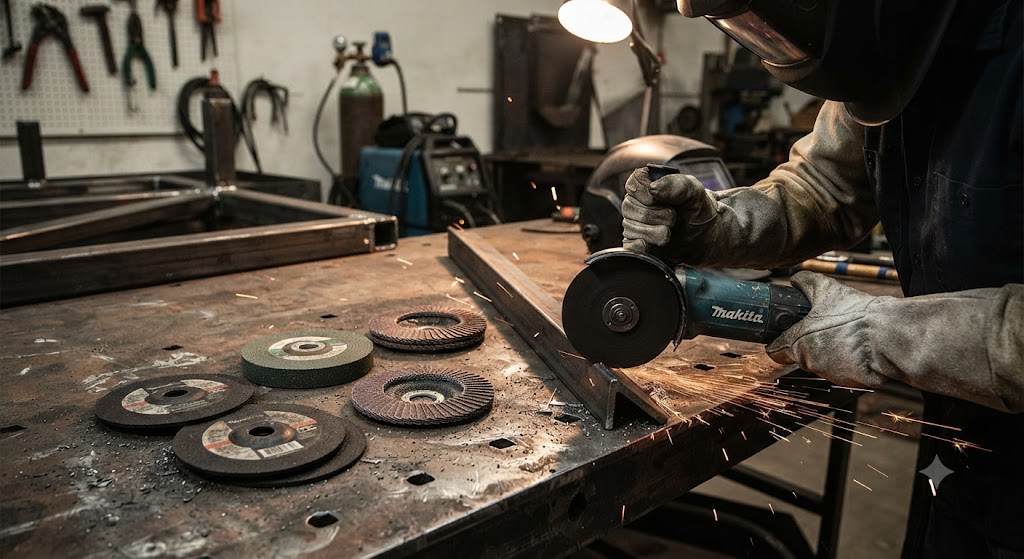
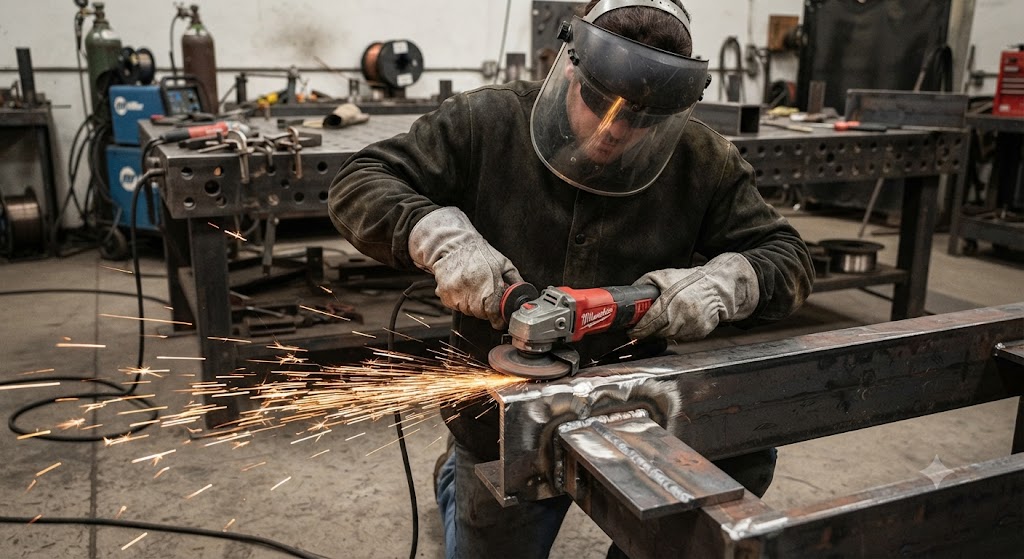
There is a moment every new welder has at the abrasive aisle: a wall of nearly identical black discs, some thin, some thick, all promising to cut or grind metal, with no clear sign which is which. Grab the wrong one and the consequences range from a slow, frustrating job to a disc that shatters because you used a thin cutting wheel for grinding. The welders who make it look easy are not stronger or faster; they just know which disc does what, and which brands hold up.
Welders use two main disc types on an angle grinder: thin cut-off wheels for slicing through metal and thicker grinding wheels for stock removal, with 3M Cubitron II and Norton among the most trusted brands. The golden rule is never to grind with a thin cutting wheel. Here is how to tell them apart and what to buy.
Cutting vs grinding: the critical difference
The single most important thing to understand is that cutting wheels and grinding wheels are not interchangeable, and confusing them is dangerous:
- Cut-off wheels are thin (often 0.045 inch or less) and designed to slice through metal edge-on, like a saw blade. They are built for cutting pressure, not side pressure.
- Grinding wheels are thick (around 1/4 inch) and designed to remove material with the face of the wheel, held at an angle to the work.
The rule that keeps you safe: never grind with a thin cut-off wheel. Side pressure on a thin cutting wheel can shatter it. Use each wheel only for its intended job.
Direct answer: what welders buy
Stock your grinder with the right disc for each task:
- Cutting bar, tube, sheet, and bolts: a thin cut-off wheel, such as a 3M Cubitron II cut-off wheel for fast, clean cuts.
- Removing tall welds and heavy stock: a thick Type 27 grinding wheel, such as a Norton metal grinding wheel.
- Blending and finishing welds: a flap disc (covered separately), which grinds and finishes in one step.
- Combined light cut and grind: a cut-and-grind wheel, a slightly thicker wheel rated for both, handy for jobs that need a bit of each.
Most welders keep a stack of thin cut-off wheels and a few grinding wheels, then reach for flap discs for cleanup.
Cut-off wheels: thinner cuts cleaner
For cutting, thinner is usually faster and cleaner. A thin cut-off wheel (0.045 inch or less) slices through steel quickly with less material loss and less heat buildup, leaving a cleaner cut with less burr. That efficiency is why they have largely replaced thick cutting wheels for most work. The premium performers here use engineered abrasive grain: 3M Cubitron II cut-off wheels use precision-shaped grain that cuts faster and lasts far longer than conventional wheels, which is why they are a shop favorite despite being an industrial product. Match the wheel diameter and maximum RPM to your grinder, and let the wheel do the cutting rather than forcing it.
Grinding wheels: built for stock removal
When you need to hog off metal, knock down a tall weld, or shape an edge, a thick Type 27 depressed-center grinding wheel is the tool. Its 1/4 inch thickness and tough bonded construction let you lean into the work with the face of the wheel at an angle. Norton grinding wheels are a longtime standard here, with zirconia and aluminum oxide options for steel, stainless, and cast iron. A grinding wheel removes metal fast but leaves a coarser finish with gouges, so it is often a first step before a flap disc smooths things out. Never use a grinding wheel for precision cutting or a cutting wheel for grinding.
Grain quality: why the good discs perform better
The difference between a basic disc and a premium one is mostly the abrasive grain:
- Conventional grain (basic aluminum oxide) cuts acceptably but dulls and wears faster, so you change discs more often.
- Zirconia lasts longer and cuts more aggressively under pressure, a solid mid-tier choice.
- Precision-shaped ceramic grain (like 3M Cubitron II) has triangular grains that stay sharp and self-sharpen as they wear, cutting faster and lasting far longer on tough steel.
The premium discs remove more metal over their life and mean fewer changeouts, which is why busy shops lean on them despite being a premium product.
Which cutting and grinding discs to buy
Here are trusted options for cutting, grinding, and blending.
- 3M Cubitron II cut-off wheel (thin, precision-shaped grain) slices through mild and high-strength steel fast and lasts far longer than conventional wheels thanks to its engineered grain. Its limitation is that, as a thin cutting wheel, it is strictly for cutting, never grinding.
- Norton metal cutting and grinding wheels, 4.5 inch (20 box) are a longtime standard for stock removal and metal work, with a durable bonded build for steel, stainless, and cast iron. The trade-off is that a thick grinding wheel leaves a coarse finish that usually needs a flap disc to blend.
- 3M Cubitron II flap disc, 40 grit, 4.5 inch blends and finishes welds in one step after cutting and grinding, using precision-shaped grain for a fast, long-lasting cut. Its limitation is that it is a premium industrial disc, more than a casual user needs for light work.
How to choose: keep thin cut-off wheels for slicing metal, thick grinding wheels for heavy removal, and flap discs for blending. Match every wheel’s size and RPM rating to your grinder, and never grind with a cutting wheel.
The bottom line
Welders rely on two main discs plus flap discs: thin cut-off wheels to slice metal, thick Type 27 grinding wheels for stock removal, and flap discs to blend. The safety rule is absolute: never grind with a thin cutting wheel, because side pressure can shatter it. Trusted brands like 3M Cubitron II and Norton earn their place through better grain that cuts faster and lasts longer. Stock the right disc for each job, match RPM to your grinder, and let the abrasive do the work.
FAQ
What cutting disc do welders recommend most? Thin cut-off wheels (0.045 inch or less) are the standard for cutting metal, and premium engineered-grain wheels like 3M Cubitron II are widely recommended for cutting faster and lasting longer than conventional wheels.
Why do welders prefer 3M Cubitron II discs? Cubitron II uses precision-shaped triangular ceramic grain that stays sharp and self-sharpens as it wears, so it cuts faster and lasts far longer than conventional abrasive wheels. That means fewer disc changes on tough steel.
Is a thinner cutting disc better for clean cuts? Usually yes. A thinner cut-off wheel slices faster with less heat and material loss, leaving a cleaner cut with less burr. Match the wheel’s RPM rating to your grinder and let it cut without forcing.
Can you grind with a cutting disc? No, and doing so is dangerous. Thin cut-off wheels are built for cutting pressure edge-on, not side pressure. Grinding with one can shatter the wheel. Use a thick grinding wheel or flap disc for grinding.
What is the difference between a cutting wheel and a grinding wheel? A cutting wheel is thin (about 0.045 inch) and slices through metal edge-on. A grinding wheel is thick (about 1/4 inch) and removes material with its face held at an angle. They are not interchangeable.
What grinding wheel is best for removing welds? A thick Type 27 depressed-center grinding wheel in zirconia or aluminum oxide, such as those from Norton, removes tall welds and heavy stock fast. Follow up with a flap disc to blend the coarse finish it leaves.
References
- 3M Cubitron II cut-off and grinding wheel technical documentation and Precision-Shaped Grain performance data (manufacturer), 3m.com.
- Norton Abrasives grinding and cutting wheel selection guidance and wheel type definitions (manufacturer), nortonabrasives.com.
- OSHA and ANSI abrasive wheel safety guidance on wheel selection and side-pressure hazards, osha.gov.