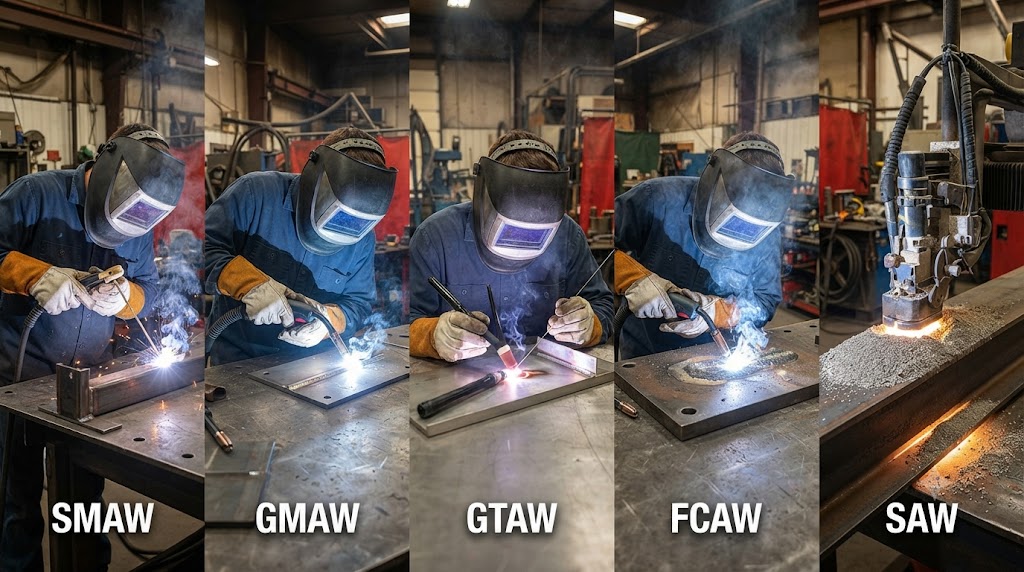
GTAW: What It Means and Why Welders Use the Term
Read a welding code, a certification, or a job posting and you will run into four letters: GTAW. It sounds technical, and beginners often assume it is some process they have not learned yet. It is not. GTAW is the formal name for a process you very likely already know by a friendlier name. This is the plain-English reference to what GTAW means, how it works, and the metals, gas and gear it involves, so the acronym stops being a mystery.
What GTAW stands for
GTAW stands for Gas Tungsten Arc Welding. Break the letters down and they describe the process exactly:
- G, Gas: an inert shielding gas (almost always argon) protects the weld from the air.
- T, Tungsten: a non-consumable tungsten electrode creates the arc.
- A, Arc: an electric arc supplies the heat.
- W, Welding: the process joins metal.
So the name is a description: welding with an arc from a tungsten electrode under a gas shield.
GTAW is TIG
Here is the key point that clears up most of the confusion: GTAW is the same thing as TIG. TIG stands for Tungsten Inert Gas, the common shop name, while GTAW is the formal designation used in codes, certifications and official documents. Same process, same machine, same skill, two names. When you see GTAW on a certification or a job listing, read it as TIG. There is nothing extra to learn.
How GTAW works, briefly
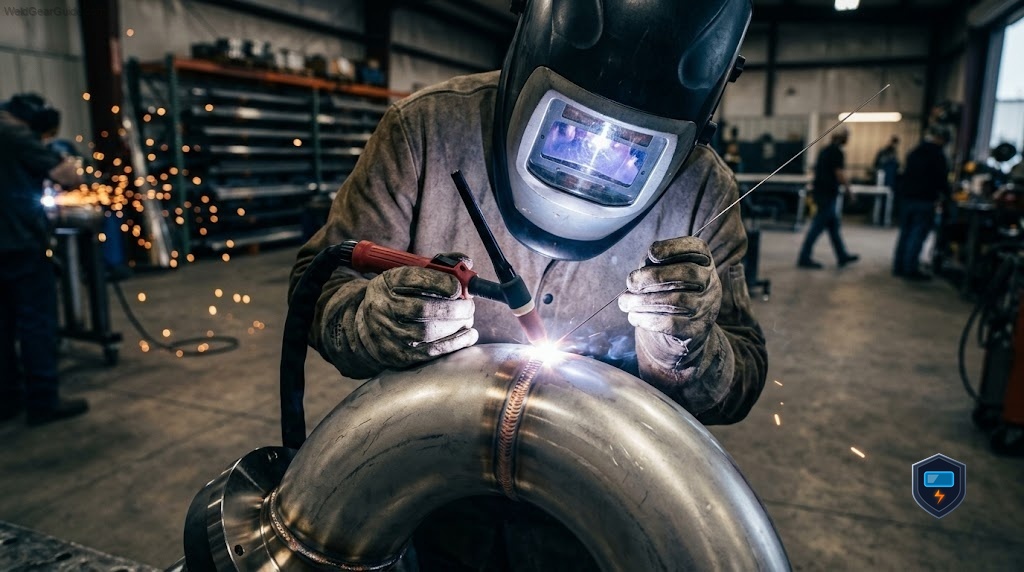
A non-consumable tungsten electrode in a torch creates an arc that melts the base metal into a puddle. Inert gas flows from the torch to shield the weld from the air. When the joint needs more metal, the welder feeds a filler rod into the puddle by hand. Amperage is usually controlled with a foot pedal, so heat can be ramped up to start and tapered down to finish. Coordinating the torch, the filler and the pedal at once is what makes GTAW the most skill-intensive of the common processes, and what gives it the cleanest, most precise welds.
Quick reference: metals, gas and gear
Metals GTAW welds: steel, stainless, aluminum (on AC), chrome-moly, titanium, copper and magnesium, essentially all weldable metals.
Current type: DC electrode negative for steel and stainless; AC for aluminum and magnesium (AC cleans aluminum’s oxide layer).
Gas: 100 percent argon for almost everything; argon-helium blends for thick aluminum or copper; a small argon-hydrogen blend for extra heat and brightness on austenitic stainless.
Tungsten: 2% lanthanated (blue) is the versatile all-purpose choice on modern machines. A 2% lanthanated tungsten 10-pack covers most work.
Filler rod: matched to the base metal, ER70S-2 for steel, ER308L for stainless, and ER5356 for aluminum.
Torch: an air-cooled 150-amp class torch (WP-17 or CK17 style) handles most hobby and light-professional work.
Where you will see the term GTAW
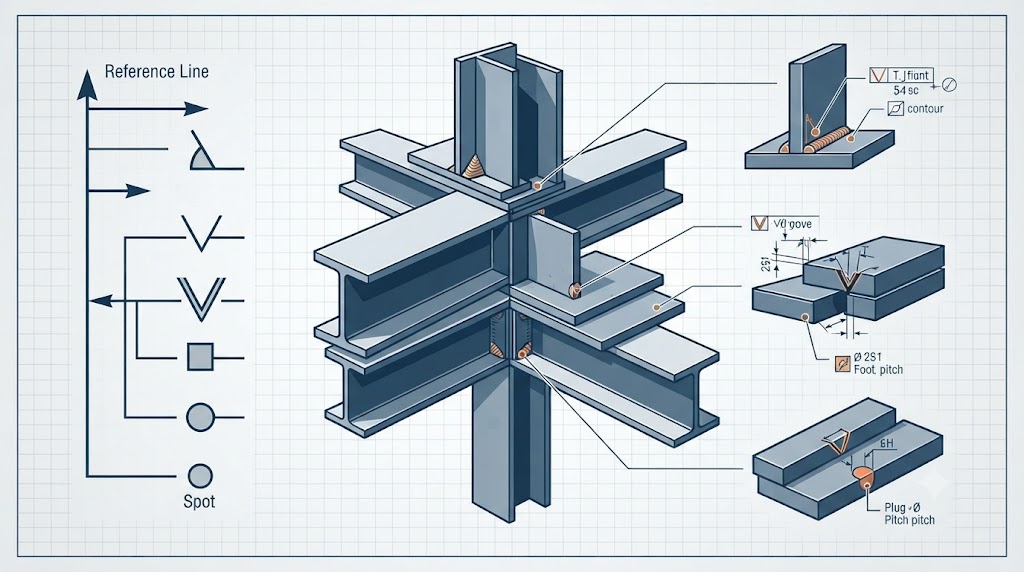
Because GTAW is the formal name, it appears wherever precision matters on paper: welding codes and standards, welder certifications and qualifications, engineering drawings and weld procedure specifications, and job postings for skilled roles in aerospace, food and medical, motorsports and pipe welding. Seeing GTAW listed simply means TIG skills are required. If you can TIG, you can do GTAW; they are the same.
The verdict
GTAW stands for Gas Tungsten Arc Welding, and the acronym describes the process precisely: an arc from a non-consumable tungsten electrode, under an inert gas shield, joining metal. The single most useful thing to know is that GTAW is TIG, the same process, machine and skill under a formal name used in codes and certifications.
Three things to keep. GTAW and TIG are identical, so seeing GTAW on a code, certification or job listing simply means TIG is required. The process works by a tungsten arc melting the base metal under a gas shield, with filler added by hand and heat controlled by a foot pedal, which is why it produces the cleanest welds and demands the most skill. And its quick reference is simple: it welds essentially all metals, uses argon and a lanthanated tungsten as defaults, DC for steel and stainless, AC for aluminum, with filler matched to the base metal.
Decode the four letters once and GTAW stops being intimidating. It is just the formal name for the precise, clean, demanding process most welders call TIG.
Frequently asked questions
What does GTAW stand for? Gas Tungsten Arc Welding. The letters describe the process: an inert gas shield, a tungsten electrode, an electric arc, and welding. It is the formal name used in codes and certifications.
Is GTAW the same as TIG? Yes. GTAW (Gas Tungsten Arc Welding) is the formal designation and TIG (Tungsten Inert Gas) is the common shop name for the exact same process, machine and skill. They are interchangeable terms.
Why are there two names for the same process? TIG is the everyday shop name, while GTAW is the standardized formal name used in welding codes, certifications, engineering documents and job listings. Both refer to identical welding.
How does GTAW work? A non-consumable tungsten electrode creates an arc that melts the base metal, inert gas shields the weld, and filler is added by hand into the puddle. Amperage is usually controlled with a foot pedal.
What metals can GTAW weld? Steel, stainless, aluminum (on AC), chrome-moly, titanium, copper and magnesium, essentially all weldable metals. This versatility is one reason GTAW is used across many industries.
What gas does GTAW use? Almost always 100 percent argon. Argon-helium blends help on thick aluminum or copper, and a small argon-hydrogen blend adds heat and brightness on austenitic stainless. Argon is the default for nearly all GTAW.
Why do job postings list GTAW instead of TIG? Because GTAW is the formal name used in professional and code contexts. A posting listing GTAW is asking for TIG skills; the two are the same, so TIG experience qualifies.
Is GTAW hard to learn? It is the most skill-intensive of the common processes because you coordinate the torch, hand-fed filler and foot-pedal heat control at once. That difficulty is also why it produces the cleanest, most precise welds.
References
- Wikipedia, Gas tungsten arc welding
- Miller Electric, How a TIG Welder Works and When to TIG Weld
- Lincoln Electric, Square Wave TIG 200 TIG welder specifications