How Does Flux Core Welding Work? Full Explainer
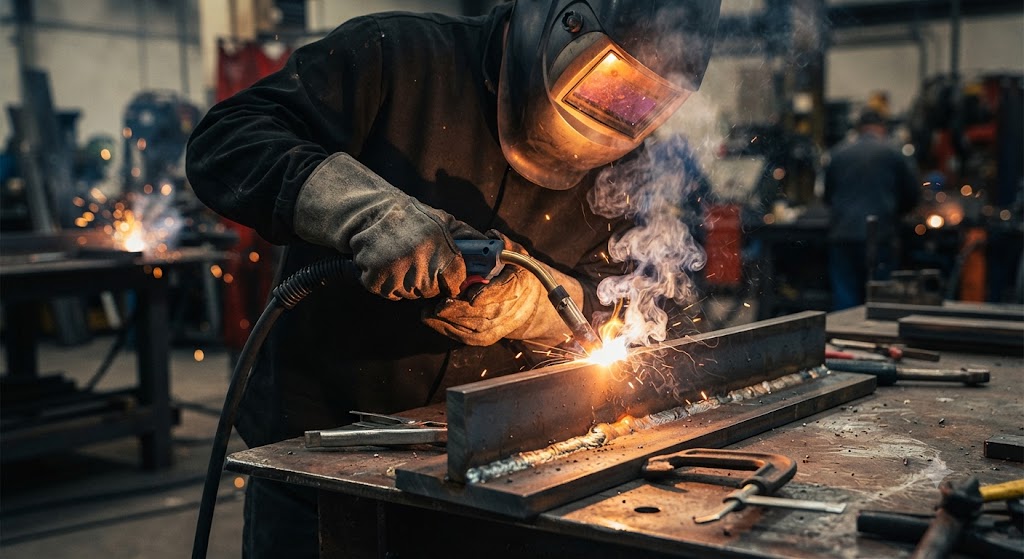
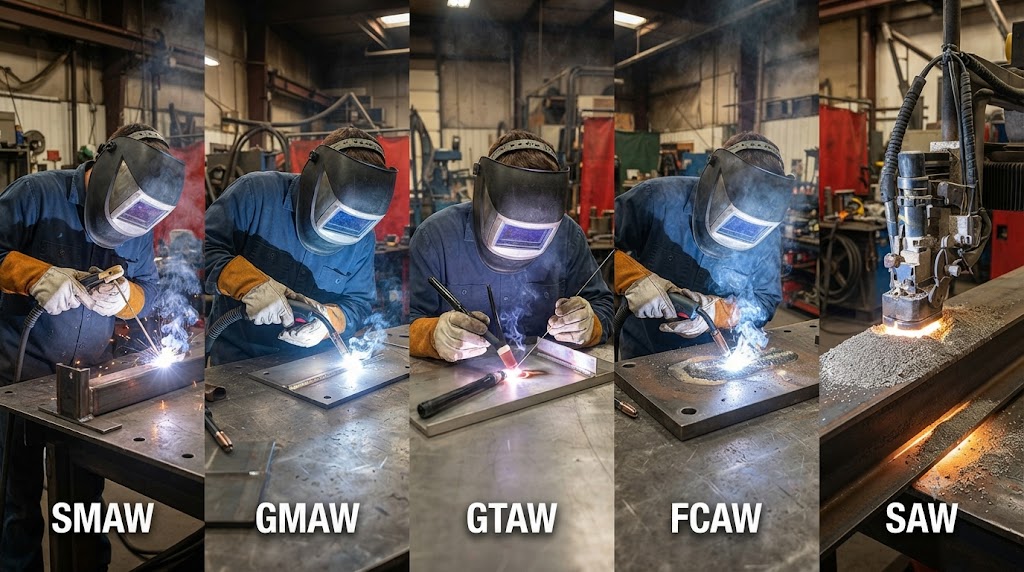
Flux core welding is the process that lets a small wire-feed machine act tough. It looks just like MIG, wire feeding through a gun, but it can weld outdoors in a stiff breeze and bite into thick, less-than-clean steel where standard MIG would give up. The trick is hidden inside the wire itself. Instead of solid metal, the wire is a tube packed with flux. This explainer covers how flux core welding works, the difference between the self-shielded and gas-shielded versions, and why it is so good outdoors.
Flux core welding, formally flux-cored arc welding (FCAW), works by feeding a tubular wire filled with flux through a gun into an arc. The flux inside the wire burns to shield the weld, so self-shielded versions need no external gas. Here is the full explainer.
The main parts
Flux core uses a setup much like MIG:
- A wire feeder that pushes the tubular wire from a spool.
- The gun and liner that guide the wire to the joint.
- A tubular flux-cored wire, hollow and packed with flux.
- A power source, usually direct current.
- A shielding gas supply, only for the gas-shielded (dual-shielded) type.
The standout part is the wire: hollow, with the flux on the inside instead of a coating on the outside like a stick electrode.
Direct answer: how flux core welding works
Here is the sequence:
- The tubular wire feeds continuously from the spool through the gun.
- An arc forms between the wire and the base metal, melting both.
- The internal flux burns, releasing shielding right at the arc.
- The molten metal joins the base metal in a weld pool.
- A slag layer forms over the weld as the flux solidifies.
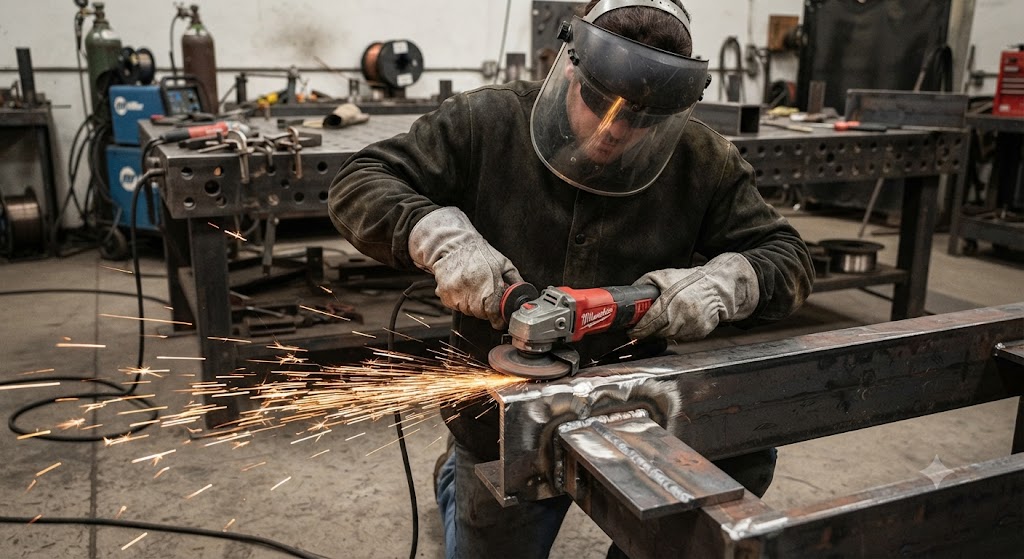
- You chip off the slag after the weld cools.
It is like MIG’s continuous wire feed combined with stick’s flux-and-slag shielding, rolled into one.
The tubular wire
The defining feature of flux core is the wire. Where MIG uses a solid wire, flux-cored wire is a thin metal tube with powdered flux packed inside. As the wire melts in the arc, the flux inside is released to do its shielding work, the same protective role that the coating plays on a stick electrode, just delivered from inside a continuously fed wire. That combination is powerful: you get the productivity of a continuously feeding wire, so you are not stopping to change rods like in stick, plus the rugged, self-protecting behavior of flux. The recommended polarity is generally DC electrode positive, though self-shielded wires can differ, so the wire specification is what to follow. As with stick, the flux leaves a slag over the finished weld that you chip and brush off.
Self-shielded versus gas-shielded
Flux core comes in two flavors, and the difference is whether an extra gas bottle is involved. Self-shielded flux core (FCAW-S) relies entirely on the burning internal flux to protect the weld, so it needs no external shielding gas at all. This is the version people usually mean by “gasless” welding, and it is a favorite for outdoor and construction work because there is no gas to blow away. Gas-shielded flux core, also called dual-shielded (FCAW-G), uses the internal flux and an external shielding gas together. The added gas gives a smoother arc and is generally preferred for indoor shop welding on thicker material, where wind is not a problem. Both types feed a tubular wire and both leave slag; the difference is simply whether they lean on the internal flux alone or add a gas bottle for a cleaner result.
Why flux core works outdoors
The big reason self-shielded flux core shines outdoors is the same reason stick does: it makes its shielding right at the arc. With standard MIG, an external gas flows over the pool, and even a light wind blows that gas away, letting air in and causing porosity. Self-shielded flux core has no such weakness, because the shielding comes from the flux burning inside the wire, produced exactly where it is needed. That makes it a practical stand-in for stick on construction sites and repairs, with the bonus of a continuously feeding wire for higher productivity. It also handles thicker and dirtier steel well. The trade-off, as with stick, is more slag and more smoke than clean MIG, but for outdoor and heavy work that is a worthwhile exchange.
The bottom line
Flux core welding works by feeding a hollow, flux-filled wire into an arc, so the flux burns to shield the weld from inside the wire itself. That blends MIG’s continuous, productive wire feed with stick’s rugged, self-protecting flux and slag. Self-shielded flux core needs no gas bottle and excels outdoors and on thick or dirty steel, because it makes its shielding at the arc where wind cannot blow it away. Gas-shielded (dual-shielded) flux core adds an external gas for a smoother arc, better suited to indoor shop work. Either way you get a tough, productive process that fills the gap between the convenience of MIG and the go-anywhere grit of stick.
FAQ
Does flux core welding need shielding gas? It depends on the type. Self-shielded flux core (FCAW-S) needs no external gas because the flux inside the wire burns to shield the weld, which is why it is called gasless. Gas-shielded or dual-shielded flux core (FCAW-G) uses the internal flux plus an external gas together for a smoother arc, mainly for indoor shop work.
How is flux core different from solid MIG wire? MIG uses a solid wire and relies on an external shielding gas, while flux-cored wire is a hollow tube packed with flux that provides shielding as it burns. That means self-shielded flux core needs no gas bottle and works outdoors, and it leaves slag to chip off, whereas solid MIG needs gas, struggles in wind, and leaves little or no slag.
Why does flux core work well outdoors? Because self-shielded flux core makes its shielding right at the arc from the flux burning inside the wire, so wind cannot blow it away. Standard MIG relies on an external gas that a breeze disperses, causing porosity. Flux core’s built-in shielding, combined with continuous wire feed, makes it a productive, rugged choice for outdoor and construction work.
What is the slag in flux core welding? It is the hardened layer left on top of the weld after the internal flux does its shielding job, the same idea as the slag from a stick electrode. The slag protects the cooling weld, then must be chipped and brushed off before inspecting the weld or laying another pass. Slag is a normal by-product of flux-based processes.
What is dual-shielded flux core? Dual-shielded flux core, also called gas-shielded FCAW (FCAW-G), uses a flux-cored wire together with an external shielding gas. The gas gives a smoother arc and cleaner results, making it well suited to indoor shop welding on thicker material, where there is no wind to blow the gas away. It contrasts with self-shielded flux core, which uses no external gas.
What polarity does flux core welding use? Most flux-cored wire runs on DC electrode positive, but self-shielded wires can vary, so you should follow the polarity listed on the wire’s specification. Using the polarity the wire calls for is important for arc stability and weld quality, just as it is with stick electrodes.
References
- Lincoln Electric guide to self-shielded versus gas-shielded flux-cored electrodes (manufacturer), lincolnelectric.com.
- Hobart Brothers references on self-shielded flux-cored wire for outdoor work (manufacturer), hobartbrothers.com.
- Miller Electric guide to solid wire versus flux-cored wire (manufacturer), millerwelds.com.