How Does MIG Welding Work? Full Explainer
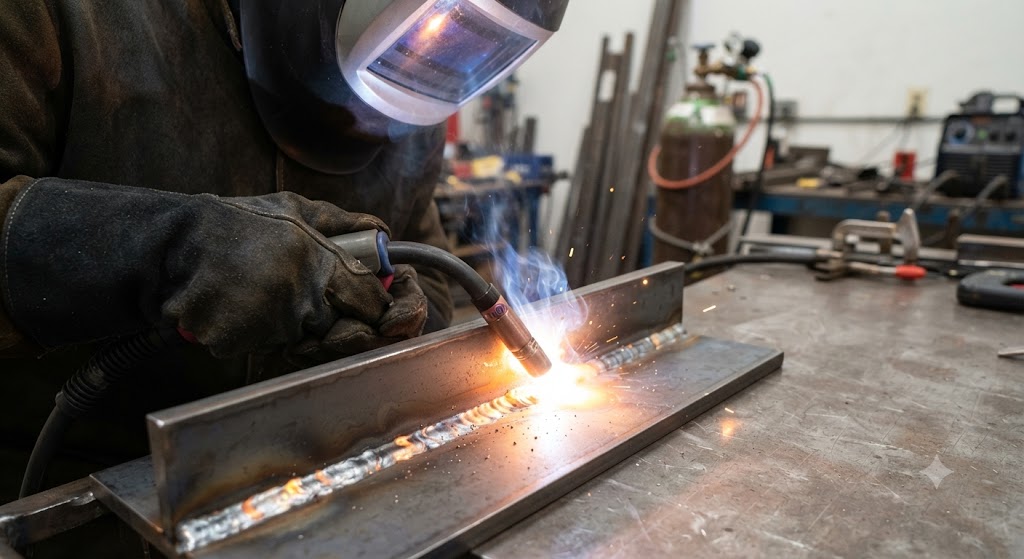
Pull the trigger on a MIG gun and a lot happens at once: a wire feeds out, an arc lights up, gas hisses over the joint, and metal fuses. It looks simple, which is exactly why MIG is the process most people learn first. But understanding what actually happens, electrically and mechanically, makes you a better welder and helps you fix problems when they show up. This explainer walks through how a MIG welder works from the wire spool to the weld pool.
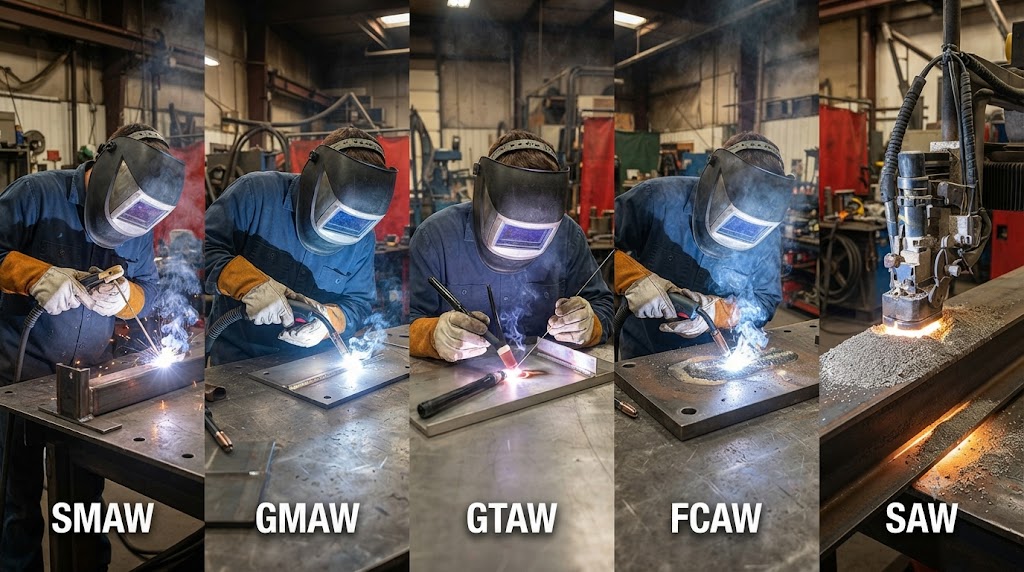
MIG welding, formally gas metal arc welding (GMAW), works by feeding a continuous solid wire electrode through a gun into an electric arc, while a shielding gas protects the molten weld pool from the air. The wire is both the electrode and the filler. Here is the full picture.
The main parts
A MIG welder brings together a few key systems:
- A wire feeder that pushes a spool of solid wire at a steady speed.
- The gun and liner that guide the wire to the joint.
- The contact tip that transfers welding current to the wire.
- A shielding gas supply, usually argon and carbon dioxide or straight CO2.
- A power source set to direct current, electrode positive.
Together these deliver wire, current, and gas to the same point, which is where the weld happens.
Direct answer: how a MIG welder creates a weld
Here is the sequence when you pull the trigger:
- The wire feeds continuously from the spool through the gun.
- Current reaches the wire at the contact tip, energizing it as the electrode.
- An arc forms between the wire tip and the base metal, generating intense heat.
- The arc melts both the wire and the base metal into a shared weld pool.
- Shielding gas flows over the pool, keeping air away.
- The pool solidifies into a weld as you move along the joint.
The wire melts off and becomes filler as fast as it feeds, so the process is continuous.
The wire feed and contact tip
What makes MIG different from stick or TIG is the continuously fed wire, and the feeder is the heart of it. A motorized drive pushes wire off the spool, through a liner in the gun cable, and out to the joint at a set wire feed speed, which controls how much filler and current you get. The wire does not carry current until it reaches the contact tip near the end of the gun. That small copper tip is where the welding current transfers into the wire, energizing just the last stretch of wire as the electrode. Keeping the right distance from tip to work (the stickout) matters, because too long a stickout reduces penetration and can cause porosity by pulling the wire away from good gas coverage. When the feed, the tip, and the stickout are right, the arc is smooth and stable.
The shielding gas
The “gas” in gas metal arc welding is essential, not optional for standard MIG. As the arc melts the metal, the molten pool is hungry to react with oxygen, nitrogen, and hydrogen in the surrounding air, and those reactions cause porosity and weak, ugly welds. A shielding gas, commonly a mix of argon and carbon dioxide or sometimes pure CO2, flows out of the gun nozzle and blankets the pool, pushing the air away while the metal is molten. This is also why standard MIG struggles outdoors: a breeze blows the shielding gas away and the weld suffers. The gas does not add metal or heat; its whole job is protection, and without it a MIG weld comes out brown, spattered, and full of holes.
What happens electrically
Electrically, MIG runs on direct current, electrode positive (DCEP), also called reverse polarity. That means the wire electrode is connected to the positive side of the circuit and the workpiece to the negative side, through the ground clamp. When the energized wire gets close to the grounded metal, the voltage jumps the small gap and forms an arc, a sustained electrical discharge that reaches thousands of degrees. That arc is the heat source that melts the wire and the base metal. DCEP gives MIG its clean, stable arc and good penetration on steel. (One note: gasless flux-cored wire, which some MIG machines can run, flips to electrode negative, but standard solid-wire MIG uses electrode positive.) The steady arc, fed by steady wire, is what makes MIG fast and beginner-friendly.
The bottom line
MIG welding works by turning a spool of wire into a continuous stream of electrode and filler. The feeder pushes the wire through the gun, the contact tip energizes it with direct current at electrode positive, and an arc forms between the wire and the grounded workpiece, melting both into a weld pool. A shielding gas flows over that pool to keep the reactive air away, which is why MIG needs gas and struggles in wind. Because the wire feeds and melts continuously, you can lay a long, steady bead simply by moving along the joint, and that combination of steady wire, stable arc, and gas protection is what makes MIG the go-to first process for so many welders.
FAQ
How does a MIG welder actually create a weld? When you pull the trigger, a solid wire feeds continuously through the gun, current energizes it at the contact tip, and an arc forms between the wire and the grounded base metal. The arc melts both the wire and the base metal into a shared pool, shielding gas protects that pool, and it solidifies into a weld as you move along.
Does MIG welding need shielding gas to work? Standard solid-wire MIG needs shielding gas. The gas, usually an argon and carbon dioxide mix, blankets the molten pool and keeps out oxygen, nitrogen, and hydrogen from the air that would cause porosity and weak welds. Without it, standard MIG welds come out spattered and full of holes. Flux-cored wire is the gasless alternative.
What happens electrically inside a MIG welder? MIG runs on direct current, electrode positive (DCEP). The wire is connected to the positive side and the workpiece to the negative side. When the energized wire nears the grounded metal, voltage jumps the gap to form an arc, a sustained discharge reaching thousands of degrees, and that arc is the heat that melts the wire and base metal.
What is the contact tip for in MIG welding? The contact tip is a small copper part near the end of the gun that transfers welding current into the wire. The wire does not carry current until it passes through the tip, which energizes the last stretch of wire as the electrode. A worn or wrong-size tip causes an erratic arc and feeding problems.
Why does MIG welding struggle outdoors? Because standard MIG relies on shielding gas flowing over the weld pool, and even a light breeze blows that gas away. Once the air reaches the molten metal, porosity and weak welds result. For outdoor or windy work, self-shielded flux-cored welding is preferred because it does not depend on an external gas.
What controls how much filler MIG adds? The wire feed speed. The feeder pushes wire at a set rate, and since the wire is both electrode and filler, faster feed adds more metal and draws more current, while slower feed adds less. Matching wire feed speed and voltage to the material thickness is central to getting a good MIG weld.
References
- Miller Electric guide to the basics of MIG welding (manufacturer), millerwelds.com.
- ESAB guidance on MIG machine settings, polarity, and stickout (manufacturer), esab.com.
- Lincoln Electric and Hobart references on gas metal arc welding fundamentals (manufacturers), lincolnelectric.com, hobartbrothers.com.