How Does Stick Welding Work? Full Explainer
Stick welding is the process that looks the most like magic and the least like precision machinery. There is no gas bottle, no wire feeder, just a machine, a clamp, and a coated rod that crackles and smokes as it lays down metal. That simplicity is its superpower: stick works outdoors, on rusty steel, and in places a MIG or TIG setup would quit. The secret to all of it is the flux coating on the electrode. This explainer covers how stick welding works and why that coating does so much of the job.
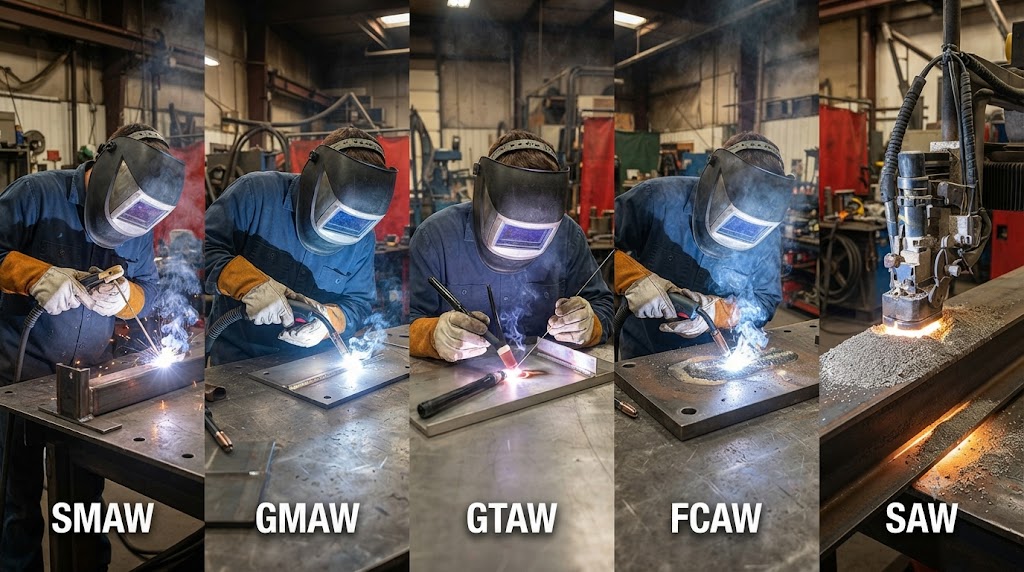
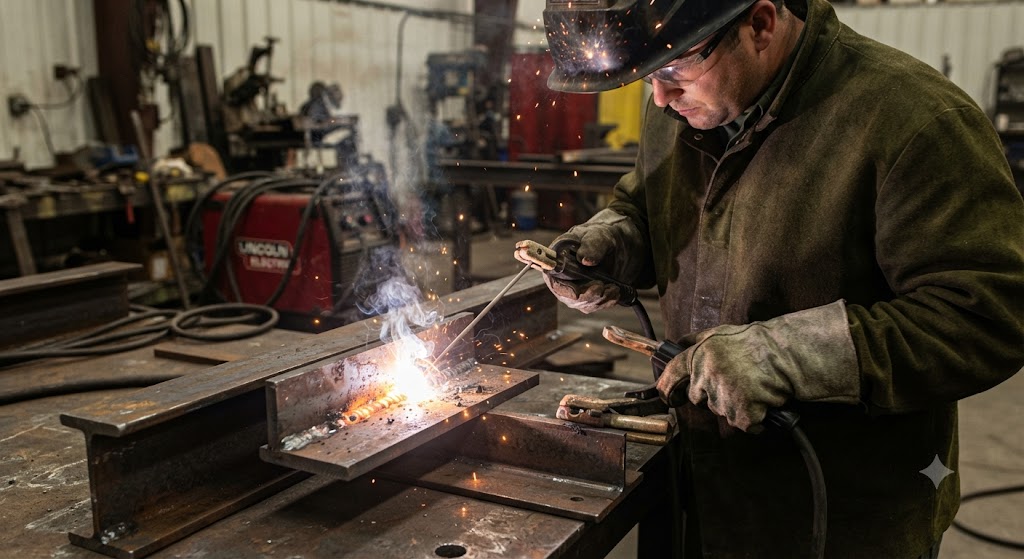
Stick welding, formally shielded metal arc welding (SMAW), works by striking an arc between a flux-coated consumable electrode and the base metal. The arc melts both, while the burning flux creates a shielding gas and leaves a protective slag over the cooling weld. Here is how it all fits together.
The main parts
Stick welding needs very little gear:
- A power source set to AC or DC.
- An electrode holder (the “stinger”) that grips the rod.
- A flux-coated electrode, the consumable rod that becomes filler.
- A ground clamp that completes the circuit to the work.
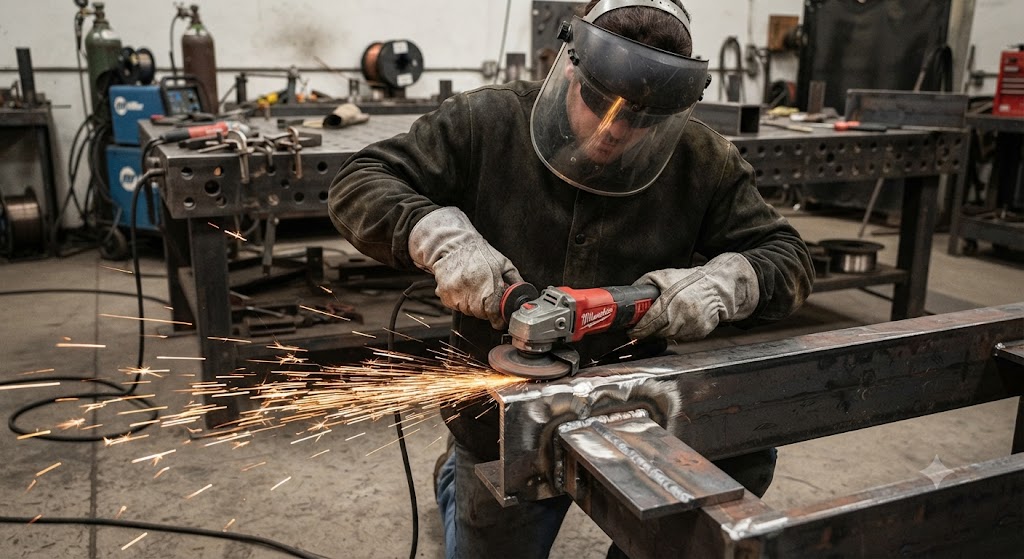
- A chipping hammer and brush to remove slag afterward.
Notice what is missing: no shielding gas bottle and no wire feeder, which is why stick is so portable.
Direct answer: how stick welding works
Here is the sequence:
- You strike an arc by touching the electrode to the metal and pulling back slightly.
- The arc’s heat melts both the electrode tip and the base metal.
- The flux coating burns, releasing a shielding gas around the arc.
- Molten metal transfers across the arc into the weld pool.
- A slag layer forms over the pool as the flux solidifies.
- You chip off the slag once the weld cools.
The electrode melts away as you go, so it is consumable, and you swap in a new rod when it gets short.
The consumable electrode
Unlike TIG’s tungsten, the stick electrode is consumable: it melts and becomes the filler metal of the weld. The rod has two parts, a metal core wire that melts into the joint, and a flux coating around the outside that does the protective work. As you weld, the rod gets shorter because it is literally being deposited into the weld, so stick welding happens in bursts, one rod at a time, with a pause to load a fresh electrode. Different electrodes have different core metals and flux formulas for different jobs, which is why rods carry classification numbers. Most common stick electrodes run on direct current electrode positive (DCEP), also called reverse polarity, for good arc stability and penetration, though many are rated for AC and DC.
The flux coating and slag
The flux coating is what makes stick welding work without a gas bottle, and it does three jobs at once. First, as the flux burns in the arc, it releases a shielding gas that surrounds the molten pool and keeps oxygen and nitrogen in the air from ruining the weld. Second, as the metal cools, the flux solidifies into a layer of slag on top of the weld, which shields the still-hot metal from the air and helps it cool more evenly for a sounder weld. Third, the flux helps stabilize the arc and makes it easier to control. This is the trade-off that defines stick: because the flux does the shielding, you do not need a gas bottle and the process works in wind and outdoors, but it also leaves slag that you have to chip and brush off before inspecting the weld or making another pass.
Why stick has no gas bottle
The reason stick welding needs no external shielding gas comes straight from the flux. In MIG and TIG, a bottle supplies the gas that protects the pool, which is why wind can blow that gas away and cause problems. In stick, the shielding gas is generated right at the arc by the burning flux, so it is produced exactly where it is needed and is far harder for a breeze to disturb. That makes stick the rugged, go-anywhere process. It welds outdoors on a windy day, it tolerates dirty or rusty steel better than the cleaner processes, and the equipment is simple and portable. The trade-off is more slag, more smoke, and a bit more cleanup, but for field repair and heavy fabrication that is a fair deal.
The bottom line
Stick welding works by striking an arc between a flux-coated consumable electrode and the base metal. The arc melts the rod and the workpiece into a weld pool, while the burning flux coating does three things: it releases a shielding gas, it leaves a protective slag over the cooling weld, and it stabilizes the arc. Because the flux makes its own shielding right at the arc, stick needs no gas bottle and works outdoors, in wind, and on less-than-clean metal, which is why it dominates field repair and heavy structural work. You pay for that ruggedness with slag to chip and more smoke, but the simplicity and portability are exactly why stick welding has stayed a workhorse for so long.
FAQ
How does the flux coating on a stick electrode work? The flux coating does three jobs. As it burns in the arc, it releases a shielding gas that keeps air away from the molten pool. As the weld cools, it forms a protective slag layer over the metal. And it helps stabilize the arc for easier control. This is why stick welding needs no separate gas bottle.
Why does stick welding leave slag? Because the flux coating that shields the weld solidifies into a slag layer on top as the metal cools. That slag protects the hot weld from the air and helps it cool evenly, but it must be chipped and brushed off afterward before you inspect the weld or lay another pass. Slag is a normal by-product of the flux doing its job.
Does stick welding need shielding gas? No external gas bottle is needed. The shielding gas is generated right at the arc by the burning flux coating on the electrode. Because the shielding is made where it is needed rather than supplied from a bottle, stick welding works outdoors and in wind, unlike standard MIG, which relies on gas that a breeze can blow away.
Is the stick electrode consumable? Yes. Unlike a TIG tungsten, a stick electrode melts and becomes the filler metal of the weld, so it gets shorter as you weld and must be replaced with a fresh rod. This is why stick welding happens one rod at a time, with a pause to load a new electrode when the old one gets too short.
What polarity does stick welding use? Most common stick electrodes run on direct current electrode positive (DCEP), also called reverse polarity, which gives good arc stability and penetration. Many electrodes are also rated to run on AC or DC electrode negative, and the electrode packaging lists the recommended polarity for that specific rod.
Why is stick welding good for outdoor and dirty work? Because the flux makes its shielding gas right at the arc, wind cannot easily blow it away like it can with MIG’s bottled gas, so stick works outdoors. Stick also tolerates rusty or dirty steel better than cleaner processes, and its equipment is simple and portable, which is why it dominates field repair and structural work.
References
- Haynes International reference on shielded metal arc welding (SMAW) parameters and polarity (industry), haynesintl.com.
- ESAB guidance on polarity in stick welding (manufacturer), esab.com.
- Omnifab and TWI references on SMAW coated electrodes and slag formation (industry), twi-global.com.