Miller Digital Elite Review: The All-Day Workhorse
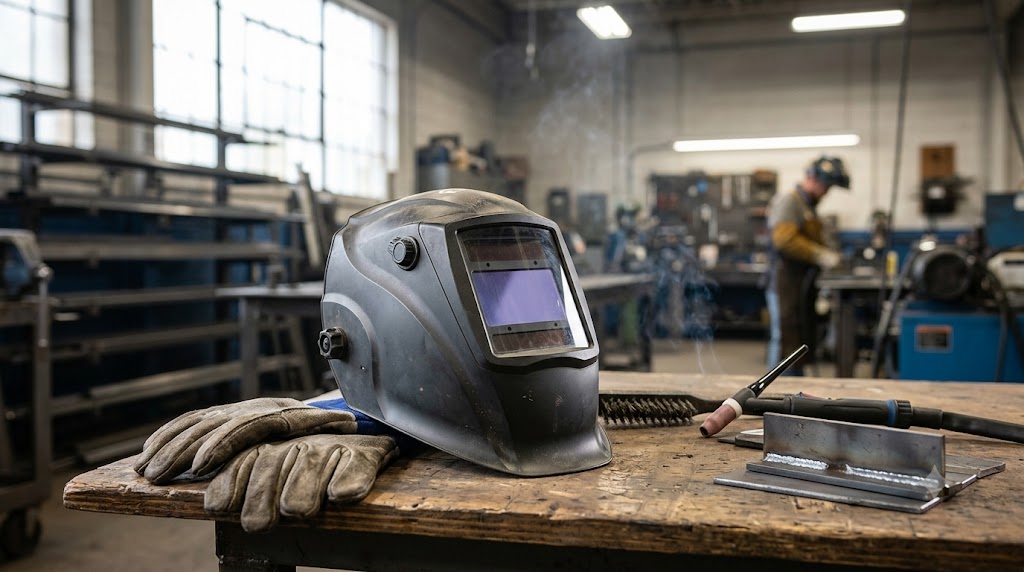
Ask a room full of professional welders which hood they reach for every shift, and the answer that keeps coming up is the subject of this Miller Digital Elite review. It is not the biggest window in Miller’s range and it is not the cheapest, but it hits a balance of clarity, comfort, and weight that has made it the default choice for people who weld for a living. Here is what it does brilliantly, the one thing it gives up, and who should buy it.
What the Miller Digital Elite is
The Digital Elite is Miller’s flagship all-day auto-darkening helmet, now sold with ClearLight 4x lens technology. It offers a 9.2 square inch viewing area, four independent arc sensors, and four operating modes: Weld, Cut, Grind, and the signature X-Mode. It covers welding shades 8 to 13 and cutting shades 5 to 8 with a bright shade 3 light state, switches in 1/25,000 of a second, and is rated for low-amperage TIG below 5 amps. It weighs about 18 ounces, runs on a CR2450 battery with solar assist, and carries digital controls with two memory presets.
The direct answer: is the Digital Elite worth buying?
Yes, and for the daily welder it is arguably the smartest buy in Miller’s lineup. The reason is weight. At 18 ounces it is noticeably lighter than the Digital Infinity, and over an eight-hour shift that difference is the one you actually feel in your neck. You still get flagship ClearLight optics, four sensors, X-Mode, and half-shade digital control, so you are not sacrificing capability to get that comfort.
The only welders who should look elsewhere are those who specifically need the largest possible window, who will prefer the Infinity, and pure hobbyists who weld occasionally, for whom the cheaper Classic Series makes more sense. For everyone in between, the Digital Elite is the sweet spot.
Optics and X-Mode
ClearLight is the headline, and it earns it. The lens shows the puddle in bright, natural color instead of the old monotone green, which reduces eye strain and makes it easier to keep the hood down between tacks. X-Mode is the underrated feature: it electromagnetically senses the arc, so the lens keeps working when sunlight would fool a standard sensor or when your view of the arc is obstructed. For outdoor and low-amp TIG work, that reliability matters.
Comfort and controls
The redesigned headgear spreads the 18 ounce weight well, and the digital push-button controls make dialing in shade, sensitivity, and delay quick and repeatable. The two memory presets let you jump between, say, a MIG setting and a TIG setting without re-tuning every dial. You can find the Miller Digital Elite on Amazon in black and a range of graphic designs.
The flaw worth knowing
The honest limitation is the window size relative to the price. At 9.2 square inches the Digital Elite’s view is smaller than the Infinity’s 13.4 square inches and even smaller than some cheaper large-view budget hoods. Who should skip it: welders who prioritize a big panoramic window above all else, and anyone doing extensive out-of-position work where a wider view genuinely helps. They should either step up to the Infinity or look at a large-view helmet.
How it compares
Against the Digital Infinity, the Elite trades window size for lighter weight and a lower price, which most all-day welders consider the better deal. Against the Classic Series, the Elite adds two more arc sensors, X-Mode, grind mode, digital memory, and a larger window, justifying its higher cost for anyone welding regularly. Against premium rivals like the ESAB Sentinel or Lincoln Viking 3350, it competes on lens clarity and comfort while offering the X-Mode trick they lack.
Where the Digital Elite lands
This Miller Digital Elite review comes down to a simple truth: it is the helmet you buy when you weld for hours and want to forget you are wearing it. Buy it if daily comfort and flagship optics matter more than raw window size. Step up to the Infinity only if the biggest view is your priority. As always, confirm the ANSI Z87.1 marking that OSHA cites as the baseline for welding eye protection.[^https://www.osha.gov/sites/default/files/publications/OSHAFACTSHEET-EYEPROTECTION-DURING-WELDING.pdf]
Frequently asked questions
What is X-Mode on the Miller Digital Elite? X-Mode electromagnetically senses the arc rather than relying only on light, so the lens keeps darkening reliably in bright sunlight, outdoors, or when your view of the arc is obstructed.
How does ClearLight lens technology work? ClearLight allows a wider range of the color spectrum through the lens, replacing the old green tint with a brighter, more natural view that reduces eye strain.
What battery does the Digital Elite use? A CR2450 lithium coin cell, Miller part number 217043, with solar assist. It is shared across nearly all Miller helmets.
What is the viewing area of the Digital Elite? 9.2 square inches, smaller than the Infinity’s 13.4 square inches but paired with a lighter 18 ounce build for all-day comfort.
Is the Digital Elite good for TIG welding? Yes. It is rated for low-amperage TIG below 5 amps, and X-Mode helps the lens trigger reliably on a low, obstructed arc.
What shade range does it cover? Welding shades 8 to 13, cutting shades 5 to 8, and a bright shade 3 light state for keeping the hood down between welds.
References
- Miller Electric, Digital Elite ClearLight 4x: https://www.millerwelds.com/en-US/safety-products/helmets/digital-elite-m00471/digital-elite-black-qr-clearlight-4x-296765
- U.S. Occupational Safety and Health Administration, Eye Protection During Welding: https://www.osha.gov/sites/default/files/publications/OSHAFACTSHEET-EYEPROTECTION-DURING-WELDING.pdf