Welding Chipping Hammer: What It Does and Which to Buy
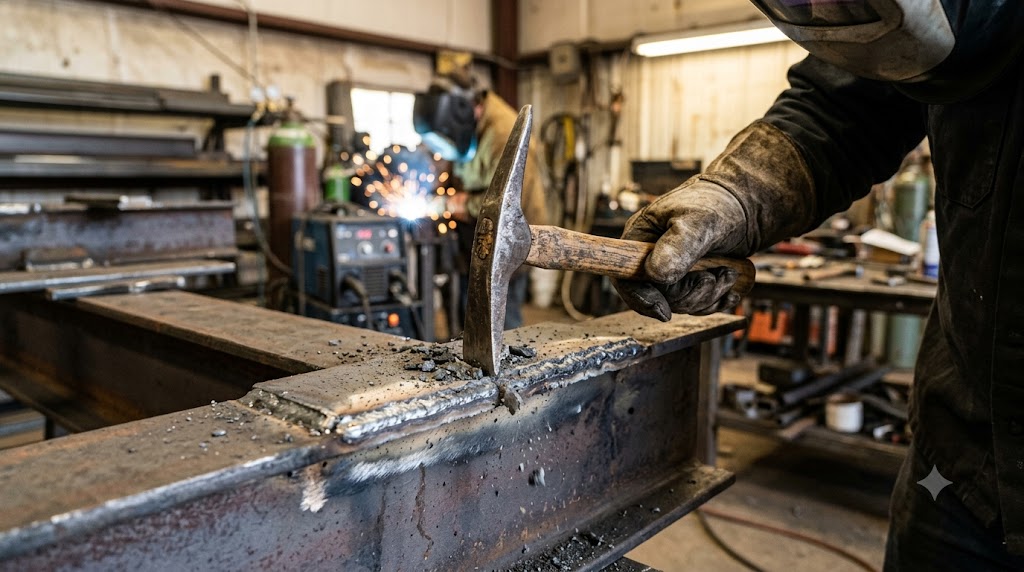
If you have ever stick welded, you know the sound: that hard glassy crust over your fresh bead, hiding the weld underneath. That crust is slag, and until you knock it off you cannot see your work, and you certainly cannot weld over it cleanly. The tool for the job is one of the oldest and simplest in the shop, a chipping hammer, and despite how simple it is, it is one item you do not want to be without.
A welding chipping hammer is a specialized hammer with a chisel end and a pointed end, used to remove slag from welds after stick and flux-core welding. The distinctive coiled spring handle absorbs the shock of chipping. Here is what it does, when you need one, and how to choose.
What a chipping hammer does
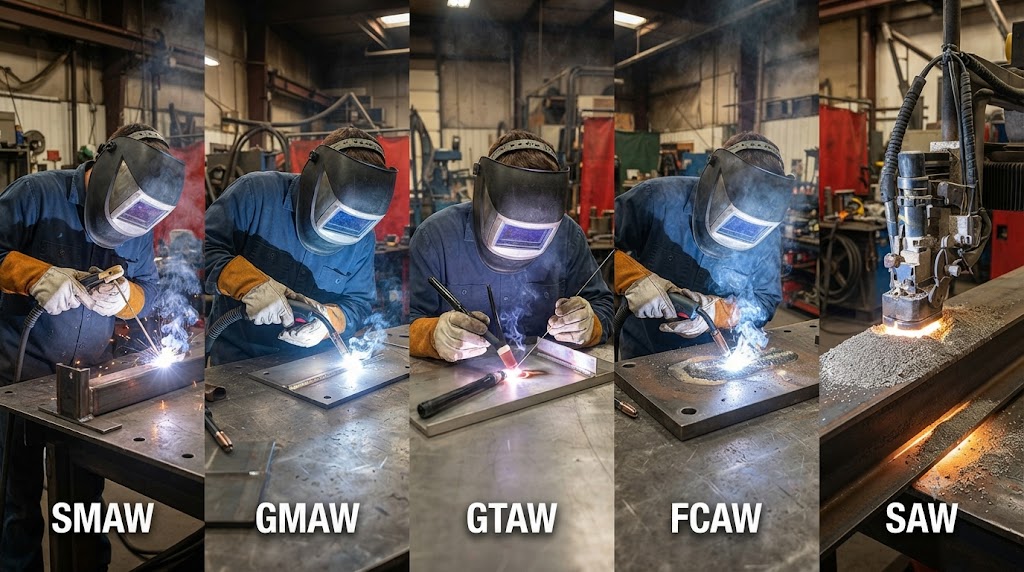
When you weld with a stick electrode or flux-core wire, the flux forms a protective slag layer over the hot weld as it cools. That slag has to come off, both so you can inspect the bead and so any following passes bond cleanly instead of trapping slag inclusions. A chipping hammer is designed exactly for this: you tap and scrape along the bead to crack and flake the slag away. The two ends handle different situations, and the spring handle makes the repetitive chipping easier on your hand and wrist.
It is a humble tool, but a clean weld starts with clean slag removal, and nothing does that first pass like a chipping hammer.
Direct answer: do you need one, and what to look for
If you stick weld or run self-shielded flux-core wire, yes, you need a chipping hammer. If you only MIG weld with solid wire and gas, you can often skip it (more on that below). What to look for:
- A chisel end and a pointed (cone) end, so you can flake broad slag and dig into corners and root passes.
- A coiled spring handle, which absorbs impact shock and reduces hand fatigue.
- A forged, heat-treated head for durability, ideally one-piece forged for the longest life.
- A comfortable grip, whether a spring coil or a shock-reduction molded handle.
A basic spring-handle hammer covers most needs; a premium one-piece forged hammer lasts longer and chips more comfortably.
The two ends and the spring handle
The design is simple but purposeful:
- The chisel end is a flat, wide edge for flaking slag off the broad surface of a bead and running along the weld.
- The pointed (cone) end digs into tight corners, weld roots, and undercut spots where the chisel cannot reach.
- The coiled spring handle is the signature feature: it flexes on impact, absorbing the shock that would otherwise travel into your hand, which makes repeated chipping far more comfortable.
That spring handle is why a purpose-made chipping hammer beats grabbing any old hammer for the job.
Do you need one for MIG welding?
Here is a common question with a nuanced answer. Solid-wire MIG welding with shielding gas produces little to no slag (just some spatter), so you often do not need a chipping hammer for pure MIG, and a wire brush handles cleanup. But self-shielded flux-core welding does produce slag, just like stick welding, so if you run gasless flux-core wire you will want a chipping hammer. In short: stick and flux-core need one, solid-wire MIG usually does not. Many welders keep one anyway, since it takes up little room and handles the occasional slag or spatter that a brush cannot.
Spring handle vs one-piece forged
Two main styles exist, and the choice is durability versus simplicity:
- Coiled spring handle hammers are the classic, simple design. The wire spring absorbs shock well, though the welded-on head can eventually loosen with heavy use.
- One-piece forged hammers (like Estwing’s) forge the head and handle from a single piece of steel, so there is no joint to fail, paired with a molded shock-reduction grip. They are a step up but far more durable and comfortable for heavy daily use.
For occasional work, a spring-handle hammer is plenty. For daily slag removal, a one-piece forged hammer is worth the upgrade.
Which chipping hammers to buy
Here are options from basic to premium.
- TOLSEN welding chipping hammer with spring handle is the classic coiled-spring design with a chisel and point, absorbing shock for comfortable everyday slag removal. Its limitation is that the welded-on head can loosen over time under heavy daily use, unlike a forged one-piece tool.
- VASTOOLS welding chipping hammer with coil spring handle and wire brush pairs a cone-and-chisel spring-handle hammer with a wire brush, covering both slag chipping and follow-up brushing in one buy. The trade-off is that the included brush is a basic add-on rather than a heavy-duty dedicated brush.
- Estwing E3-WC welding chipping hammer (one-piece forged) forges the head and handle from a single piece of American steel with a shock-reduction grip, for maximum durability and comfort on heavy daily chipping. Its limitation is that a one-piece forged tool is a step up from a basic spring-handle hammer.
How to choose: for occasional stick or flux-core work, a spring-handle hammer (or a hammer-and-brush combo) is all you need. For daily slag removal, the one-piece forged Estwing lasts longer and chips more comfortably.
Who should skip a chipping hammer: someone who only MIG welds with solid wire and gas, where a wire brush usually handles the light spatter cleanup.
The bottom line
A welding chipping hammer removes the slag crust from stick and flux-core welds, using a chisel end for broad flaking, a pointed end for corners, and a coiled spring handle to absorb shock. You need one if you stick weld or run self-shielded flux-core wire; solid-wire MIG usually gets by with a brush. For occasional work, a basic spring-handle hammer does the job, while a one-piece forged hammer like the Estwing E3-WC is the durable, comfortable upgrade for daily use. It is a small tool that makes clean welds possible.
FAQ
What is a chipping hammer used for in welding? It removes the slag crust that forms over welds after stick and flux-core welding. The chisel end flakes slag off the bead, and the pointed end digs into corners and weld roots, so you can inspect the weld and lay clean follow-up passes.
Do you need a chipping hammer for MIG welding? Usually not for solid-wire MIG with shielding gas, which produces little slag, just spatter a wire brush can handle. But self-shielded flux-core welding does create slag, so you need a chipping hammer if you run gasless flux-core wire.
What is the spring handle on a chipping hammer for? The coiled spring handle flexes on impact and absorbs the shock of chipping, which reduces hand and wrist fatigue during repeated slag removal. It is the signature feature that makes a purpose-made chipping hammer comfortable to use.
Why does a chipping hammer have two different ends? The chisel end is a wide flat edge for flaking slag off the broad surface of a bead, while the pointed (cone) end digs into tight corners, weld roots, and undercut areas the chisel cannot reach. Together they clean the whole weld.
Are one-piece forged chipping hammers worth it? For heavy daily use, yes. A one-piece forged hammer has no welded joint to loosen and usually adds a shock-reduction grip, making it more durable and comfortable. For occasional work, a basic spring-handle hammer is fine.
How do you remove slag with a chipping hammer? Let the weld cool slightly, then tap and scrape along the bead with the chisel end to crack and flake the slag, using the pointed end for corners and roots. Follow up with a wire brush to clean the surface before the next pass. Wear eye protection, since slag chips fly.
References
- Estwing welding chipping hammer (E3-WC) product documentation, including one-piece forged construction and shock-reduction grip (manufacturer), estwing.com.
- Lincoln Electric and Miller Electric stick and flux-cored welding guidance on slag removal and interpass cleaning (manufacturers), lincolnelectric.com, millerwelds.com.
- American Welding Society guidance on slag inclusions and interpass cleaning, aws.org.