Welding Ear Protection Guide: Stop Sparks and Save Your Hearing
Ask a welder about safety gear and they will talk helmets, gloves, and jackets for ten minutes before anyone mentions their ears. Welding ear protection is the quietly ignored corner of the shop, right up until a bead of molten spatter finds an open ear canal during an overhead pass, or until a lifetime of grinding leaves a permanent ring you cannot switch off. This guide covers both threats, the noise and the sparks, and how to pick protection that handles them together.
Two Hazards, Not One
Most hearing advice treats ear protection as a noise problem only. For welders it is two problems at once.
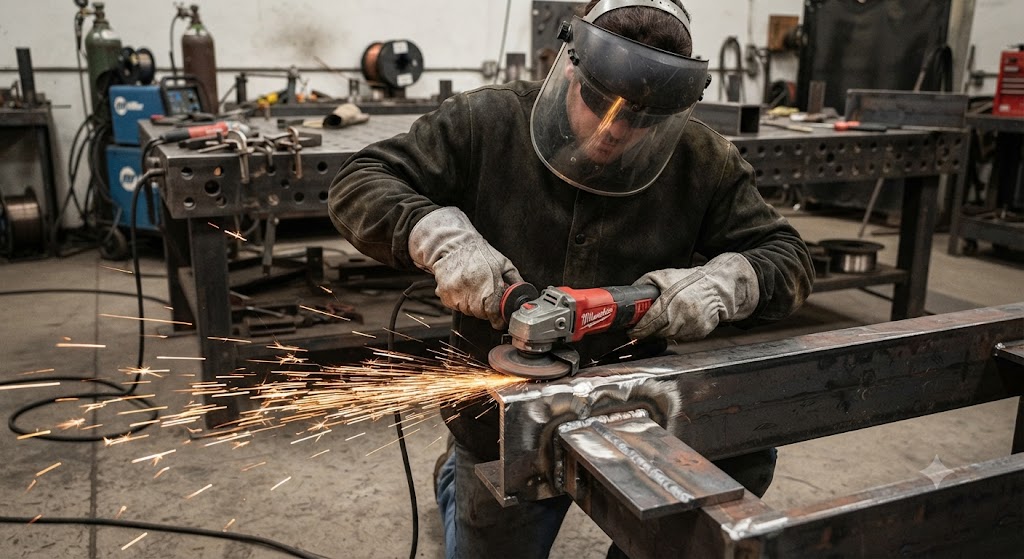
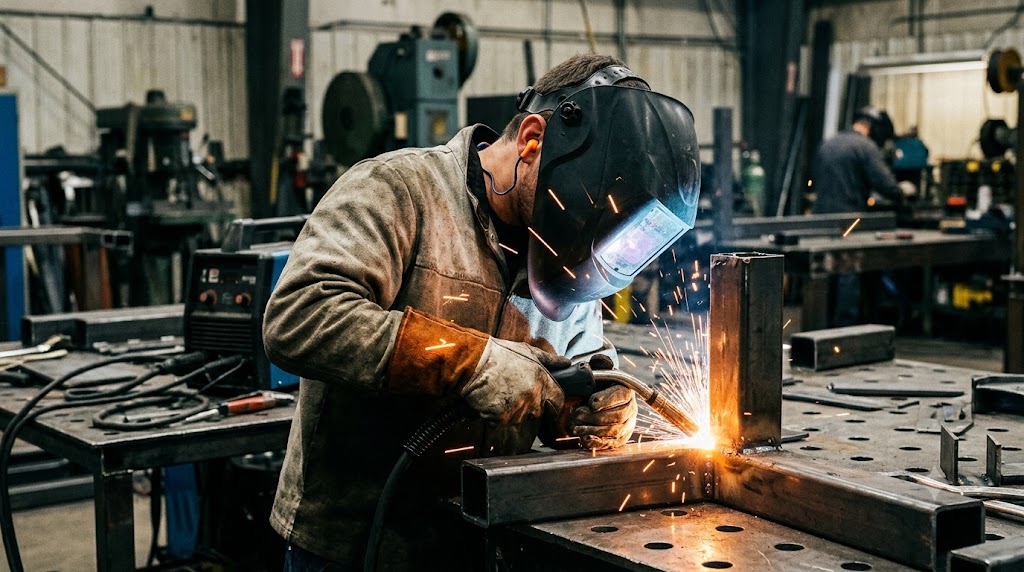
The first is noise. Grinding, gouging, plasma cutting, and needle scaling push well past the levels where OSHA requires hearing conservation, and noise induced hearing loss is permanent and gradual, so it sneaks up on you.[^https://www.nidcd.nih.gov/health/hearing-protectors] The second is spatter. During overhead and out-of-position work, hot droplets of metal fall, and an open ear canal is a perfect target. A molten bead in the ear is not a hypothetical, it is a classic shop injury, and it is exactly why in-canal protection matters for welders more than for most trades.[^https://openwa.pressbooks.pub/welding1/chapter/wa3-3/]
Understanding the NRR
Every hearing protector carries a Noise Reduction Rating, or NRR, measured in decibels. A higher NRR blocks more sound. Foam earplugs typically reach the high end, around 29 to 33 NRR, because they seal inside the canal, while earmuffs usually land in the low to high 20s. In extreme noise you can wear both together for combined protection.[^https://www.3m.com/3M/en_US/hearing-protection-us/support/center-for-hearing-conservation/protect/use-and-care/]
Earplugs vs Earmuffs for Welding
This is where welding breaks from general industry advice.
Foam and pre-molded earplugs are the welder’s default for a reason. They fit easily under a welding hood alongside safety glasses and a respirator, they carry high NRR values, and critically, they physically block the ear canal so spatter cannot drop in. A flame resistant foam plug is the ideal here, because it resists the exact heat hazard you face. The 3M E-A-R Classic foam plug offers an NRR of 29 and is explicitly flame resistant to help in arc flash situations, which makes it a natural welding choice.[^Check on Amazon]
If you want reusable plugs you can pull in and out through the day without rolling foam each time, a tri-flange corded plug like the 3M reusable earplug (NRR 25) rinses clean and stays around your neck between uses.[^Check on Amazon]
Earmuffs are faster to don and doff and easy to share, which suits intermittent grinding stations. Their weakness for welders is real: the headband and cups fight a welding helmet and a hard hat for the same space, they trap heat, and they do nothing to keep spatter out of the canal. For pure grinding away from the arc they are fine. Under a hood they are awkward.
Who should skip earmuffs: anyone doing overhead or out-of-position welding, where spatter protection in the canal is the priority and helmet clearance is tight. Reach for flame resistant foam plugs instead.
A Practical Setup
The combination most working welders land on: flame resistant foam plugs as the everyday base layer under the hood, plus a spun welding cap worn with the bill turned toward the upward-facing ear during overhead work, which adds a fabric barrier against falling spatter. For the loudest gouging or plasma sessions, add earmuffs over the plugs for dual protection. That stack covers both the noise and the sparks without forcing you to choose.
The Bottom Line
Welding ear protection is not the afterthought the gear checklist makes it out to be. It is doing double duty, guarding a nerve you can never repair and a canal that molten metal treats as an open door. Pick flame resistant foam plugs for daily wear, layer earmuffs when the noise spikes, and turn your cap bill toward the sparks overhead. Do that and years from now you will still catch the quiet click of a good weld cooling, a sound most old welders lost long before they realized it was worth protecting.
Frequently Asked Questions
Do I really need ear protection for welding? Yes, for two reasons: grinding, gouging, and plasma work reach damaging noise levels, and in-canal protection blocks hot spatter from entering the ear during overhead work.
Are earplugs or earmuffs better for welding? Earplugs are usually better for welders. They fit under a hood, carry high NRR values, and physically block spatter from the ear canal, while earmuffs fight the helmet for space and do not protect the canal.
What NRR do I need? Higher is better. Foam plugs commonly reach 29 to 33 NRR, and for extreme noise you can wear plugs and muffs together for added protection.
Why do welders need flame resistant earplugs specifically? Because spatter and arc flash create heat near the ears. Flame resistant foam plugs resist that heat and are safer to store and wear around hot work than untreated plugs.
Can spatter actually get into your ear while welding? Yes. During overhead and out-of-position welding, molten droplets fall, and an open ear canal is a direct target. In-canal plugs block that path.
Does a welding cap help protect my ears? Yes. Turning the cap bill toward your upward-facing ear during overhead work adds a fabric barrier that helps deflect falling spatter, alongside your earplugs.
Can I wear earplugs and earmuffs at the same time? Yes. Doubling up is a recognized method for very high noise, combining the attenuation of both for extra protection during loud gouging or plasma cutting.
References
- NIDCD (NIH), Hearing Protectors and NRR: https://www.nidcd.nih.gov/health/hearing-protectors
- Introduction to Welding, PPE for Ears (Open Washington): https://openwa.pressbooks.pub/welding1/chapter/wa3-3/
- 3M Hearing Protector Use and Care, NRR guidance: https://www.3m.com/3M/en_US/hearing-protection-us/support/center-for-hearing-conservation/protect/use-and-care/