Welding Safety Checklist Guide
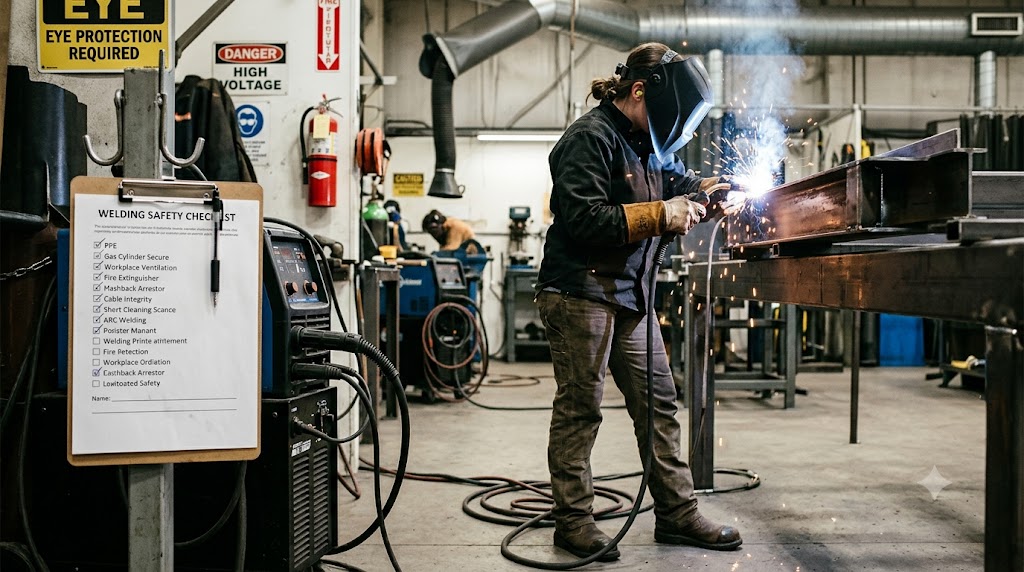
Welding involves fire, electricity, UV radiation, toxic fumes, and hot metal. A systematic pre-weld safety check prevents the most common welding injuries and shop fires. Use this checklist before every welding session.
Pre-Weld Safety Checklist
Personal Protective Equipment (PPE)
- Welding helmet - auto-darkening verified functional (ADF darkens on test strike); shade set correctly for process
- Safety glasses - worn under the helmet for grinding protection
- Welding gloves - appropriate for process (MIG, TIG, or stick); no holes or worn-through areas
- FR jacket or leather jacket - all buttons/snaps fastened; no synthetic clothing underneath
- Leather boots - steel toe preferred; no synthetic/athletic shoes
- Welding cap - bill backward; no synthetic fiber hats
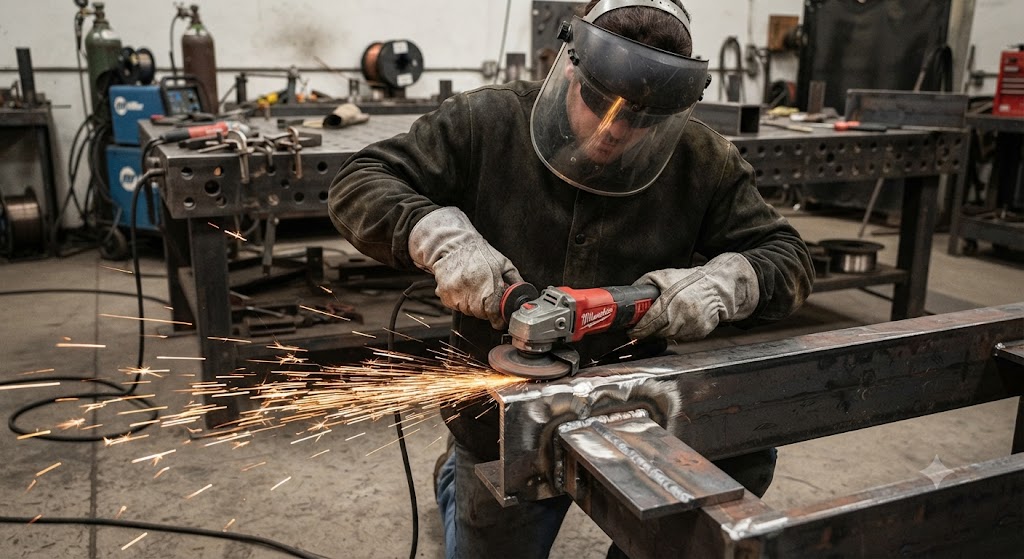
- Hearing protection - if grinding operations will be performed
- Respirator - if welding galvanized, coated, or stainless steel, or in poorly ventilated space
Fire Prevention
- Clear 35-foot radius of flammable materials from welding area (NFPA 51B requirement)
- Fire extinguisher accessible - Class ABC rated, charged, and within reach
- Fire watch - have a second person designated to watch for fire if welding near combustibles
- 30-minute post-weld fire watch - spatter can smolder in hidden locations; check 30 minutes after completing work
- Welding screen - in place to protect bystanders from UV and spatter
Electrical Safety
- Ground clamp connected - clamped to the work or welding table close to the weld area
- No standing water - welding in wet conditions is a serious electrocution hazard
- Electrode holder / gun not left energized unattended (set welder to off or standby)
- Cables inspected - no visible damage to ground cable or welding lead insulation
- Work not in contact with building electrical ground - stray current can damage equipment
Ventilation and Fume Control
- Ventilation active - shop ventilation fan, fume extractor, or doors open
- Wind direction confirmed - fumes should not blow toward the welder’s breathing zone
- Identify base metal - galvanized, zinc-coated, or painted materials require respirator use
- Confined space protocol - if welding in a confined space, additional ventilation and gas monitoring required
Equipment Check
- Gas flow set - shielding gas flowing at 20–25 CFH (MIG); verify with a test
- Wire/electrode installed correctly - proper size for process; no kinks or bird-nesting
- Connections tight - ground clamp, gun connection, and all quick-connects secure
- Consumables checked - contact tip, nozzle, and liner in good condition
- Cylinder secured - gas cylinder chained or strapped upright; cap on when not in use
Common Welding Hazards and Prevention
| Hazard | Prevention |
|---|---|
| Arc eye (photokeratitis) | Auto-darkening helmet; welding screens for bystanders |
| Burns from spatter | FR/leather jacket; welding cap; gloves; leather boots |
| Fume inhalation | Ventilation; fume extractor; respirator for hazardous materials |
| Electric shock | Dry conditions; insulated equipment; proper grounding |
| Fire from spatter | 35’ clearance; fire extinguisher; fire watch |
| Cylinder explosion | Secured upright; no heat near cylinder; cap when not in use |
| Metal fume fever | Respirator for galvanized/zinc-coated steel; ventilation |
Post-Weld Checklist
- Turn off welder and shielding gas
- Replace cylinder cap if cylinder will not be used
- Allow all metal to cool before handling - hot metal looks identical to cold metal
- Mark hot metal with chalk or soapstone if leaving the area
- Conduct 30-minute fire watch
- Store electrode holder or MIG gun safely (not energized and hanging free)
- Clean up spatter and debris
FAQs
What PPE is required for welding? At minimum: auto-darkening welding helmet, welding gloves, FR or leather jacket, leather boots, and safety glasses. Respirator required for galvanized/coated materials or poor ventilation.
How far away should flammable materials be from welding? NFPA 51B specifies 35 feet from the welding arc. If 35 feet is not possible, use welding screens and fireproof blankets to shield combustibles.
How long should you fire watch after welding? A minimum of 30 minutes after the last weld is completed. Spatter and sparks can smolder in hidden locations and ignite long after welding stops.