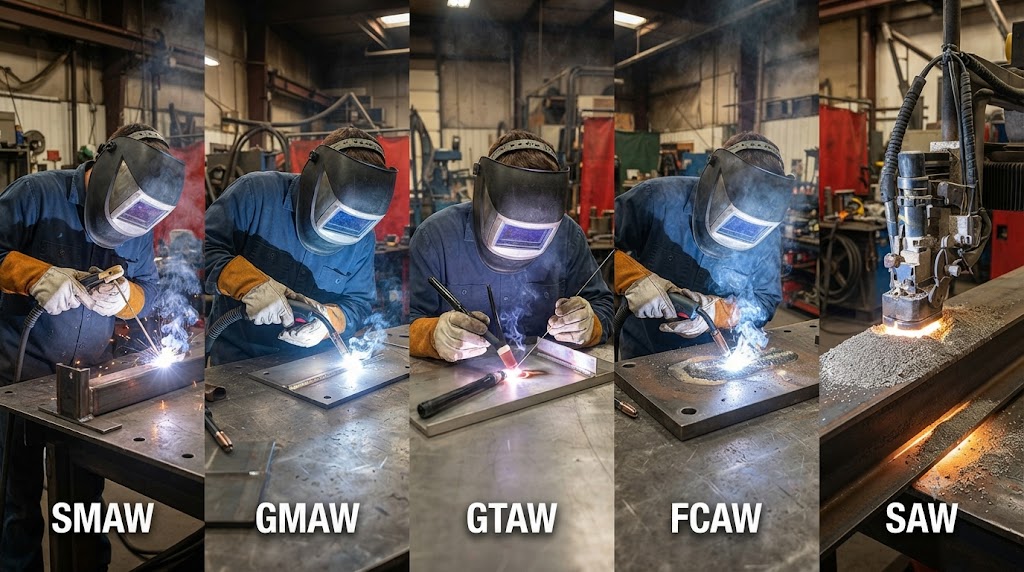
Welding Safety Gear Full Checklist: Helmet, Gloves, Jacket, Boots, Respirator
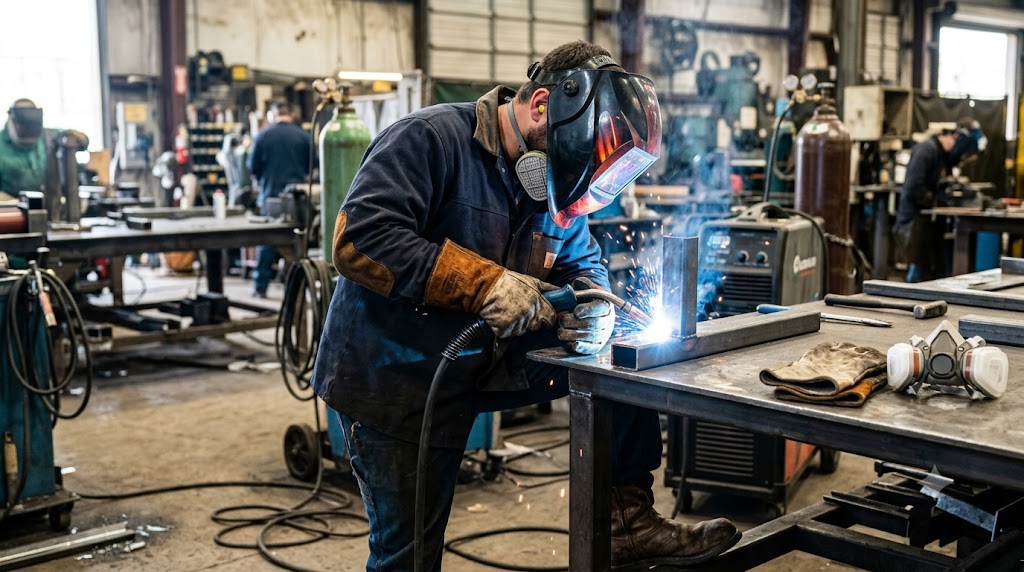
When I was an apprentice, an older welder handed me a welding helmet and a pair of gauntlet gloves and told me that was all I needed. It was not bad advice for the early 1990s, but it was incomplete. Over the years I have watched people take arc flash to the eyes, burn through synthetic-blend pants, and send themselves to the doctor for lung problems they attributed to something other than their daily fume exposure. The reality is that welding PPE has a system to it. Each piece covers a different exposure, and a gap in one area can undo the protection in every other area. This checklist covers every category from helmet to boots so you can confirm your setup is actually complete.
The Complete Welding PPE System
Welding exposes you to multiple simultaneous hazards: arc flash UV and infrared radiation, electric shock, heat and fire from spatter and slag, toxic metal fume particulates, loud noise from grinding and plasma, and contact burns from hot metal. Each of these hazards requires a specific type of protection. No single piece of PPE covers all of them.
The most dangerous gap most welders have is respiratory protection. The arc hazard and the burn hazard are visible and immediate. The fume hazard is invisible and cumulative. Welders who are rigorous about helmet and gloves but skip the respirator are protecting themselves from the hazards they can see while ignoring the one that causes the most long-term damage.
The Welding Safety Gear Checklist
| PPE Category | Minimum Standard | Notes |
|---|---|---|
| Welding helmet | ANSI Z87.1+, correct shade for process | Auto-darkening: shade 9 to 13 for MIG/stick, shade 5 to 8 for TIG |
| Welding gloves | Leather appropriate to process | MIG and stick: heavy cowhide. TIG: fine grain goatskin or kidskin |
| Welding jacket or sleeves | FR cotton or leather | No synthetic blends. FR cotton minimum for most applications |
| Welding pants | FR work pants or leather chaps over FR base | No synthetic fibers that melt. Standard cotton jeans are marginal |
| Welding boots | Leather upper, steel or composite toe, no synthetic sole | Leather upper required, no mesh panels, no synthetic soles that melt |
| Respirator | P100 half-mask minimum for indoor welding | PAPR for stainless, galvanized, confined spaces |
| Ear protection | Plugs or muffs rated NRR 25+ for grinding and plasma | Welding arc alone is typically below 85 dB threshold |
Helmet
Your welding helmet must be ANSI Z87.1 certified, which means it has passed independent testing for impact resistance, UV and IR filtration, and optical clarity. Look for the Z87.1 marking on the lens and the shell. A helmet that is not marked is not certified, regardless of what the packaging says.
For auto-darkening helmets, the correct shade range matters. MIG welding on carbon steel at standard amperages requires shade 10 to 12 depending on wire diameter and amperage. Stick welding typically uses shade 10 to 14. TIG welding at low amperages can use shade 8 to 10. AWS Z49.1 contains the shade recommendation tables for each process and amperage range.
A helmet with a fixed shade lens is safe and functional. An auto-darkening helmet improves productivity significantly for most welding tasks but is not inherently safer than a fixed shade lens if both are properly rated.
Gloves
Welding gloves must be leather. Synthetic gloves melt and fuse to skin under welding heat. The leather type and weight depend on the process. MIG and stick welding require heavy cowhide or elk hide gauntlet-style gloves with enough protection to handle hot metal and slag. TIG welding requires lighter fine-grain goatskin or kidskin gloves that maintain enough finger sensitivity for electrode and torch manipulation. Using heavy MIG gloves for TIG welding is technically protective but produces poor results because you cannot feel what you are doing.
For grinding, use leather work gloves or welding gloves with the gauntlet style. Standard cut-resistant gloves without leather construction can still melt or ignite around grinding sparks.
Jacket and Upper Body
Your torso and arms are exposed to sparks, UV arc flash, and radiant heat during welding. An FR (flame resistant) cotton welding jacket or a leather welding jacket is the correct protection. FR cotton is the most common everyday choice because it is lighter and cooler than leather while still providing self-extinguishing protection. Leather provides more robust protection for heavy overhead and high-spatter processes.
Never wear synthetic fiber clothing, nylon, or polyester blends when welding. These materials melt when exposed to arc flash radiation or direct spatter contact and cause severe burns that are significantly more serious than the same exposure to cotton or leather.
Pants
Standard blue jeans are marginal for welding. Denim cotton does not melt, but it ignites more readily than FR-rated cotton and provides no significant arc flash protection. FR work pants in a cotton or cotton-nylon FR blend are the proper choice for regular welding. For heavy overhead welding or high-spatter processes, leather chaps worn over your FR pants add a sacrificial outer layer where the exposure is highest.
Boots
Welding boots must have a leather upper with no mesh panels. Mesh panels melt and allow hot spatter through to your feet. Synthetic soles can melt on hot steel surfaces. Steel-toed or composite-toed boots protect against dropping heavy material. Pull-on styles with no laces reduce the risk of a spark catching in a lace loop or eyelet. Avoid safety boots with fabric panels, synthetic overlays, or any non-leather exterior surface on the upper.
Respirator
For indoor welding on carbon steel with any regularity, a P100 half-mask respirator is the minimum standard. For stainless steel, galvanized steel, or any welding in confined or poorly ventilated spaces, upgrade to a PAPR. See the dedicated respirator guides in this series for product selection.
Ear Protection
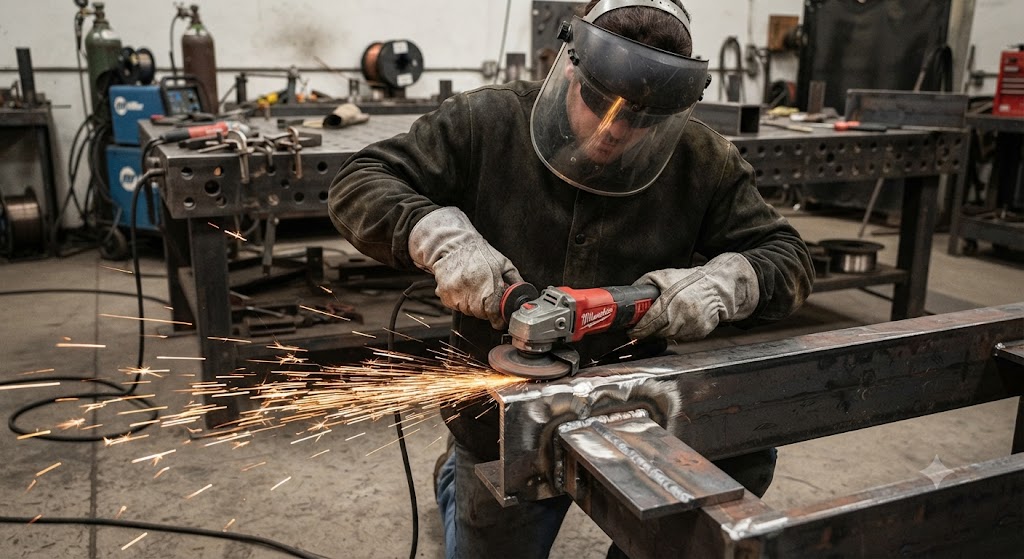
The welding arc itself typically does not generate enough noise to require hearing protection. Grinding, plasma cutting, and air arc gouging all produce noise levels that exceed the OSHA 85 dB action level and in many cases reach well above 100 dB. Wear ear plugs or earmuffs rated NRR 25 or higher when grinding or plasma cutting. Keep them accessible and wear them consistently, not just when the noise gets annoying.
The Bottom Line
A complete welding PPE setup is helmet plus gloves plus jacket plus pants plus boots plus respirator plus ear protection for grinding. Every piece covers a different hazard. Skipping any one of them leaves a specific exposure unprotected. The respiration gap is the most commonly skipped and the most consequential long-term. Build your complete set before you need it and use it consistently.
Frequently Asked Questions
Is a welding helmet enough eye protection for welding? A properly rated and fitted welding helmet is the primary arc flash and UV eye protection for the welder. Bystanders require separate welding curtain or screen protection.
Can I wear regular jeans for welding? Cotton jeans are marginal. They do not melt but they ignite more readily than FR-rated fabrics and provide no arc flash protection. FR-rated work pants are the correct choice for regular welding.
What kind of gloves do I need for TIG welding? Fine-grain goatskin or kidskin TIG welding gloves are the correct choice. They provide burn protection while preserving the tactile sensitivity that TIG welding technique requires.
Do I need ear protection for welding? For the welding arc alone, typically no. For grinding, plasma cutting, and air arc gouging, yes. Those processes regularly exceed 85 to 100 dB. NRR 25+ ear protection is appropriate.
What respirator do I need for welding? A P100 half-mask respirator is the minimum for regular indoor welding on carbon steel. A PAPR is appropriate for stainless, galvanized, and confined space work.
Are leather welding jackets better than FR cotton? Leather provides more protection for heavy overhead and high-spatter work. FR cotton is lighter and cooler for everyday welding. Most welders use FR cotton for daily work and leather for specific high-exposure tasks.
What boots should I wear for welding? Leather upper, no mesh panels, steel or composite toe, no synthetic sole. Pull-on or lace-up with leather eyelets. No mesh, no synthetic overlays.
What does ANSI Z87.1 mean for a welding helmet? ANSI Z87.1 is the American National Standard for occupational and educational eye and face protection. A helmet marked Z87.1 has passed independent testing for impact resistance, UV filtration, shade accuracy, and optical clarity.
References
https://www.osha.gov/laws-regs/regulations/standardnumber/1910/1910.252 https://www.aws.org https://www.nfpa.org
SEO Title: Welding Safety Gear Checklist: Full PPE Guide