Why Do Welds Crack? Hot, Cold, and Crater Cracks Explained
A crack is the defect no welder wants to see, because unlike a little porosity or undercut, a crack is almost never acceptable. A crack is a break waiting to spread. But cracks are not all the same: some appear while the weld is still glowing, some show up hours or days after the job is done, and some form in the little pit at the end of a bead. Understanding the three main types tells you exactly what went wrong and how to stop it. This explainer covers why welds crack, breaking down hot cracking, cold cracking, and crater cracks.
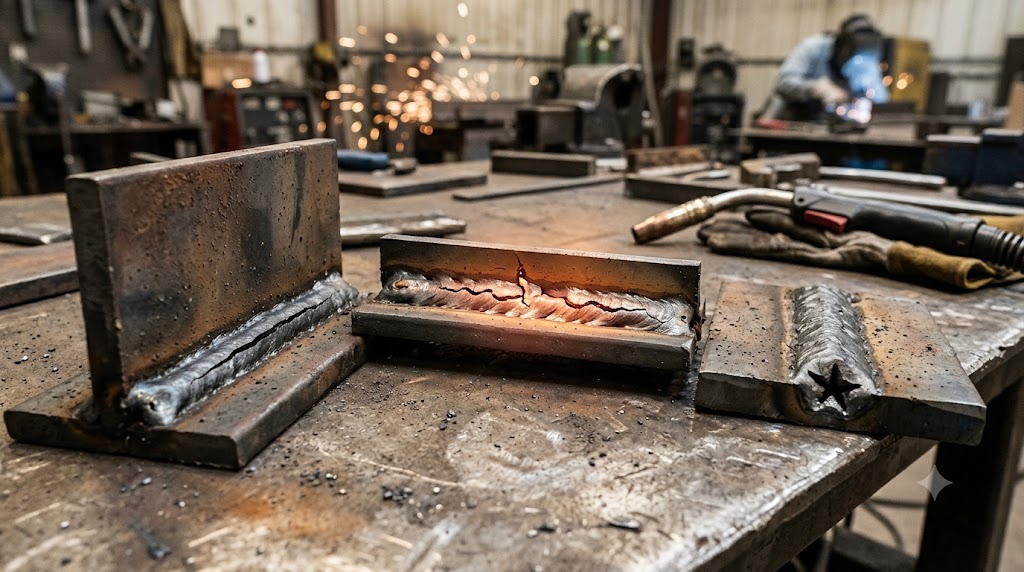
Welds crack when stresses in the cooling weld exceed the metal’s ability to withstand them, and the cause depends on the type. Hot cracks form during solidification, cold cracks form after cooling (often from hydrogen), and crater cracks form in the pit at the end of a weld. Here is each one.
The three main crack types
Weld cracks fall into three familiar categories:
- Hot cracks, which form at high temperature as the weld solidifies.
- Cold cracks, which form after the weld has cooled, sometimes days later.
- Crater cracks, which form in the crater at the end of a weld bead.
Each has a different cause, and knowing which one you have points straight to the fix.
Direct answer: why welds crack
Here is the short version of each type:
- Hot cracking: happens during solidification, when shrinkage stress pulls apart a weld that is still partly liquid, worsened by certain impurities and crack-prone alloys.
- Cold cracking: happens after the weld cools, driven by a combination of dissolved hydrogen, a hard brittle microstructure, and residual stress; often delayed by hours or days.
- Crater cracking: happens in the crater left when the arc stops too abruptly, as that small pool shrinks and cracks.
All three come down to stress meeting a weld that cannot resist it, but the conditions differ.
Hot cracking
Hot cracking, also called solidification cracking, happens at high temperature while the weld is still freezing. As the weld pool solidifies, it shrinks, and if the metal is pulled apart by that shrinkage stress before it has fully solidified, a crack forms along the centerline or between the solidifying grains. Two things make it worse: certain impurities like sulfur and phosphorus that create low-melting films between grains, and alloys prone to wide freezing ranges. Aluminum, for instance, is especially susceptible to hot cracking because it shrinks a lot as it solidifies, which is one reason aluminum welding uses specific filler alloys chosen to resist cracking. To prevent hot cracking, welders control the weld’s shape (avoiding deep, narrow beads that concentrate stress), choose the right filler for the alloy, manage heat input, and reduce restraint so the joint is not fighting itself as it shrinks.
Cold cracking
Cold cracking, also called hydrogen-induced cracking, is the sneaky one because it often appears after the weld has cooled, sometimes hours or even days later, which is why it is also called delayed cracking. It needs three things at once: dissolved hydrogen in the weld, a hard and brittle microstructure (such as martensite in hardenable steels), and tensile residual stress. Remove any one and the crack usually will not form. The hydrogen comes from moisture and contamination; the hard microstructure comes from fast cooling of certain steels; and the stress comes from the natural shrinkage and restraint of the joint. Cold cracks often form in the heat-affected zone. The classic prevention is a low-hydrogen approach: use dry, low-hydrogen electrodes, clean the metal, and preheat and control interpass temperature to slow cooling so hydrogen can escape and the microstructure stays less brittle. Managing hydrogen and cooling rate is the heart of preventing cold cracks.
Crater cracks
Crater cracks are the small but serious cracks that form in the crater, the depression left when a welder stops the arc too quickly at the end of a bead. When the arc breaks suddenly, that last little pool of molten metal is left thin and unsupported, and as it cools and shrinks it can crack, often in a distinctive star shape. These cracks matter because they can propagate into the rest of the weld. The fix is simple technique: fill the crater before breaking the arc. Many welders pause at the end of the bead to build the crater back up, reverse direction briefly back over the weld, or use a machine’s crater-fill setting that tapers the current down so the pool solidifies fully supported. Because the cause is purely how the weld is ended, crater cracks are among the most preventable of all, just do not leave the crater unfilled.
The bottom line
Welds crack when stress overcomes the metal’s ability to resist it, and the type tells you the cause. Hot cracks form during solidification from shrinkage stress, impurities, and crack-prone alloys like aluminum, and are prevented with the right filler, good bead shape, and less restraint. Cold cracks form after cooling from the combination of hydrogen, a hard microstructure, and residual stress, and are prevented with low-hydrogen practices, clean metal, and preheat that slows cooling. Crater cracks form in an unfilled crater at the end of a bead and are prevented simply by filling the crater before breaking the arc. Since a crack is almost never acceptable, knowing which type you are dealing with is the fastest route to stopping it for good.
FAQ
What is the difference between hot cracking and cold cracking? Hot cracking forms at high temperature while the weld is still solidifying, caused by shrinkage stress, impurities, and crack-prone alloys. Cold cracking forms after the weld has cooled, sometimes hours or days later, from the combination of dissolved hydrogen, a hard brittle microstructure, and residual stress. Hot cracks are a solidification problem; cold cracks are a hydrogen and cooling problem.
What causes cold cracking in welds? Cold cracking needs three things together: dissolved hydrogen (from moisture and contamination), a hard brittle microstructure (from fast cooling of hardenable steels), and tensile residual stress. Remove any one and it usually will not form. That is why prevention focuses on low-hydrogen electrodes, clean dry metal, and preheat with controlled interpass temperature to slow cooling and let hydrogen escape.
What is a crater crack and how do you prevent it? A crater crack is a crack, often star-shaped, that forms in the crater left when the arc is stopped too abruptly at the end of a bead. The thin, unsupported pool shrinks and cracks as it cools. Prevent it by filling the crater before breaking the arc, pausing to build it up, reversing briefly back over the weld, or using a crater-fill setting that tapers the current down.
Why does aluminum crack more than steel? Aluminum is especially prone to hot (solidification) cracking because it shrinks a lot as it solidifies, generating high stress in the freezing weld. Its wide freezing range and sensitivity to composition add to the risk. This is why aluminum welding uses specific filler alloys chosen to resist cracking, along with good joint design and heat control to manage the shrinkage.
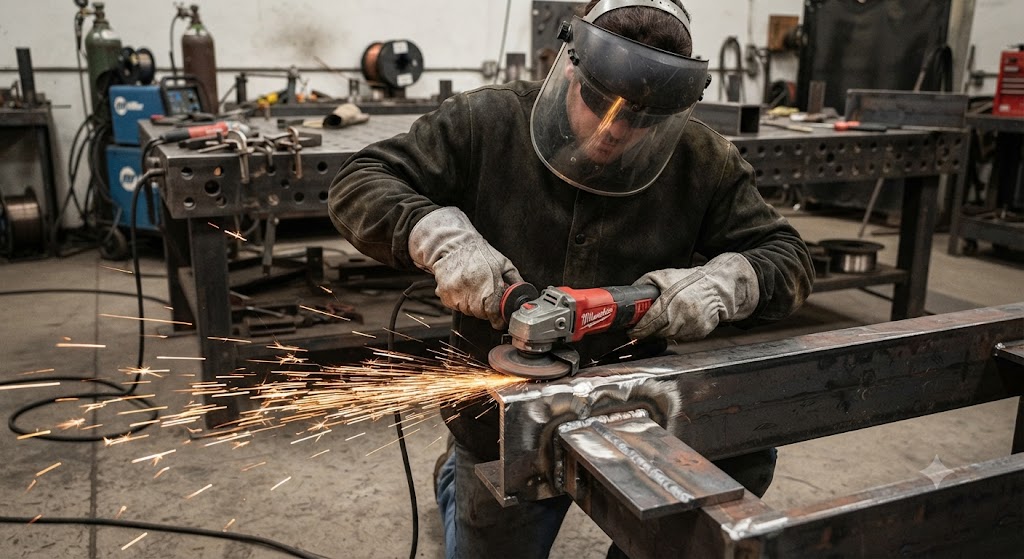
Can a cracked weld be repaired? Yes, but it must be done properly. The crack has to be fully removed, usually by grinding or gouging it out along its entire length (including a little beyond each end), the cause corrected, and the area rewelded with the right procedure. Simply welding over a crack does not fix it, because the crack remains underneath and can keep growing.
Are weld cracks ever acceptable? Almost never. Unlike small amounts of porosity or shallow undercut, which some codes allow within limits, cracks are generally treated as rejectable defects that must be removed and repaired. A crack is a discontinuity that concentrates stress and tends to grow under load, so welding codes typically prohibit cracks of any size in the finished weld.
References
- CWB Group, what causes weld hot and cold cracking and how to avoid it (industry), cwbgroup.org.
- TWI, hydrogen (cold) cracking and preheat to reduce cracking risk (industry), twi-global.com.
- Hobart Brothers and Lincoln Electric guidance on crater cracks and aluminum cracking (manufacturers), hobartbrothers.com, lincolnelectric.com.