Butt Welding Clamps Guide
Anyone who has tried to butt-weld two flat panels together knows the problem: the moment you tack one spot, the rest of the seam wants to pull, buckle, or step out of line. Sheet metal moves as it heats, and holding two edges perfectly flush along a whole seam is genuinely hard by hand. Butt welding clamps solve this. They grip both panels and hold them edge-to-edge, in the same plane, with a small even gap, so you can tack down a clean seam that needs little grinding afterward. This guide covers how they work, where they shine, and which to buy.
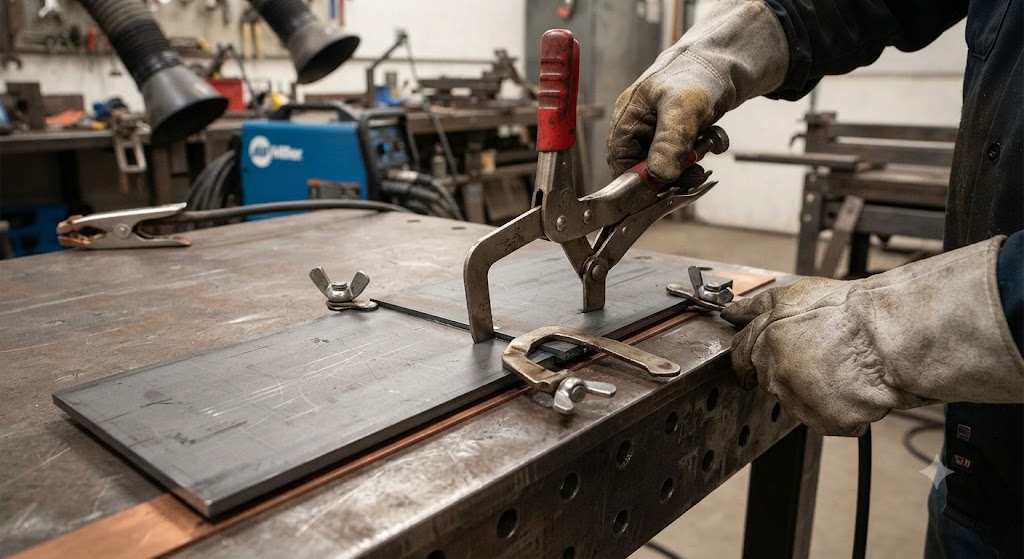
Butt welding clamps hold two panels edge-to-edge in the same plane with a small, consistent gap for clean butt welds. Often called intergrips, they clamp from one side and keep panels flush along a seam. Here is how to use them.
Why butt welding clamps matter
For seam welding flat material, these clamps earn their place:
- They keep panels flush, in the same plane, so the finished seam is flat with no step to grind down.
- They set a consistent gap, typically around 0.040 inch, which is ideal for a clean butt weld.
- They resist movement, holding the panels as heat tries to pull them.
- Many clamp from one side, so you can hold panels even without access behind them.
The result is a straighter, flatter seam with far less finishing work, which is why body and fabrication shops keep sets of them.
Direct answer: how they work
Most butt welding clamps, often sold as intergrips, follow the same clever idea:
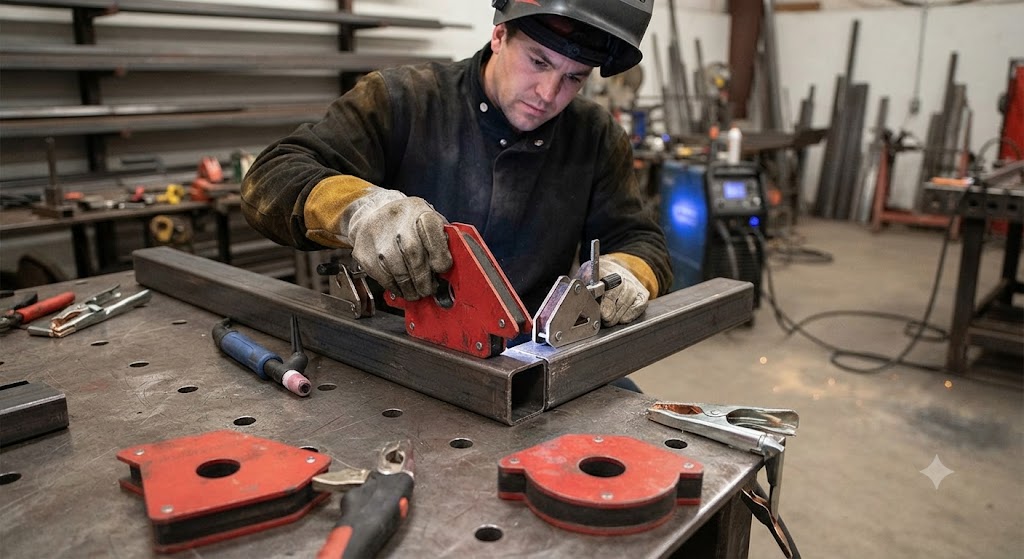
- A pin or step passes through or between the panels, setting them at a fixed small gap and in the same plane.
- A spring or wing-nut mechanism clamps the two edges down flush on either side of that gap.
- You space several clamps along the seam, holding the whole length flush and evenly gapped.
- You tack in the gaps between clamps, then move the clamps and finish the seam.
Set, tack, leapfrog the clamps down the seam, and you get a flat, even butt joint.
The gap that makes a clean weld
The small gap these clamps hold, often around 0.040 inch (about 1 mm), is not a flaw, it is the feature. A butt weld needs a little space between the edges so the weld penetrates through rather than just piling on top, and holding that gap consistently along the whole seam is what produces an even, sound weld with full fusion. Just as important, the clamp keeps both panels in the same plane, so one edge does not sit proud of the other. That flatness is what saves you grinding time: a seam that is level and evenly gapped needs only light dressing, while a stepped or wavy seam means hours with a grinder. Consistent gap plus flush panels equals a clean butt weld.
Not just for auto body
Butt welding clamps are famous in auto body work, and for good reason, since replacing a rusted panel or floor section is exactly the flush-seam job they were made for. But they are just as useful in general fabrication whenever you butt-join sheet or plate: repairing a steel panel, joining sheet for an enclosure, or seaming any flat material where you want a clean, level joint. They work on flat panels and, with the right clamp, gently curved ones too. So while the auto body crowd made them popular, do not overlook them for shop and repair work; anytime you need two flat edges held flush with an even gap, an intergrip-style clamp earns its keep.
Which butt welding clamps to buy
Here are three options, mostly sold as multi-packs since you space several along a seam.
- Eastwood 8-piece intergrip welding clamp set holds panels flush with a consistent 0.040 inch gap and clamps from one side, a well-regarded set from a name trusted in auto restoration. Its limitation is that eight clamps suit shorter seams; long seams want more.
- Pumtus 24-piece butt welding clamp set gives you a large count of clamps so you can space them closely along long seams for even, flush holding. The trade-off is that a big multi-pack of general-brand clamps varies more in finish than a premium set.
- 8-piece butt welding clamp holder set is a straightforward set that sets the panels at a small even gap and holds them flush for tacking, a practical starter set for occasional panel work. Its limitation is the smaller clamp count.
How to choose: for a trusted quality set, the Eastwood intergrips. For long seams needing many clamps, the Pumtus 24-piece set. For occasional light panel work, the 8-piece holder set.
Who should skip these: welders joining only thick plate with heavy edge prep, who will rely on standard clamps and fixtures rather than sheet intergrips.
The bottom line
Butt welding clamps solve the hardest part of seaming flat metal: holding two edges flush and evenly gapped while heat tries to pull them apart. By setting panels in the same plane with a consistent gap of around 0.040 inch, intergrip-style clamps give you a flat, sound seam that needs little grinding, and many clamp from one side so you do not need access behind the work. They shine in auto body repair but earn their keep in any sheet fabrication. Space a set along the seam, tack in the gaps, leapfrog down the line, and finish with a clean butt joint.
FAQ
What is a butt welding clamp used for? It holds two panels edge-to-edge in the same plane with a small, consistent gap so you can tack and weld a clean butt seam. Often called an intergrip, it keeps the panels flush along the seam, producing a flat joint that needs little grinding afterward.
What gap do butt welding clamps set? Most hold a small gap of around 0.040 inch (about 1 mm). That space lets the weld penetrate through the joint rather than sitting on top, and holding it consistently along the seam produces an even, fully fused butt weld.
Are butt welding clamps only for auto body? No. They are popular in auto body for panel replacement, but they are just as useful in general fabrication anytime you butt-join sheet or plate, such as panel repairs, enclosures, or seaming flat material where you want a clean, level joint.
How many butt welding clamps do I need? Enough to space several along the seam so the whole length is held flush and evenly gapped. Short seams may need only a handful, while long seams call for many clamps spaced closely, which is why larger multi-packs exist. You tack in the gaps, then leapfrog the clamps down.
Do intergrip clamps work on curved panels? Many work on flat panels and gently curved ones, since the clamp holds the two edges flush at the seam rather than the whole panel. For strongly curved work, check that the specific clamp is rated for it; some sets handle mild curves better than others.
Why do butt welded seams need an even gap? A consistent gap lets the weld penetrate through both edges for full fusion, while an uneven gap causes spots of poor penetration or burn-through. Butt welding clamps hold that even gap and keep the panels flush, so the seam welds soundly and finishes flat.
References
- Eastwood guidance on intergrip and butt welding clamps for panel work, including gap and flush alignment (retailer resource), eastwood.com.
- Miller Electric and Lincoln Electric guidance on sheet metal fit-up and butt joint preparation (manufacturers), millerwelds.com, lincolnelectric.com.
- The Fabricator guidance on sheet metal joint fit-up and distortion control (industry publication), thefabricator.com.