GVS Elipse Respirator for Welding Review: The Low-Profile P100 That Fits Under Your Hood
Most welders discover the GVS Elipse the same way: they get tired of a bulky 3M half mask fighting the bottom of their welding helmet, they go looking for something slimmer, and this odd little pancake-shaped respirator keeps coming up. So the real question this GVS Elipse respirator for welding review answers is simple. Does going low profile cost you protection, or do you actually get both? Having run one under a hood, here is the honest read.
What Makes the Elipse Different
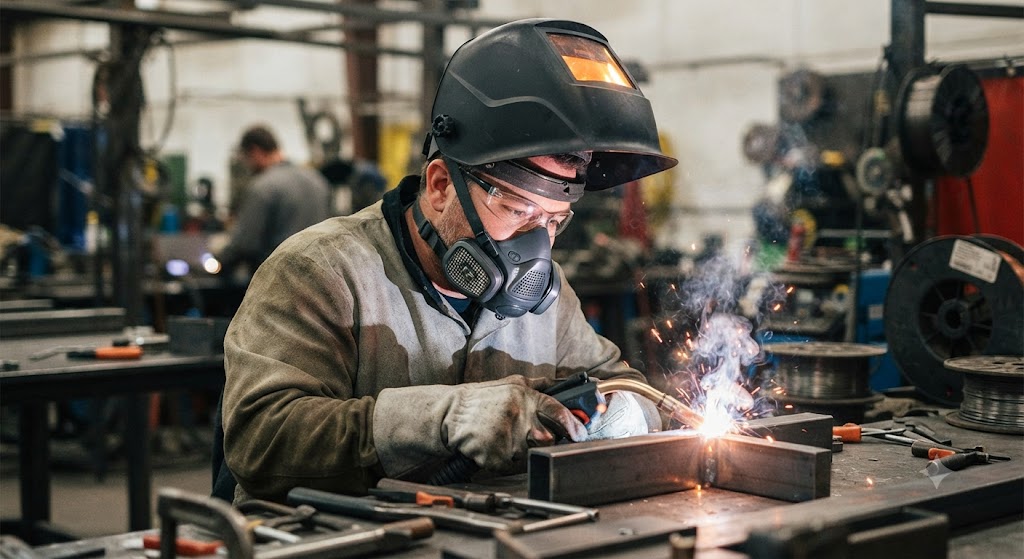
The GVS Elipse is a NIOSH approved P100 half mask (approval number TC-84A-6949) built around two thin, pleated filters that sit flat against your cheeks instead of bulging forward like cartridge respirators.[^https://www.gvs-rpb.com/assets/Elipse-P100-TDS.pdf] The whole assembly weighs about 4.5 ounces, which you notice the first time you wear it for a full session and your jaw is not sore from holding up a mask.
That flat filter geometry is the entire point for welders. The low profile keeps the filters out from under the helmet and out of the way when you tip your head back for overhead work, and it does not crowd safety glasses. It comes in two common sizes: the SPR457 in medium/large and the SPR451 in medium.[^Check on Amazon]
How It Performs for Welding
The P100 media does exactly what P100 should: it captures 99.97 percent of particles at 0.3 microns and resists oil based aerosols, which is the correct rating for the ultrafine metal fume welding produces. Against manganese, chromium, iron, and the rest of the mild steel plume, the filtration is not the compromise here.
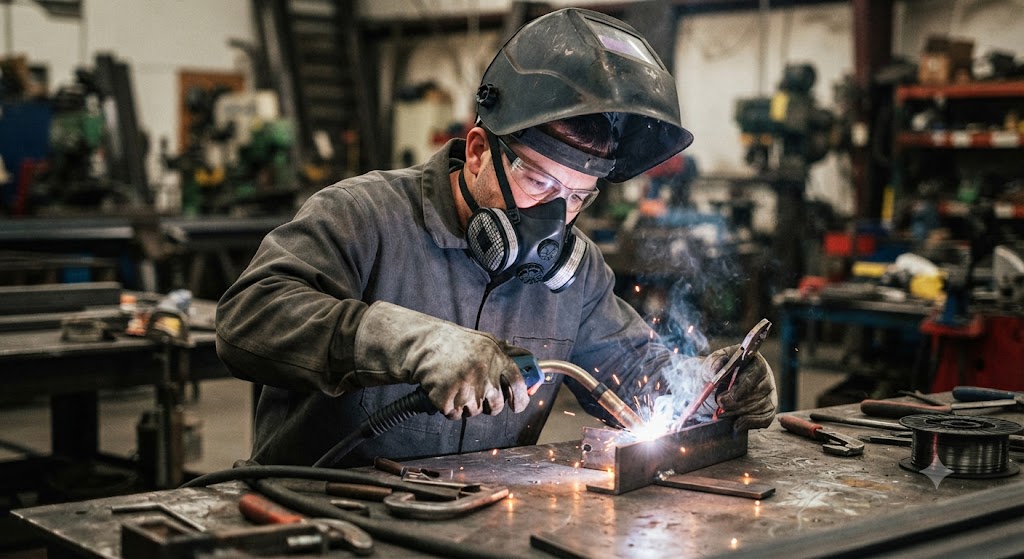
The fit is the standout. The mask body is a soft, medical grade TPE that is latex and silicone free, and the four point strap pulls it into a clean seal without the pinch some rigid masks cause. Under a welding hood the Elipse genuinely disappears in a way a 3M 6000 series never quite does. For TIG work where you are hunched close to the puddle, the compact profile keeps you from feeling boxed in.
Filters are reusable and swappable, and replacements are easy to source, so the mask body soldiers on for years while you rotate media as it loads.
Where It Falls Short
Two honest flaws. First, and this is not unique to the Elipse but you must hear it: the standard Elipse P100 is a particulate respirator only. It does nothing against gases or organic vapors. If you weld coated, painted, or solvent-cleaned metal that off-gasses, you need the nuisance OV version at minimum or a proper vapor cartridge setup. Do not treat this mask as a solution for fumes it was never built to filter.
Second, sizing runs narrow. The Elipse is famous for fitting slim and narrow faces beautifully and frustrating wider or rounder faces, where the seal can break at the jaw. If you have a broad face, size up to the SPR457 and be prepared to seal check carefully, because a low profile mask that does not seal is just a fashionable way to breathe fume.
Who should skip it: anyone with a wide or heavily bearded face who cannot get a repeatable seal, and anyone whose main hazard is vapor rather than particulate. Those welders are better off with a fit-tested cartridge respirator or supplied air.
Elipse vs a Traditional Cartridge Half Mask
Against a 3M 6000 series, the trade is clear. The 3M platform wins on versatility, because you can bayonet on vapor and gas cartridges for painting or coated metal. The Elipse wins on comfort, weight, and helmet clearance, and it seals well on the faces it fits. For a pure particulate welder who lives under a hood, the Elipse is the more comfortable daily driver. For a fabricator who also paints and degreases, the modular 3M earns its bulk.
The Bottom Line
This GVS Elipse respirator for welding review lands on a recommendation with one condition. If the mask fits your face and your hazard is weld particulate, the Elipse is one of the most comfortable ways to wear real P100 protection under a helmet, and comfort is what actually keeps a respirator on your face instead of hanging around your neck. Confirm the seal, respect its particulate-only limit, and it becomes the mask you forget you are wearing, which for a low profile respirator is the whole job done right.
Frequently Asked Questions
Is the GVS Elipse good for welding? Yes, for particulate protection. It is a NIOSH P100 half mask that filters 99.97 percent of fine particles, and its low profile fits well under a welding helmet.
Does the GVS Elipse protect against welding gases and vapors? The standard Elipse P100 is particulate only. For organic vapor odors choose the nuisance OV version, and for real vapor or gas hazards use a proper cartridge or supplied air respirator.
Which size Elipse should I get, SPR451 or SPR457? The SPR451 is medium and the SPR457 is medium/large. Wider faces should size up to the SPR457 and perform a careful seal check.
Will the Elipse fit under my welding helmet? Yes. The flat, pleated filters give it a very low profile that clears most welding hoods and does not crowd safety glasses.
Are the filters reusable? The mask is designed for repeated use and the P100 filters are changeable. Replace them when breathing resistance rises or they become damaged or wet.
Does it work for beards? Any tight fitting respirator struggles to seal over facial hair. A beard along the seal line will break the fit, so the Elipse is best on a clean seal area.
How does it compare to a 3M half mask for welding? The Elipse is lighter and lower profile for pure particulate work, while a 3M 6000 series accepts vapor and gas cartridges for more versatile use on coated metal and paint.
References
- GVS Elipse P100 Technical Data Sheet (NIOSH TC-84A-6949): https://www.gvs-rpb.com/assets/Elipse-P100-TDS.pdf
- GVS Elipse P100 NIOSH Respirator product page: https://www.gvs.com/en/catalog/elipse-p100-niosh-respirator