Harbor Freight Welding Blanket Review
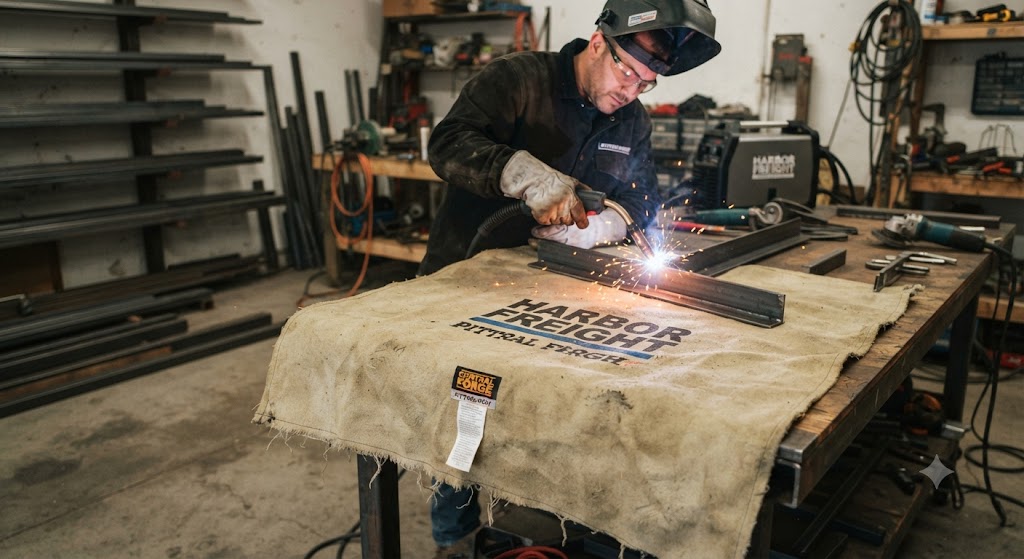
I bought my first Harbor Freight welding blanket on a Tuesday morning because I had a job starting Wednesday and I had left my usual blanket at another site. It was cheap, it was there, and it got me through the day. If you are asking whether the Harbor Freight welding blanket is good enough to actually trust, the honest answer is: it depends on what you are asking it to do. For home hobby welding and light production work, it works. For overhead welding in a production shop or any situation with sustained high heat, it is not the right tool. Let me break down exactly what you get and when that is enough.
What Harbor Freight Welding Blankets Are
Harbor Freight sells welding blankets under both the Chicago Electric and Vulcan brands, depending on the current product lineup at your location or their online store. Both are basic woven fiberglass construction, without silicone coating, and they follow the same general spec as most entry tier fiberglass blankets: heat resistance up to around 1000F, standard woven glass fiber mat, grommeted edges for hanging, and simple stitched edge binding.
The build follows the same basic engineering as any plain fiberglass blanket. The fiber weave is inherently non-combustible and will absorb and deflect welding spatter and sparks without igniting. What you are getting for the Harbor Freight price point is the base-level version of this protection: decent weave density, adequate grommets, and edge binding that is functional but not the most durable on the market.
For most home welders and weekend fabricators, that is exactly what they need.
Is the Harbor Freight Welding Blanket Good Enough?
For home garage use and occasional MIG, TIG, or light stick work, yes. The Harbor Freight fiberglass blanket does its core job: it catches sparks, intercepts hot spatter, and keeps your floor, cables, and nearby materials from taking damage. If you are a hobbyist who welds a few times a month and you want a blanket to throw over the car frame or garage floor while you run a bead, the Harbor Freight option serves that purpose without requiring you to spend more.
For a production shop doing daily welding, overhead work, or high-amperage stick welds near heat-sensitive materials, you will want more. The edge binding on budget blankets tends to fray faster under daily use, the grommets can pull through with regular hanging and takedown, and the thinner weave does not absorb repeated heavy slag drops the way a premium Tillman or Steiner blanket does. The Harbor Freight blanket is not a daily production tool, it is a convenience purchase.
Head to Head: Harbor Freight vs Tillman vs Steiner
| Feature | Harbor Freight | Tillman | Steiner Velvet Shield |
|---|---|---|---|
| Material | Plain woven fiberglass | Heavy fiberglass or carbonized fiber | Carbonized acrylic fiber |
| Max heat rating | ~1000F | ~1800F (carbonized fiber) | ~1800F |
| Edge binding | Basic stitched | Reinforced stitched | Heavy reinforced |
| Grommets | Brass, basic | Brass, reinforced | Brass, reinforced |
| Fiber shedding | Yes, wear gloves | Moderate (fiberglass) to low (carbonized) | Very low |
| Handleability | Stiff | Moderate to stiff | Soft and flexible |
| Durability under daily use | Light to moderate | Heavy production | Heavy production |
| Best for | Home hobby, light use | Professional shops | Professional shops, high heat |
What to Watch Out For
The edge binding on Harbor Freight blankets tends to start fraying at the corners first, particularly if you are folding and unfolding the blanket frequently. Once the edge binding goes, the glass fiber mat starts to fray from the outside in, and that fraying accelerates shedding. If you buy a Harbor Freight blanket, inspect the edges after the first few months of use. When the binding is gone, retire the blanket.
The grommets are functional but on the lighter side. If you are hanging the blanket overhead from a single grommet repeatedly, check that the grommet hole is not stretching or the fabric is not tearing around it. For light use this is rarely a problem. For a blanket you pull down and re-hang daily, a heavier construction is worth the investment.
When Harbor Freight Is the Right Call
You have a job starting tomorrow and your blanket is at another site. You need a blanket for a one-time project. You are just starting out and you want to learn the habit of using a welding blanket before investing in a premium one. Your garage welding is occasional and the heat levels are moderate. All of these are legitimate reasons to buy the Harbor Freight option. It is not a lie, it is a real product that provides real protection at a level appropriate for its price and build.
What it is not: a long-term production tool, a high-heat overhead blanket, or a blanket you stake your daily work on. At that level, spend more and buy Tillman or Steiner.
The Bottom Line
The Harbor Freight welding blanket is honest about what it is. It is a budget fiberglass blanket that protects surfaces from light to moderate spark and spatter exposure. It is enough for home use and light work. It is not the right blanket for a shop that depends on it daily or for overhead applications that demand quality construction. Buy it for what it is, use it within its heat rating, replace it when the binding frays, and you will get your money’s worth from it.
Frequently Asked Questions
Is the Harbor Freight welding blanket ANSI or OSHA approved? Harbor Freight does not typically publish ANSI certification for their welding blankets. For job sites that require certified welding protection equipment, use a blanket from a brand that provides certification documentation, such as Tillman or Steiner.
What is the heat rating on the Harbor Freight welding blanket? Plain woven fiberglass blankets like the Harbor Freight option typically handle up to around 1000F before the fibers begin to degrade. Check the current product packaging for the specific stated rating.
Does Harbor Freight sell different sizes of welding blanket? Available sizes vary by product and location. Common sizes in the Harbor Freight lineup include 4x6 foot and 6x8 foot options. Check the current in-store and online selection for what is available at your time of purchase.
Should I wear gloves when handling a Harbor Freight fiberglass blanket? Yes. All plain woven fiberglass blankets shed glass fibers when handled, which cause skin and respiratory irritation. Wear gloves and wash your hands and arms after handling. Do not shake the blanket indoors without ventilation.
How long will a Harbor Freight welding blanket last? For home and occasional use, a year or more if you handle it gently. For daily shop use with regular folding, hanging, and spatter exposure, expect the edge binding to show wear within a few months and replace accordingly.
Can I use a Harbor Freight welding blanket for overhead welding? For light overhead work, it can serve temporarily. For sustained overhead welding or high-heat applications, use a silicone coated fiberglass blanket or a carbonized fiber option rated for 1800F or higher.
References
https://www.osha.gov/laws-regs/regulations/standardnumber/1910/1910.252 https://www.nfpa.org https://www.harborfreight.com https://www.tillmangloves.com https://www.steinerindustries.com
SEO Title: Harbor Freight Welding Blanket Review