Magnetic Welding Ground Clamps Guide
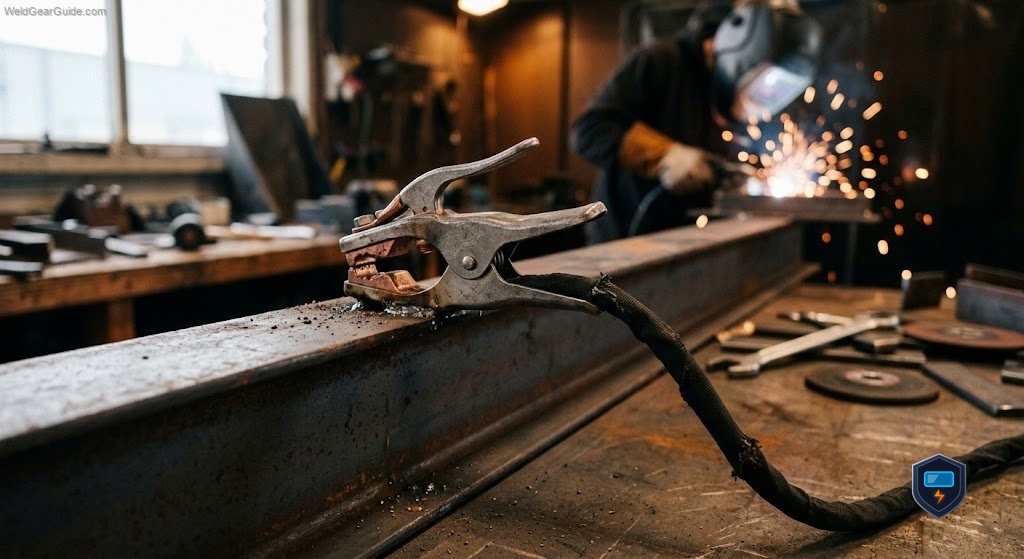
I spent years with a standard C-clamp style ground clamp and I never thought much about it until I started doing a lot of pipe work. Clamping a standard ground clamp onto the outside of a pipe section sounds simple until the pipe is too large for the clamp opening, the clamp slips off a curved surface the moment you bump it, and you lose your ground mid-weld. Switching to a magnetic welding ground clamp on pipe and structural work changed my setup speed and my arc quality more than I expected. If you are wondering whether a magnetic ground is worth adding to your setup, this guide gives you the full picture.
What a Magnetic Welding Ground Clamp Does
A magnetic welding ground clamp is a welding earth (ground) connection that uses a permanent magnet rather than a mechanical jaw to attach to the workpiece. The magnet adheres to any ferromagnetic steel surface, creating a conductive connection between the workpiece and your welder’s ground circuit. It functions identically to a standard ground clamp in terms of electrical purpose but attaches by magnetic force rather than by clamping.
The magnetic connection has one key advantage over a standard C-clamp or spring-loaded jaw clamp: it makes good contact on curved surfaces, pipes, structural shapes, and flat plate equally well. A standard jaw clamp can only grip on edges or flat sections thin enough to fit in the jaw. A magnetic ground makes full-surface contact anywhere the magnet can sit flat.
The electrical path in a magnetic ground clamp runs from the magnet face through the steel workpiece, so the quality of that magnetic contact directly affects your arc quality. A dirty, rusty, or spatter-covered contact face increases resistance and degrades arc performance. Keeping the magnet face clean is not optional maintenance, it is part of using the tool correctly.
Magnetic vs Standard Ground Clamp: Which Is Better?
The direct answer is that they are complementary tools rather than one being objectively superior. A standard jaw clamp is simpler, cheaper, and works fine for flat plate and straightforward bench work. A magnetic ground clamp is faster to place, works on curved surfaces where a jaw clamp struggles, and does not need a projecting edge to grab.
For pipe welding, structural welding on beams and channels, and any situation where the workpiece shape makes jaw clamp positioning awkward, the magnetic ground clamp is the clear winner. For flat bench work with a consistent workpiece thickness and shape, a quality standard jaw clamp does the job without requiring any additional investment.
Magnetic vs Standard Ground Clamp Compared
| Feature | Magnetic Ground Clamp | Standard Jaw Ground Clamp |
|---|---|---|
| Attachment to curved surfaces (pipe, beam) | Excellent | Poor to moderate |
| Attachment to flat plate | Excellent | Excellent |
| Setup speed | Fast, one hand | Moderate, requires jaw positioning |
| Contact quality on rusty or dirty steel | Reduced | Reduced |
| Works on non-ferromagnetic steel (304 SS, Al) | No | Yes |
| Amp capacity range available | 200A to 400A | 200A to 600A |
| Quick release feature | Yes, on most models | No |
| Cost | Higher | Lower |
Key Buying Factors
Amp rating. Match the amp rating of your ground clamp to your welder’s maximum output. A 200A clamp is enough for most hobby MIG welders. For a heavy stick welder or a high-amperage MIG, buy a 300A or 400A rated clamp. Using an undersized ground clamp on a high-amperage welder will cause the clamp to run hot and the cable connection to fail over time.
Contact surface quality. The face of the magnet that contacts the workpiece must be flat, clean, and conductive. High-quality magnetic ground clamps have a machined or polished contact surface for maximum conductance. Budget versions with rough or painted contact faces make poor arc quality. Inspect the contact face before buying and clean it with a wire brush regularly in use.
Quick release handle. Most current magnetic welding grounds have a rotating handle or lever that allows quick detachment without prying the magnet off by force. This is worth having. A standard magnetic ground with no quick release must be pried off the workpiece, which takes time and leverage when the magnet is large.
Cable connection quality. The cable lug connection at the back of the clamp is a common failure point on cheap magnetic grounds. Look for a solid screw terminal or bolted lug connection rather than a pressed crimp. The connection needs to handle the full amp load of the welder without resistance heating the joint.
Holding strength. A magnetic ground that slides off your pipe when you bump the cable is useless. Check holding force specifications, but also check that the magnet has enough contact surface area to stay put on the workpiece geometry you are using.
When Magnetic Ground Clamps Do Not Work
Magnetic ground clamps require a ferromagnetic workpiece. They will not adhere to austenitic stainless steel (304, 316), aluminum, copper, brass, or any non-ferrous material. If your welding is primarily on non-ferrous materials or austenitic stainless, you need a standard jaw clamp.
Also: like all welding magnets, a magnetic ground placed in the direct arc zone during prolonged welding can be demagnetized by sustained heat. Locate the magnetic ground clamp away from the weld area, not directly adjacent to the joint.
The Bottom Line
A magnetic welding ground clamp is a genuine productivity upgrade for anyone doing pipe, structural, or multi-position welding. It does not replace a standard ground clamp for every situation, but for the work where standard jaw clamps are awkward, a magnetic ground is noticeably faster and makes better consistent contact. Buy a reputable brand with a clean contact face, a quick release handle, and an amp rating matched to your welder.
Frequently Asked Questions
Does a magnetic ground clamp work on stainless steel? Only on ferritic stainless grades. Common austenitic grades like 304 and 316 are non-magnetic and a magnetic ground clamp will not adhere to them.
What amp rating should my magnetic welding ground be? Match it to your welder’s maximum output or higher. For a 200A MIG welder, a 200A ground is the minimum. For a 300A machine, use a 300A or 400A clamp to avoid heat buildup at the cable connection.
Why does my magnetic ground clamp make the arc sputter? The most common cause is a dirty or spatter-covered contact face on the magnet. Clean the contact face with a wire brush. Also check that the cable lug connection at the back of the clamp is tight and that the cable itself is not damaged.
How do I remove a magnetic welding ground from the workpiece? Models with a quick release handle: rotate the handle to break the magnetic field and lift the clamp off. Models without quick release: slide or pry the clamp off from the edge of the contact face. Never pull straight up by the cable, which will strain the cable lug connection.
Can I use a magnetic ground clamp on a welding table? Yes, if your welding table is steel and the clamp has a clean contact surface. Many shops use a magnetic ground on the table itself rather than clamping to the workpiece for flat work.
Do magnetic ground clamps affect welding current quality? A magnetic ground with a clean contact face and a properly rated cable makes an excellent arc quality connection. A dirty contact face, an undersized cable, or a poor lug connection will degrade arc quality the same way any poor ground does.
References
https://www.osha.gov/laws-regs/regulations/standardnumber/1910/1910.252 https://www.magswitch.com.au https://www.lincolnelectric.com
SEO Title: Magnetic Welding Ground Clamps Guide