Miller LPR-100 Respirator Review: The Welding-First Half Mask, Tested
Most half mask respirators are general purpose tools that welders borrow. The Miller LPR-100 respirator is the opposite: it was designed from the start to live under a welding helmet, and you feel that intent the moment you put one on. This review looks at what that welding-first design actually buys you, where it still has limits, and whether it deserves the spot under your hood over a generic P100 mask.
Built for the Hood, Not Borrowed From the Paint Booth
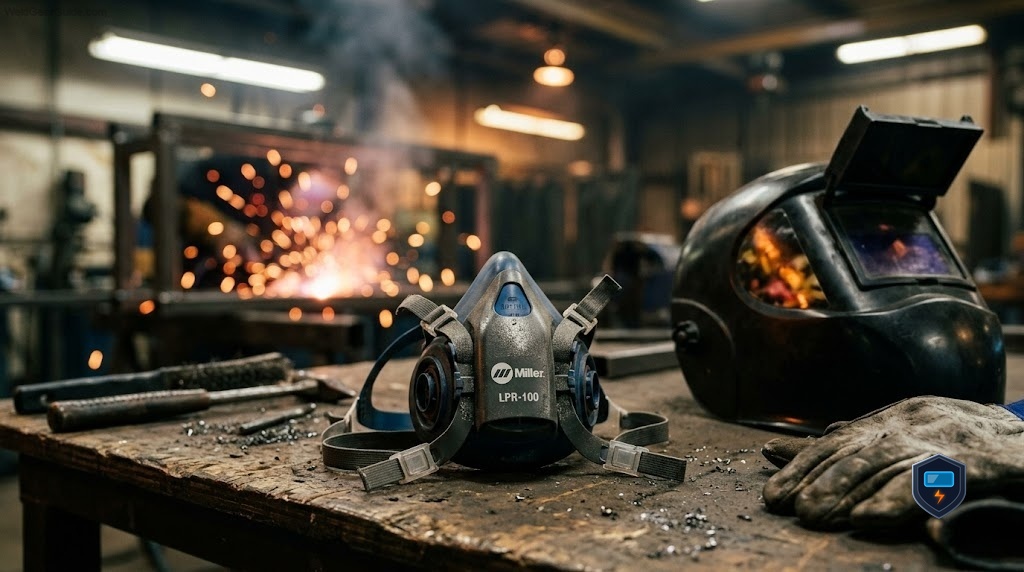
The LPR-100 is a reusable half mask with replaceable P100 filter cartridges that carry an assigned protection factor of 10 and are NIOSH certified under 42 CFR part 84.[^https://www.millerwelds.com/en-us/safety-products/weld-fume/respiratory/half-mask-respirators-m00469/lpr-100-half-mask-respirator-s-m-ml00894?tab=specifications] The filters remove 99.97 percent of airborne particulate and mists, oil based and non oil based, including the metal fume welders care about: hexavalent chromium, stainless and galvanized steel fume, manganese alloys, aluminum, cadmium, and lead.
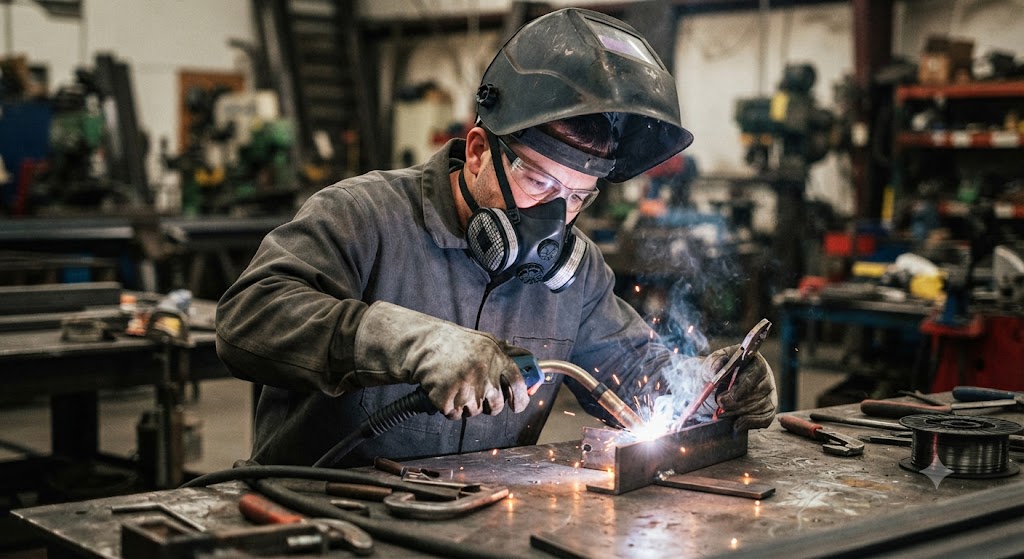
The details that reveal its welding pedigree are the ones a paint-booth mask never bothered with. A wrap-around spark guard shields the filter media from spatter and grinding debris, so a stray spark does not chew up your filters. The exclusive pleated filter design packs more surface area into a smaller footprint, which lowers breathing resistance while keeping the mask slim enough to seat under a helmet and the Weld-Mask goggles. Four point strap adjustment and an integrated comfort cushion round out the fit.
How It Performs
Under a hood, the LPR-100 does the two things that matter. It stays low enough that the helmet closes over it without pushing the mask off your face, and it breathes easily thanks to that pleated media, which is the difference between wearing a respirator all shift and yanking it off after twenty minutes. The turnbuckle filter mounts make swapping filters fast, so maintenance never becomes an excuse to skip protection.
The spark guard is the underrated feature. If you have ever watched a hot bead of spatter land square on an unprotected filter and melt a divot into it, you understand why Miller wrapped the media. On the LPR-100 that debris hits the guard instead of your filter, and filter life stretches accordingly. Miller has since released a Gen II version that refines the fit and adds a built-in fit check exhaust valve, so there are two generations in circulation.[^https://www.millerwelds.com/en-US/safety-products/weld-fume/respiratory/half-mask-respirators-m00469/lpr-100-gen-ii-half-mask-respirator-m-l-294962]
Where It Falls Short
The honest limitation is the same one every P100 mask shares: it is a particulate respirator. The standard LPR-100 filters stop solid particles, fume, and mists, and they do nothing against gases and organic vapors. Weld on coated, painted, or solvent-degreased metal that off-gasses and you need the LPR-100 OV version with added carbon for nuisance vapor, or a full vapor cartridge system. Do not stretch this mask past what its filters are rated to do.
The second knock is availability and lock-in. The LPR-100 uses Miller’s own filter format, so you are buying into that consumable line rather than the ubiquitous 3M ecosystem you can find in any hardware store. If you value being able to grab replacement filters anywhere, the proprietary format is a mild annoyance.
Who should skip it: welders whose primary hazard is vapor or gas rather than particulate, and anyone who wants a single mask that also handles painting and heavy solvent work. A modular cartridge respirator serves those needs better than a welding-specialized half mask.
LPR-100 vs a Generic P100 Half Mask
Against a general purpose 3M 6000 series with P100 filters, the LPR-100 wins on welding-specific comfort: it is lower profile under a hood, the spark guard protects filters from spatter, and the pleated media breathes well. The generic 3M wins on versatility and parts availability, because you can bolt on gas and vapor cartridges and buy filters anywhere. For a dedicated welder, the LPR-100 is the more thoughtful tool. For a jack of all trades fabricator, the modular mask is more flexible.
The Bottom Line
The Miller LPR-100 respirator is what happens when a welding company builds a respirator instead of adapting one. The spark guard, the low profile, and the easy breathing pleated filters all point at one user: the welder who wants real P100 protection that cooperates with a helmet instead of fighting it. Respect its particulate-only nature and accept the proprietary filters, and it earns its place. The quiet win is that it removes the last excuse for welding bare-faced, because a mask this comfortable is one you will actually keep on.
Frequently Asked Questions
What does the Miller LPR-100 protect against? It filters 99.97 percent of airborne particulate and mists, including metal fume such as hexavalent chromium, manganese, aluminum, cadmium, and lead. It does not protect against gases or organic vapors unless you use the OV version.
Is the LPR-100 P100 rated? Yes. It uses replaceable P100 filter cartridges, NIOSH certified under 42 CFR part 84, with an assigned protection factor of 10.
Does it fit under a welding helmet? Yes. The LPR-100 is designed specifically to seat under most welding helmets and Miller’s Weld-Mask goggles, with a low profile pleated filter design.
What is the spark guard for? The wrap-around spark guard shields the filter media from spatter and grinding debris, protecting the filters and extending their usable life.
What is the difference between the LPR-100 and the Gen II? The Gen II refines the mask fit and adds a built-in fit check exhaust valve for daily seal checks, while keeping the same welding-focused P100 filtration.
Can I use it for painting or working on coated metal? Only with the OV version for nuisance vapor odors, or with a proper vapor cartridge system. The standard particulate filters do not protect against paint or solvent vapors.
How often should I replace the filters? Replace filters when breathing resistance increases, when they get wet or damaged, or on your workplace schedule. The spark guard helps them last longer by keeping spatter off the media.
References
- Miller LPR-100 Half Mask Respirator specifications (MillerWelds): https://www.millerwelds.com/en-us/safety-products/weld-fume/respiratory/half-mask-respirators-m00469/lpr-100-half-mask-respirator-s-m-ml00894?tab=specifications
- Miller LPR-100 Gen II Half Mask Respirator product page: https://www.millerwelds.com/en-US/safety-products/weld-fume/respiratory/half-mask-respirators-m00469/lpr-100-gen-ii-half-mask-respirator-m-l-294962