Portable Welding Fume Extractor Guide
Welding fume is one of the most underappreciated hazards in the welding shop. The International Agency for Research on Cancer (IARC) classifies general welding fume as a Group 1 carcinogen - the same classification as asbestos and tobacco smoke. Yet many hobby and small-shop welders work without fume extraction, relying on shop ventilation alone.
A portable welding fume extractor is the most practical solution for one-person shops, home garages, and job sites where permanent ventilation systems aren’t feasible.
What Is a Portable Welding Fume Extractor?
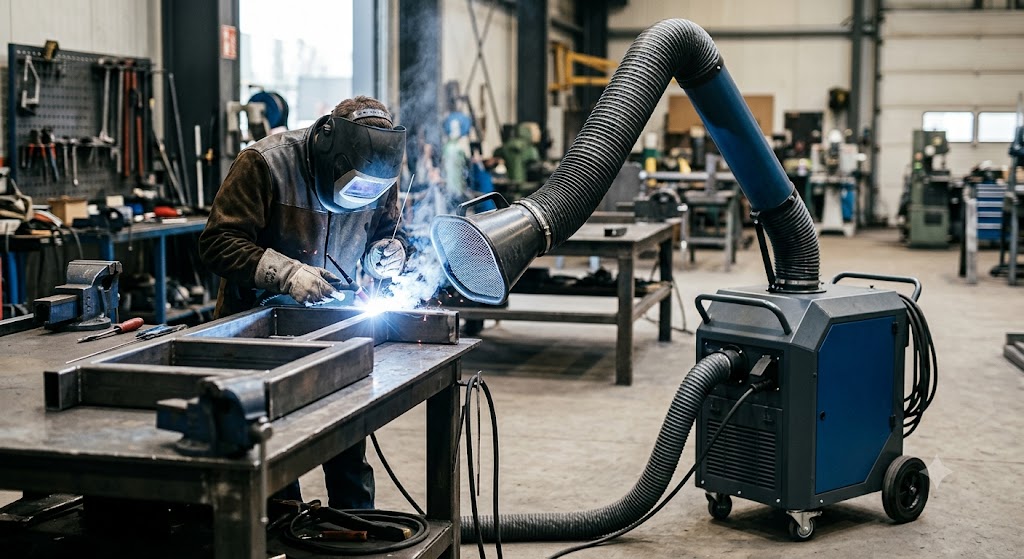
A self-contained unit that captures welding fumes at or near the source - before they reach the welder’s breathing zone. Core components:
- Capture hood or flexible arm - positions the extraction inlet close to the weld (typically 4–8 inches away)
- Fan/motor - creates suction to draw fumes into the extraction hose
- Filter system - captures particulate and fumes before air is recirculated or exhausted
- Portable body - wheels, handles, compact footprint for easy repositioning
Do I Need a Fume Extractor for Occasional Home Welding?
Lower-risk situations where ventilation alone may be adequate:
- Welding mild steel outdoors or in a well-ventilated open structure
- Very occasional welding (a few hours per month maximum)
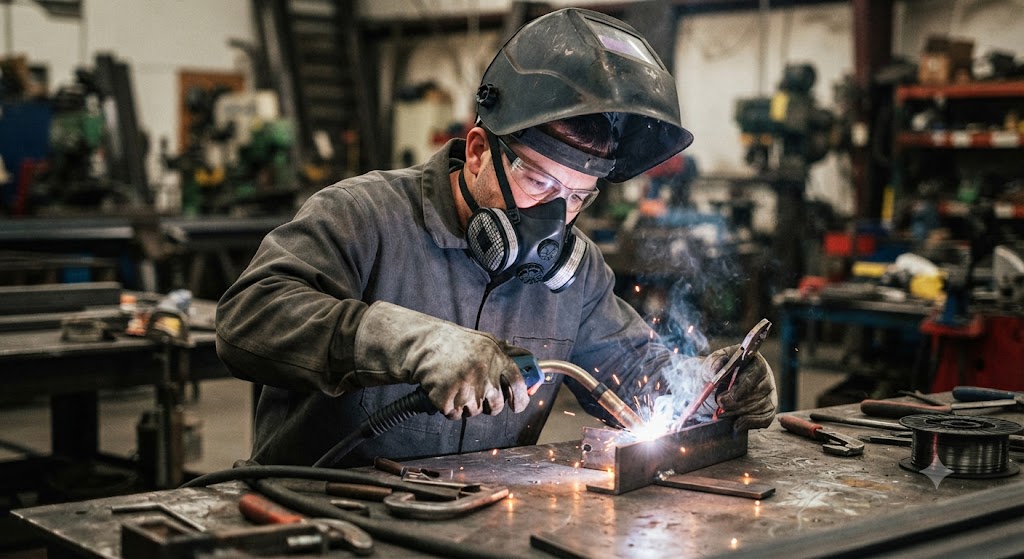
- Using a half-face respirator with P100/OV combination cartridges
Situations where a fume extractor is strongly recommended:
- Welding indoors in a garage or shop with limited air exchange
- Welding coated, galvanized, stainless, or chrome-moly steel (significantly more hazardous fumes)
- Regular welding sessions (more than a few hours per week)
- Welders with pre-existing respiratory conditions
- TIG welding (produces fine, highly penetrating fume particles)
The OSHA Permissible Exposure Limit (PEL) for welding fume is 5 mg/m³ - a level easily exceeded in an enclosed garage during moderate welding.
Portable Extractor vs. Just Wearing a Respirator
| Approach | Effectiveness | Comfort | Cost |
|---|---|---|---|
| No protection | None | Max | $0 |
| Shop fan (ventilation) | Low–moderate | Good | $30–100 |
| Half-face respirator | Good (if fitted correctly) | Fair | $30–60 + cartridges |
| Portable fume extractor | Very good (at source) | No interference | $150–800+ |
| Respirator + extractor | Excellent | Moderate | Combined |
Respirators filter what you’re already inhaling rather than capturing fumes before they become airborne.
Portable extractors remove fumes at the source before they disperse - more effective at reducing overall shop air contamination. The limitation: the capture hood must be positioned correctly (within 4–8”) or efficiency drops sharply.
Best practice: Use a portable extractor positioned correctly AND wear a half-face respirator for high-hazard processes (stainless, galvanized, chrome-moly, coated materials).
What CFM Rating Is Enough for a One-Man Garage?
For a one-person garage shop, 150–300 CFM at the capture point is generally sufficient for most MIG, TIG, and stick welding.
Key factors:
- Distance matters most - 100 CFM at 4 inches is more effective than 500 CFM at 24 inches
- Process - TIG produces finer, denser fume than MIG; flux-core and stick produce higher fume volumes
- Shop size - smaller enclosed spaces accumulate fumes faster
Practical recommendation for a one-car garage: 200–400 CFM with a flexible arm that positions the hood 4–8 inches from the arc.
Allegro Portable Fume Extractor
Allegro Industries is a recognized brand in portable fume extraction for welding and industrial applications.
Allegro 9450 Portable Fume Extractor:
- Extraction capability: 113–226 CFM (low and high settings)
- 10-foot extraction hose with flexible steel tube hood assembly
- Magnetic support base for hands-free positioning
- Designed for field work, maintenance, and production welding
- Lightweight and portable
- Available through industrial safety distributors (JendCo Safety, Safety Services Inc.)
- Price: ~$190–250
Allegro extractors are distributed through industrial safety channels rather than consumer retail. Search “Allegro 9450 fume extractor” to find distributors.
Other Options
ECyclo-Air S750 (Amazon): Consumer-accessible option - 442 CFM, cleanable triple filter, adjustable speed, caster wheels. ~$300–400. Search Amazon.
Plymovent and Lincoln Electric: Professional-grade units for production welding environments. $500–2,000+.
DIY approach: Some garage welders build their own extraction using shop vacuum filtration assemblies with HEPA filters. Can be effective but requires careful filter selection.
What Filter Type Do You Need?
For capturing welding fume:
- Pre-filter - captures larger particles, extends main filter life
- HEPA or 95%+ main filter - captures fine fume particles (0.3 microns and above)
- Cleanable filters - reduce ongoing consumable cost for regular users
Avoid extractors with foam filter only - foam captures large particles but does not filter the fine respirable fraction of welding fume that causes long-term respiratory harm.
FAQs
Do I need a fume extractor for occasional home welding? For outdoor mild steel work or very occasional use with a respirator, probably not. For regular indoor welding - especially alloy steels, galvanized, or stainless - yes, strongly recommended.
How does a portable extractor compare to just wearing a respirator? Extractors remove fumes from shop air at the source. Respirators filter what you inhale. Both have roles; for high-hazard processes, use both.
What CFM rating is enough for a one-man garage? 200–400 CFM at the capture hood, positioned 4–8 inches from the arc.