Sheet Metal Welding Clamps Guide
Thin metal is unforgiving. Clamp it too hard and you leave a dent or a mark; clamp it too loosely and it shifts or warps the moment heat hits. Welding sheet metal well depends as much on how you hold it as on how you run the bead, and that means using clamps made for thin gauge rather than the heavy clamps built for structural steel. This guide covers the clamps that hold sheet metal flush and flat without marring it, how to keep panels from denting, and which to buy.
Sheet metal welding clamps hold thin panels flush and aligned with gentle, even pressure that avoids denting. The best options include intergrip butt clamps, flat-jaw locking clamps, and clamp sets made for panel work. Here is how to choose and use them.
Why sheet metal needs special clamps
Holding thin material calls for a different approach than heavy stock:
- Gentle, spread-out pressure, because concentrated force from a hard-jaw clamp dents thin panels.
- Flush alignment, keeping panel edges in the same plane so seams stay flat.
- Even holding along a seam, since sheet moves and buckles as it heats.
- Marring resistance, so the finished panel does not need extra bodywork to hide clamp marks.
Use a clamp made for sheet, and you hold the panel securely without fighting dents and distortion afterward.
Direct answer: what to use
For sheet metal, reach for these:
- Intergrip butt clamps hold two panel edges flush with a small even gap, ideal for seam welding thin panels.
- Flat-jaw locking clamps grip flat panels over a wide jaw area, spreading pressure to reduce marking.
- Panel clamp sets combine styles for holding, aligning, and clamping thin material.
- Cleco-style temporary fasteners hold overlapping panels in alignment through pre-drilled holes.
Match the clamp to the joint, and always favor spread pressure over a hard point bite.
Avoiding dents and marring
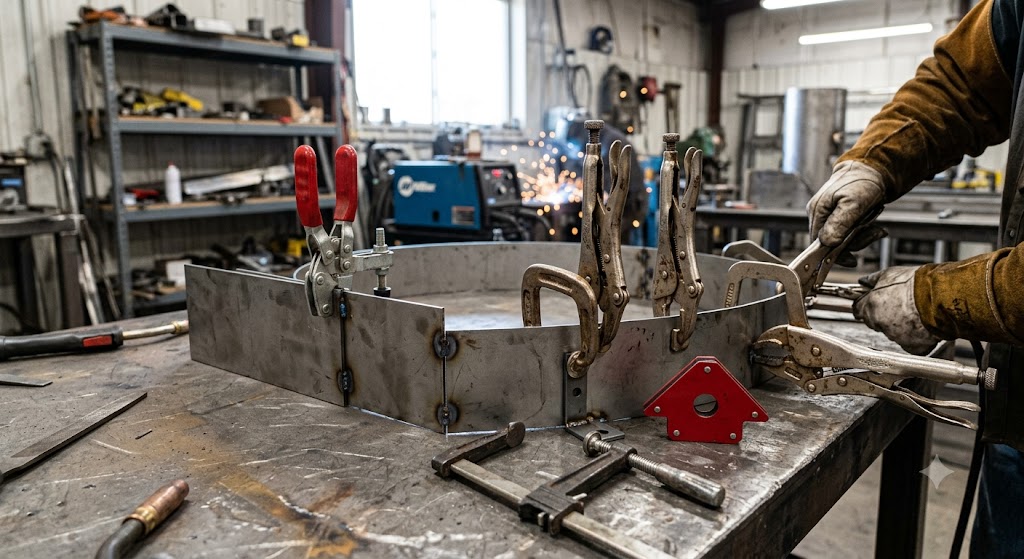
The cardinal rule with sheet metal is to spread the load. A standard clamp with small, hard jaws puts all its force through a tiny contact area, which is exactly what leaves dents and marks in thin panels. The fixes are straightforward. Use clamps with wide, flat jaws or swivel pads that contact more of the surface, so the same holding force is spread thin instead of concentrated. Back off the pressure: on thin gauge you only need enough grip to keep the parts from moving, not the crushing force you would use on plate. And where you can, use intergrips or clecos that hold at the seam or through holes rather than pinching the panel face. Hold gently and broadly, and your panels come out of the fixture as flat as they went in.
Holding a seam flush
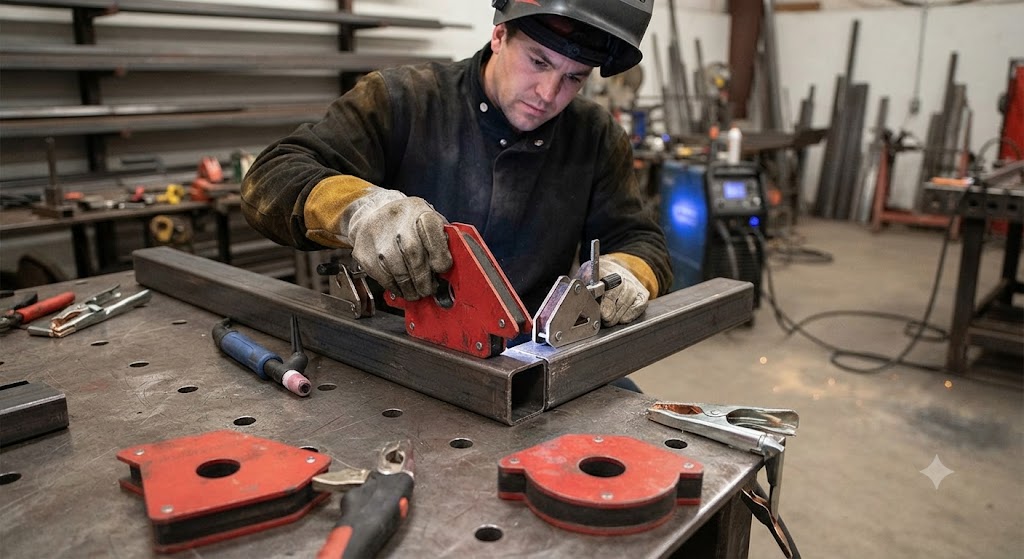
The other half of sheet metal work is keeping the seam flat and evenly gapped as you tack, because thin metal loves to step out of line or pull as it heats. This is where intergrip-style butt clamps earn their place: they hold both edges in the same plane with a consistent small gap, so the seam stays flush and welds flat with minimal grinding. Space several along the seam, tack in the gaps between them, then leapfrog the clamps down the run. For overlapping or lap joints, cleco fasteners pull the panels tight together through drilled holes and hold alignment while you tack. And to fight warping, tack in a spread-out pattern rather than running a long continuous bead, letting the clamps hold everything true between tacks. Flush holding plus smart tacking is how thin seams stay flat.
Which sheet metal clamps to buy
Here are three useful options.
- QWORK 10 inch flat-jaw locking clamp has wide, flat jaws that spread pressure across the panel to hold sheet firmly with less marking, a handy locking clamp for flat work. Its limitation is that even flat jaws can mark if you overtighten, so ease off on thin gauge.
- Klutch 3-piece welding vise clamp set combines a C-clamp, a sheet metal clamp, and a claw-type clamp in one set, covering a range of panel-holding tasks. The trade-off is that a mixed set is a starting kit rather than a specialist’s full array.
- Eastwood 8-piece intergrip welding clamp set holds panel edges flush with a consistent 0.040 inch gap for clean butt seams, the go-to for seam welding thin panels without steps to grind. Its limitation is that eight clamps suit shorter seams; long runs want more.
How to choose: for flat panel holding, the QWORK flat-jaw clamp. For a versatile starter kit, the Klutch 3-piece set. For flush butt seams, the Eastwood intergrips.
Who should skip these: welders working only heavy plate and structural steel, who need forged C-clamps and corner clamps rather than gentle sheet clamps.
The bottom line
Sheet metal is held, not gripped: the goal is gentle, spread-out pressure that keeps thin panels flush and aligned without leaving dents. Use wide flat-jaw clamps or swivel pads for flat work, intergrips for flush butt seams, and clecos for lap joints, and back off the pressure to just what holds the parts still. Tack in a spread pattern to fight warping and let the clamps hold true between tacks. The QWORK flat-jaw clamp, Klutch mixed set, and Eastwood intergrips cover the common jobs. Hold thin metal the right way, and it welds flat and finishes clean.
FAQ
What clamps are best for welding sheet metal? Clamps that hold with gentle, spread-out pressure: intergrip butt clamps for flush seams, flat-jaw locking clamps for flat panels, and cleco fasteners for lap joints. Avoid heavy hard-jaw clamps that concentrate force and dent thin metal.
How do I clamp sheet metal without denting it? Spread the load and ease the pressure. Use wide flat jaws or swivel pads that contact more surface, tighten only enough to keep parts from moving, and where possible use intergrips or clecos that hold at the seam or through holes rather than pinching the panel face.
What is an intergrip clamp for sheet metal? An intergrip holds two panel edges flush in the same plane with a small consistent gap, so a butt seam welds flat with little grinding. You space several along the seam, tack in the gaps, then leapfrog them down the run. It is ideal for thin-panel butt joints.
Can regular C-clamps be used on sheet metal? They can for edges and where marks do not matter, but their small hard jaws concentrate force and can dent thin panels. For visible or delicate sheet, use flat-jaw clamps, swivel-pad clamps, or intergrips that spread or avoid direct face pressure.
What are cleco fasteners used for in sheet metal? Clecos are temporary fasteners that clip through pre-drilled holes to pull overlapping panels tight and hold them in alignment while you tack. They are common in lap-joint and panel work, keeping parts registered without clamping across the panel face.
How do I stop sheet metal from warping when welding? Hold it flush with clamps and tack in a spread-out pattern rather than running a long continuous bead. Let the clamps hold everything true between tacks, and space your welds to keep heat from building in one area, which is what causes thin metal to pull and warp.
References
- Eastwood guidance on sheet metal clamps, intergrips, and cleco fasteners for panel work (retailer resource), eastwood.com.
- Miller Electric and Lincoln Electric guidance on welding sheet metal, distortion control, and tacking patterns (manufacturers), millerwelds.com, lincolnelectric.com.
- The Fabricator guidance on sheet metal fit-up and warping control (industry publication), thefabricator.com.