Tillman and Steiner Welding Blanket Review
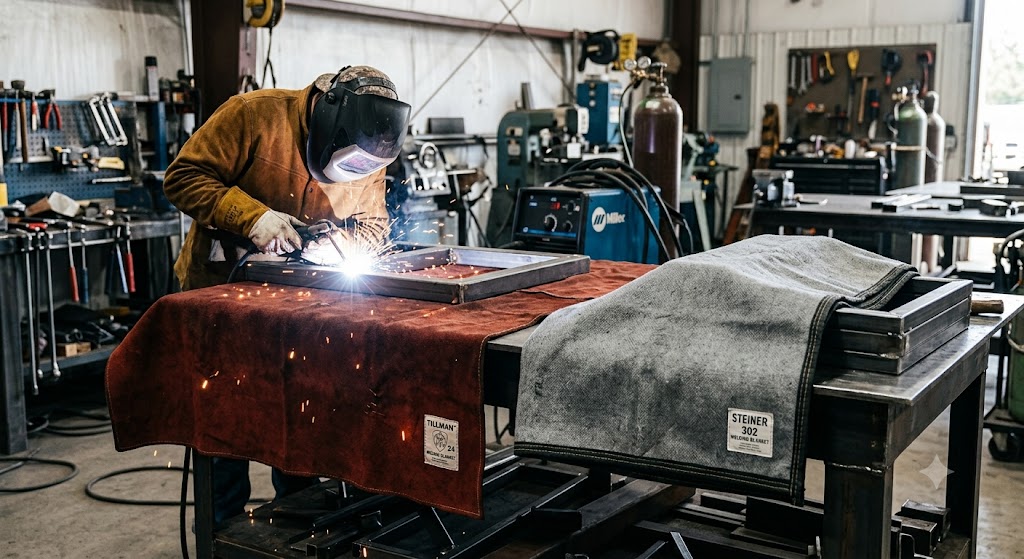
I have bought both Tillman and Steiner welding blankets at different points in my career, and the conversation about which one is better is one I have had at the supply house counter more than once. The short version: Tillman is the tougher workhorse for heavy-duty shop protection. Steiner is the more comfortable, easier-to-handle option that works better for daily use against your body or in applications where you want the blanket to conform to a shape. Both are premium brands that hold up where Harbor Freight and budget options fall short. Here is the full breakdown.
What Tillman and Steiner Welding Blankets Are
Tillman Industries has been making welding protection products, primarily gloves and blankets, for over fifty years. Their welding blankets come in multiple materials including heavy woven fiberglass, carbonized fiber, and combination weaves. Tillman blankets are built to industrial standards with heavy edge binding, reinforced grommets, and weave densities that absorb sustained slag and spatter contact without rapid burn-through.
Steiner Industries is known for their Velvet Shield carbonized fiber line, which is their most recognized welding blanket product. Velvet Shield is made from carbonized acrylic fibers rather than glass fibers. The carbonized acrylic weave is softer than any fiberglass construction, has minimal fiber shedding compared to plain fiberglass, and is rated to handle temperatures comparable to silicone coated fiberglass, typically up to 1800F depending on the specific product.
Both brands serve the professional welding market and price their products accordingly. Neither is cheap compared to Harbor Freight or YESWELDER options, and neither is supposed to be.
Tillman Welding Blankets
Tillman’s welding blanket lineup runs from lighter fiberglass mat options through their heavy carbonized fiber blankets. The most commonly purchased Tillman blanket in a production shop is a heavy woven fiberglass product with reinforced brass grommets, heavy stitched edge binding, and a weave thick enough to absorb sustained spatter without rapid wear.
My verdict on Tillman: these are the shop standard for a reason. The build quality is consistent, the edge binding outlasts budget alternatives by a significant margin, and the grommets hold up to being pulled off hooks and re-hung daily. The honest flaw is that fiberglass Tillman blankets still shed glass fibers. Handle them with gloves, do not shake them out in your face, and you will be fine, but if you want a nearly fiber-free experience, Steiner Velvet Shield wins on that axis.
Who should skip Tillman: Anyone who wants a blanket that is soft to the touch and easy to drape over curved surfaces without stiffness. Fiberglass Tillman blankets are stiff and need a break-in period before they conform well. The carbonized fiber versions are softer but also more expensive.
Steiner Welding Blankets
Steiner’s Velvet Shield line is the flagship product, and it genuinely feels different in your hands from the first time you pick one up. The carbonized acrylic weave is soft like a heavy felt fabric, not scratchy or stiff like fiberglass. It drapes over curved surfaces, wraps around pipe runs, and lays flat on floors without the springiness that makes fiberglass blankets slide off things. The near-zero fiber shedding makes daily handling comfortable without constant gloves-on, gloves-off rituals.
My verdict on Steiner Velvet Shield: the best blanket for welders who handle their blankets all day, every day, and who work around curved or complex surfaces where drape matters. The honest flaw is that it is softer than fiberglass, which means it is less abrasion resistant against concrete floors and rough steel surfaces. It wears faster in drag applications. Who should skip it: anyone laying the blanket flat on a rough concrete floor and dragging heavy material across it regularly. Fiberglass holds up better to that specific abuse.
Head to Head Comparison
| Feature | Tillman Fiberglass | Tillman Carbonized Fiber | Steiner Velvet Shield |
|---|---|---|---|
| Material | Woven fiberglass | Carbonized fiber blend | Carbonized acrylic fiber |
| Max heat rating | ~1000F to 1800F depending on product | ~1800F | ~1800F |
| Fiber shedding | Yes, moderate | Low | Very low |
| Drape and flexibility | Stiff | Moderate | Excellent |
| Abrasion resistance | Very good | Good | Moderate |
| Edge binding | Heavy reinforced | Heavy reinforced | Heavy reinforced |
| Grommets | Brass, reinforced | Brass, reinforced | Brass, reinforced |
| Best application | Floor protection, general shop | High heat, overhead | Overhead, pipe, daily handling |
Which Should You Choose?
For a production shop where blankets live on the floor protecting against slag drops and heavy use, Tillman fiberglass is the more economical choice and holds its shape better under that specific abuse. For overhead work, pipe welding, and applications where you want the blanket to conform to a surface, Steiner Velvet Shield is worth paying the premium.
Many professional shops keep both: Tillman for the floor and table applications, Steiner for the overhead and pipe work where drape and comfort in handling matter more than abrasion toughness.
The Bottom Line
Both Tillman and Steiner make blankets that outperform the budget field by a clear margin. Tillman wins on abrasion toughness and raw durability for floor and heavy-use applications. Steiner wins on handleability, drape, and fiber-shedding comfort for daily hands-on use. If you can only own one, the work you do most should make the decision. If you do more floor and table welding, buy Tillman. If you do more overhead and pipe work, buy Steiner.
Frequently Asked Questions
Is Tillman or Steiner a better welding blanket brand? Both are professional quality brands. Tillman is tougher for floor and abrasion-heavy applications. Steiner Velvet Shield is softer, handles better daily, and drapes better over curved surfaces. Choose based on the work you do most.
What is Steiner Velvet Shield made from? Velvet Shield is made from carbonized acrylic fiber, not traditional fiberglass. The carbonized construction makes it soft, nearly fiber-shedding free, and rated to handle high welding temperatures.
Does the Tillman welding blanket shed fiberglass fibers? Yes, Tillman fiberglass blankets shed glass fibers when handled, particularly when new or when folding. Handle with gloves and wash your hands and arms after handling. Tillman’s carbonized fiber options shed significantly less.
What heat rating do Tillman and Steiner blankets carry? Heat ratings vary by specific product line. Check the product spec for the exact rated temperature. Most premium Tillman and Steiner blankets handle 1000F to 1800F depending on material and thickness.
Can I use a Tillman or Steiner blanket for overhead welding? Yes. Both brands make blankets suitable for overhead work. For overhead applications, choose a product with a high heat rating and reinforced grommets that can support the hanging load.
Are Tillman and Steiner blankets reusable long term? Yes, both are designed for sustained professional use and last significantly longer than budget alternatives. Replace when burn-throughs appear at critical areas or edge binding deteriorates.
Where can I buy Tillman and Steiner welding blankets? Both are available through industrial welding supply distributors, safety supply companies, and online retailers. Tillman and Steiner both sell through professional supply channels rather than big box retail primarily.
References
https://www.osha.gov https://www.nfpa.org https://www.tillmangloves.com https://www.steinerindustries.com
SEO Title: Tillman vs Steiner Welding Blanket Review