Vise Grip Welding Clamps Guide
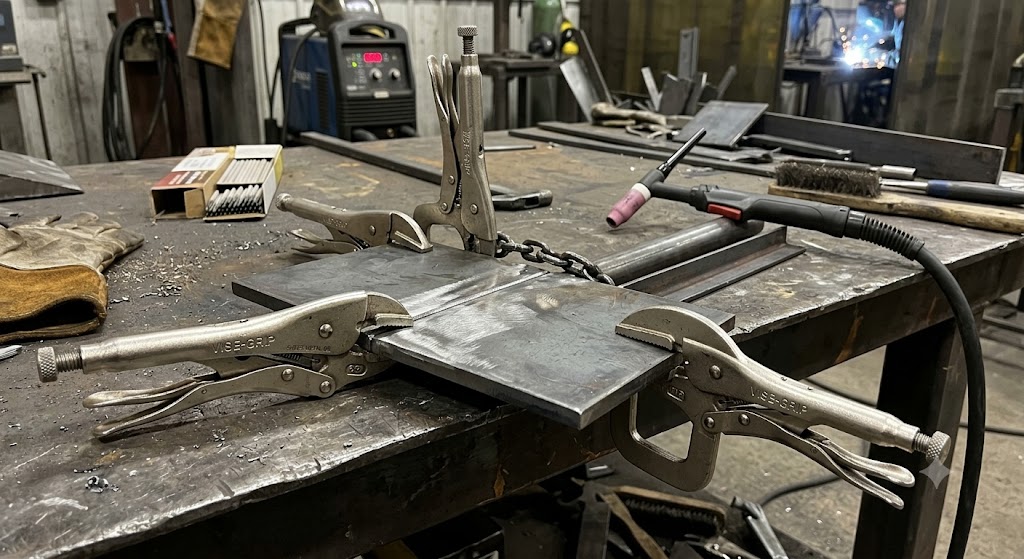
There is a reason the locking pliers on every fabricator’s bench are worn shiny at the handles. A Vise-Grip style welding clamp does something no simple clamp can: it locks onto your work with one squeeze, holds with serious force, and frees both your hands for the torch. Whether you are pulling a bracket square or holding a panel flush, locking welding clamps are the fast, grab-and-go work holders you reach for constantly. This guide covers the styles, where each shines, and which to buy.
Vise Grip welding clamps are locking pliers designed for welding, including U-shaped welding clamps for holding joints and locking C-clamps with swivel pads for flat and sheet work. They lock with one hand and hold with strong force. Here is how to choose.
Why locking welding clamps
Locking clamps earn their constant use for a handful of reasons:
- One-handed operation, so you clamp with one hand and keep the torch in the other.
- Strong, adjustable pressure, set by a screw so the clamp locks with real force.
- Speed, since they grab and release far faster than screwing a C-clamp.
- Versatility, with jaw styles for joints, flat surfaces, and sheet metal.
For fast, repeatable holding during fabrication, they are hard to beat, which is why welders own a whole rack of them.
Direct answer: which style for what
The right locking clamp depends on the work:
- U-shaped welding clamps (like the Irwin 9R) have open, U-shaped jaws that give you visibility and room to work right at the joint, ideal for holding two pieces in alignment for tacking.
- Locking C-clamps with swivel pads clamp flat surfaces and sheet metal, with pads that pivot to grip without concentrating pressure on one point.
- Sheet metal and panel clamps have wide, flat jaws for holding thin panels flush.
Match the jaw style to the job, and keep more than one style on hand.
The U-shaped welding clamp
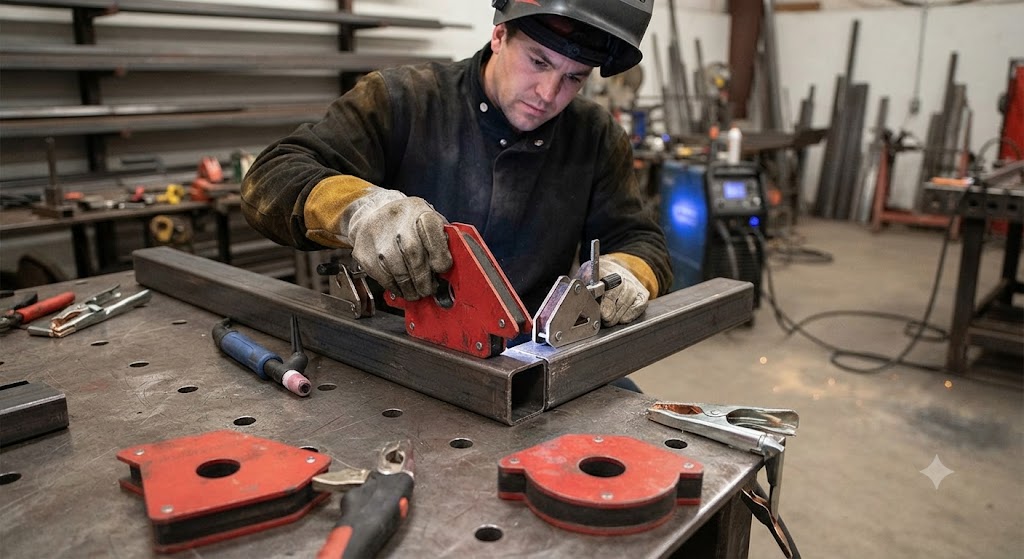
The classic welding-specific locking tool is the U-shaped clamp, and the Irwin 9R is the reference. Its jaws form an open U, which does two useful things: it gives you a clear view of the joint you are holding, and it leaves room to run your bead right where the clamp is gripping. That makes it perfect for holding two workpieces in proper alignment while you tack them, without the clamp blocking the joint or your line of sight. The screw adjustment lets you dial in exactly how hard it grips, so it locks firmly on whatever thickness you set it to. If you weld a lot of brackets, frames, and angle joints, a set of U-shaped welding clamps quickly becomes the tool you grab first.
Locking C-clamps and swivel pads
For flat work and sheet metal, a locking C-clamp with swivel pads is the go-to. Instead of the U-shaped welding jaw, these have C-shaped jaws with round pads that swivel to sit flat against the surface. The swivel action matters: it lets the pad adapt to the work and spread the clamping pressure over a wider spot, which grips securely and reduces the chance of denting or marking. That makes locking C-clamps a good middle ground between the raw force of a screw C-clamp and the speed of locking pliers, and it is why they show up constantly in auto body and sheet metal work. Set the screw for firm but not crushing pressure on thin material, and they hold panels flush for tacking.
Do locking clamps mark thin metal?
An honest concern, especially for body panels: yes, locking clamps can leave marks or slight dents on thin sheet metal if you crank them down too hard, because they concentrate a lot of force through small jaws. Two things help. First, choose a style with swivel pads, which spread the pressure over a wider area instead of biting on a narrow line. Second, back off the screw adjustment so the clamp holds firmly without crushing; on thin sheet you want just enough grip to keep the parts from moving, not maximum force. For the most delicate panels, welders often step to specialty sheet metal clamps or intergrips that are designed to hold with minimal marring. Match the clamp and the pressure to the gauge of the metal.
Which locking welding clamps to buy
Here are three useful styles.
- Irwin Vise-Grip 9R original locking welding clamp has the U-shaped jaws that give visibility and room to work, holding joints in alignment for tacking, from the brand that defines the category. Its limitation is that the open welding jaw is made for joints, not flat sheet.
- Irwin Vise-Grip 9 inch locking C-clamp with swivel pads brings swivel pads for flat work and sheet metal, spreading pressure to grip without concentrating force on one point. The trade-off is less open visibility at the joint than the U-shaped welding clamp.
- Irwin Vise-Grip 6 inch locking C-clamp is a compact locking C-clamp for smaller work and tight spaces, quick to lock with one hand. Its limitation is the smaller jaw capacity and reach.
How to choose: for holding joints in alignment, the 9R welding clamp. For flat and sheet work, the 9 inch swivel-pad C-clamp. For small parts and tight spots, the 6 inch C-clamp.
Who should skip heavy locking clamps: welders working exclusively on delicate thin panels, who should look at dedicated sheet metal clamps and intergrips that minimize marring.
The bottom line
Vise Grip style welding clamps are the fast, one-handed work holders you reach for constantly, and choosing well means matching the jaw style to the job. U-shaped welding clamps like the Irwin 9R give visibility and room to hold joints in alignment for tacking; locking C-clamps with swivel pads handle flat work and sheet metal while spreading pressure to reduce marking; compact C-clamps handle small parts. On thin metal, use swivel pads and ease off the screw to avoid dents. Keep a mix of styles on the rack, and you will always have the right grab-and-go clamp within reach.
FAQ
What vise grip style is best for sheet metal welding? For sheet metal, a locking C-clamp with swivel pads is a good choice, since the pads spread pressure to grip without denting. For the most delicate panels, dedicated sheet metal clamps or intergrips minimize marring. Avoid cranking narrow-jaw clamps down hard on thin material.
Do locking welding pliers leave marks on thin metal? They can if you tighten them too hard, because they concentrate force through small jaws. To avoid it, use a style with swivel pads that spread the pressure, and back off the screw so the clamp holds firmly without crushing. For very thin panels, use specialty sheet metal clamps.
Are vise grip clamps strong enough for fabrication? Yes. Locking welding clamps use a screw-set over-center mechanism that locks with strong, adjustable force, plenty for holding brackets, frames, and joints during tacking. For the very highest clamping force on heavy stock, a forged C-clamp still leads, but locking clamps handle most fabrication holding.
What is a U-shaped welding clamp for? A U-shaped welding clamp, like the Irwin 9R, has open jaws that give you visibility and room to work right at a joint. It is designed to hold two workpieces in alignment while you tack them, without the clamp blocking the joint or your view.
How do locking welding clamps differ from C-clamps? Locking clamps lock and release with one hand and are much faster to use, while a screw C-clamp is slower but delivers higher raw clamping force. Locking clamps are the grab-and-go choice for fast holding; C-clamps are for maximum pressure and a rigid, locked hold.
Can you weld near a locking welding clamp? With a U-shaped welding clamp, yes, that is the point of the open jaw, which leaves room to run a bead at the joint it is holding. Keep the clamp itself out of the direct weld path, and let it hold the alignment while you tack.
References
- Irwin Vise-Grip locking welding clamp and locking C-clamp specifications, including the 9R welding clamp and swivel-pad models (manufacturer), irwintools.com.
- Eastwood guidance on welding clamps, locking pliers, and sheet metal work holding (retailer resource), eastwood.com.
- Miller Electric and Lincoln Electric guidance on fit-up and work holding for welding (manufacturers), millerwelds.com, lincolnelectric.com.