Welding Blanket for Grill and Smoker Use Guide
Spend any time in barbecue and backyard-project forums and you will run into people using welding blankets for something the welding aisle never intended: wrapping smokers for insulation, shielding surfaces from grill heat, and acting as a fire-resistant barrier around cooking setups. It is a genuine crossover use, and welding blankets do have properties that make them attractive for it. But there are real caveats worth understanding before you repurpose one around food and fire. This guide covers the honest picture.
Can a Welding Blanket Double as a Grill Heat Shield?
Yes, a welding blanket can work as a heat shield around a grill or smoker, and this is one of the more popular non-welding uses. Welding blankets are made from fiberglass or other high-temperature materials designed to resist heat, sparks, and molten spatter. Those same properties make them useful for:
- Shielding a nearby surface (a deck rail, a wall, a table) from the radiant heat of a grill or smoker.
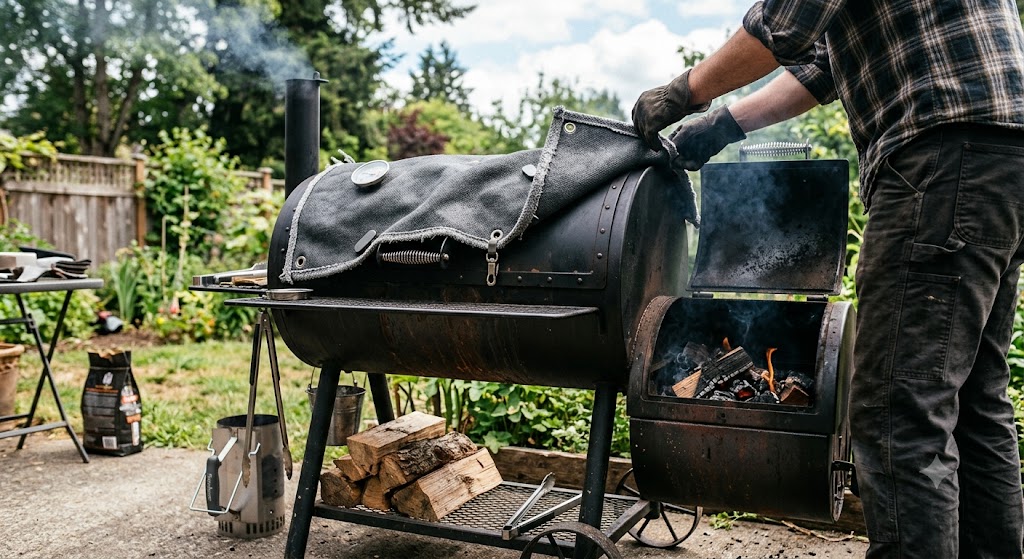
- Insulating a smoker to help it hold temperature in cold or windy conditions, which is a well-known trick among smoker enthusiasts.
- Acting as a fire-resistant barrier underneath or beside a cooking setup to protect a deck or patio.
The high heat resistance that protects a welder’s surroundings translates reasonably well to protecting surroundings from cooking heat.
Is This a Common Crossover Use Case?
Yes, it is genuinely common, particularly the smoker insulation use. Many people who run offset smokers, kamado grills, or barrel smokers in cold weather use welding blankets as insulation wraps to help the smoker maintain a steady temperature without burning more fuel. The high-temperature rating of a welding blanket comfortably exceeds the exterior temperatures a smoker reaches, making it a practical insulation choice where a purpose-made smoker blanket is unavailable or more expensive.
Using a welding blanket as a heat shield to protect combustible surfaces near a grill is also common and sensible, given how well the material resists radiant heat and stray embers.
Important Caveats for Cooking Use
The crossover is real, but so are the caveats:
Fiberglass and food do not mix. Many welding blankets are fiberglass, which can shed fibers, especially from cut or worn edges. Fiberglass fibers should never come into contact with food or food surfaces. Use a welding blanket only as an external heat shield or insulation wrap on the outside of a smoker, never anywhere near the food or the cooking chamber interior. Keep it away from where you handle food.
Direct flame vs radiant heat. Welding blankets are rated for spark, spatter, and radiant heat resistance, but not all are rated for sustained direct flame contact. Check the temperature rating of the specific blanket and understand whether your use is radiant heat (fine for most blankets) or direct sustained flame (needs a higher-rated blanket). For smoker insulation on the exterior, you are dealing with radiant and conducted heat, which is within most blankets’ ratings.
Coated blankets and off-gassing. Some welding blankets have coatings or treatments. When heated, certain coatings can off-gas. Around food and cooking, you want to avoid any blanket that off-gasses when warm. Uncoated high-temperature fiberglass or a blanket specifically rated safe for the temperatures involved is the safer choice for cooking-adjacent use.
Does It Affect the Warranty If Used for Grilling?
Using a welding blanket for grilling or smoker insulation is an off-label use, and manufacturers design and warrant these blankets for welding applications. Using one for cooking-related purposes would generally fall outside the intended use, and any warranty typically covers the product for its designed welding purpose rather than repurposed uses. In practice, welding blankets are inexpensive and the warranty is rarely the deciding factor, but understand that repurposing is at your own discretion and outside the manufacturer’s intended application.
Practical Recommendations
- For smoker insulation: use an uncoated high-temperature welding blanket on the exterior only, keeping it clear of food and the cooking chamber.
- For a grill heat shield: any quality welding blanket rated for radiant heat works to protect nearby surfaces.
- Avoid contact between fiberglass material and food or food surfaces, and avoid coated blankets that may off-gas when heated.
- Consider a purpose-made smoker insulation blanket if cooking use is your primary purpose, since those are designed and rated specifically for it.
Browse high-temperature welding blankets on Amazon
The Bottom Line
Welding blankets genuinely work as grill heat shields and smoker insulation, and the smoker insulation use in particular is popular and practical thanks to their high-temperature resistance. The key caveats are keeping fiberglass away from food entirely, matching the blanket’s rating to radiant versus direct-flame use, and avoiding coated blankets that may off-gas when heated. It is an off-label use outside the warranty’s intended purpose, but with sensible precautions it is a legitimate crossover. Use an uncoated high-temperature blanket on smoker exteriors only, and keep it clear of your food.
Frequently Asked Questions
Can a welding blanket double as a grill heat shield? Yes. Welding blankets resist radiant heat, sparks, and embers, making them effective for shielding nearby surfaces from grill and smoker heat and for insulating smokers to hold temperature in cold conditions.
Is this a common crossover use case? Yes, especially insulating offset, kamado, and barrel smokers in cold weather to maintain steady temperature. Using a blanket as a heat shield for combustible surfaces near a grill is also common and sensible.
Does it affect the warranty if used for grilling? Yes, in the sense that cooking use is off-label. Manufacturers design and warrant these blankets for welding. Repurposing falls outside the intended use, though the blankets are inexpensive and warranty is rarely the deciding factor.
Is it safe to use a fiberglass welding blanket near food? Only as an external heat shield or smoker insulation kept well clear of food and the cooking chamber. Fiberglass can shed fibers that must never contact food or food surfaces. Never place it inside a cooking chamber.
Should I worry about the blanket off-gassing when heated? Some coated or treated blankets can off-gas when warm, which you want to avoid near food. Choose an uncoated high-temperature fiberglass blanket rated for the temperatures involved for cooking-adjacent use.
References
https://www.osha.gov https://www.steinerindustries.com https://www.lincolnelectric.com
SEO Title: Welding Blanket for Grill and Smoker Use Guide