Welding Blanket for Grill and Smoker Use: A Practical Safety Guide
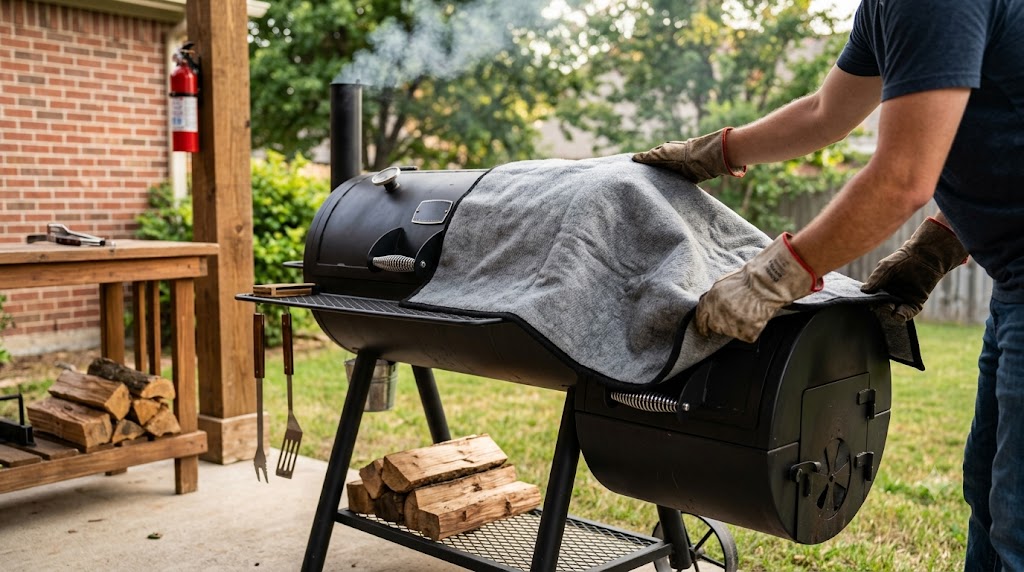
Somewhere along the way, backyard cooks discovered what welders already owned: a fiberglass welding blanket wrapped around a smoker holds heat like a thermal jacket, steadies the temperature through a long cook, and saves fuel when the weather turns cold. It works. It also comes with a few rules you cannot skip, because the same fibers that shrug off welding spatter do not belong anywhere near your food. This guide covers how to use a welding blanket for grill and smoker use safely.
The short answer: a heavy fiberglass welding blanket makes an excellent insulating wrap for a smoker or grill in cold weather, as long as you never let it touch the food, keep the exhaust venting freely, and handle it with gloves to avoid fiber irritation.
Why it works so well
A smoker’s enemy in cold or windy weather is heat loss. The fire burns hotter and eats more fuel just to hold temperature, and the swings make long cooks harder to manage. A fiberglass welding blanket, rated to roughly 1,000 F, wraps the cook chamber in an insulating layer that traps heat, steadies the temperature, and cuts fuel use. Welders and pitmasters alike report far more stable temps through long smokes, even in freezing, snowy conditions, once the blanket is on.
It is the same principle as an aftermarket insulation jacket, except a welding blanket is often cheaper, larger, and something a welder may already have on the shelf.
The rules you do not get to skip
This is the part that matters, so treat it like a toolbox talk.
- Never let the fabric touch the food. Fiberglass blankets can shed microscopic glass fibers, and those fibers must never get near what you are eating. The blanket goes on the outside of the cooker only, never inside the cook chamber and never draped where it can contact grates or food.
- Keep the exhaust and intake clear. A smoker needs to breathe. Do not cover the chimney, the exhaust, or the intake vents. Blocking airflow traps smoke and combustion gases and ruins both safety and the cook. Vent it properly.
- Wear gloves when handling it. Loose fiberglass irritates skin and lungs. Put gloves on to position or remove the blanket, and avoid shaking it out near your food or prep area.
- Use the right material. Stick to heavy-duty fiberglass or carbon felt rated for real heat. Do not improvise with a random moving blanket or a synthetic that can melt.
- Inspect and retire it. If the blanket gets scorched, holed, stiff, or contaminated, take it out of service. A shedding, damaged blanket near a cooker is not worth the risk.
Choosing a blanket for the job
Size it to wrap your cooker with a little overlap, not to strain across it. For most vertical and pellet smokers a 4x6 foot blanket covers a compact unit, while larger barrels and offset cookers do better with a 6x8. Heavier fabric (listings often quote around 850 GSM) insulates and lasts better than the thinnest options.
Blankets sold with grill and smoker use in mind, like this 4x6 foot fiberglass welding blanket for smokers or the larger 6x8 foot fiberglass smoker blanket, come with brass grommets that make them easy to secure around a cook chamber. The grommets matter more than they sound: a blanket that stays put is a blanket that keeps its edges away from vents and flame.
A quick honest caveat
Some cooks feel a full fiberglass wrap is overkill for a mild-weather smoke, and they have a point. On a warm day you may not need it at all, and a purpose-made insulation jacket designed for your exact model will fit more cleanly. The welding blanket wins on cold days, on big cookers, and on value, not as an every-cook accessory.
The verdict
A fiberglass welding blanket is a genuinely good cold-weather insulator for a smoker or grill, stabilizing temps and stretching your fuel. Just respect the non-negotiables: outside the cooker only, food never touches it, vents stay clear, gloves on when you handle it, and retire it if it is damaged. Follow those and you get restaurant-steady temps through a winter brisket without turning your cook into a science experiment.
Frequently asked questions
Can you use a welding blanket on a smoker? Yes. A heavy fiberglass welding blanket makes an effective insulating wrap around the outside of a smoker, steadying temperature and saving fuel in cold weather. It must never touch the food.
Is a fiberglass welding blanket food safe? The blanket itself is not something food should ever contact, because fiberglass can shed tiny glass fibers. Use it only on the exterior of the cooker, never inside the cook chamber.
Will a welding blanket melt on a grill? No. Fiberglass welding blankets are rated to roughly 1,000 F, well above smoker and grill surface temperatures, so they will not melt in normal use.
What size welding blanket for a smoker? A 4x6 foot blanket suits compact vertical and pellet smokers, while larger barrel and offset cookers do better with a 6x8. Size it to wrap with a little overlap.
Do I need to worry about the vents? Yes. Never cover the chimney, exhaust, or intake vents. The cooker must breathe, or you trap smoke and combustion gases and ruin the cook.
Should I wear gloves to handle it? Yes. Loose fiberglass irritates skin and lungs, so wear gloves when positioning or removing the blanket and keep it away from food prep areas.
References
- Steel Guard Safety, Fiberglass Welding Blankets (temperature ratings and material): https://www.steelguardsafety.com/fiberglass-welding-blanket
- Wellco Industries, Fiberglass Safety Fire Blanket vs Welding Blanket (safety limitations and do-not-use guidance): https://www.wellcoindustries.com/fiberglass-safety-fire-blanket-vs-welding-blanket/