Welding Blanket Fraying at Edges: Why It Happens and How to Fix It
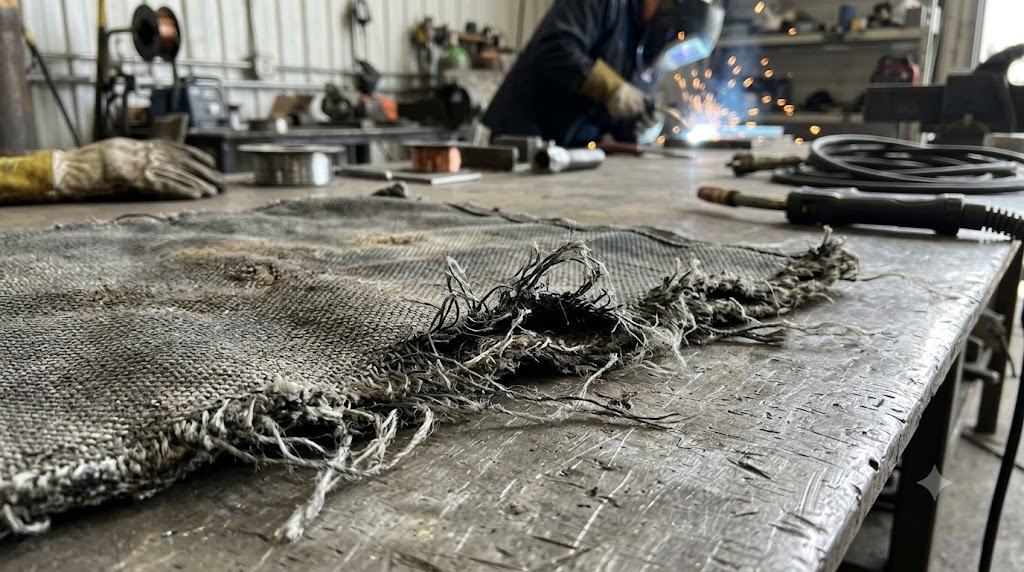
A welding blanket that loses its edges is not just fraying, it is shedding glass or silica fibers into the work area, and that matters for safety as much as for service life. Welding blanket fraying at the edges is one of the most common complaints about fiberglass and silica cloth blankets, and it happens predictably on blankets built without proper edge finishing. Fixing it is straightforward, but understanding why the edges fray first tells you how to prevent it from happening to the next blanket you buy.
Why Welding Blankets Fray at the Edges
Fiberglass and silica cloth blankets are woven from continuous filaments, and at a raw cut edge those filaments have nothing holding them in place. Every time you drag the blanket across metal, fold it, or pull it off a shelf, a few more strands work loose from the weave at the cut edge.[^https://safeprotex.com/blog/welding-blanket-maintenance-practices/] Without a hem, a binding, or a finished edge, the fraying accelerates with use until the blanket loses meaningful structural integrity at the corners and margins.
Better blankets address this at the factory with hemmed and seamed edges, reinforced perimeter stitching in high-temperature fiberglass or silica thread, and brass grommets spaced along all four sides for hanging and securing.[^https://www.tarpsnow.com/silica-fabric-weld-blanket.html] A blanket built this way can take years of abuse without significant edge loss. A raw-cut or budget blanket without these features will fray from the first session.
The Other Reason: Fabric Irritation
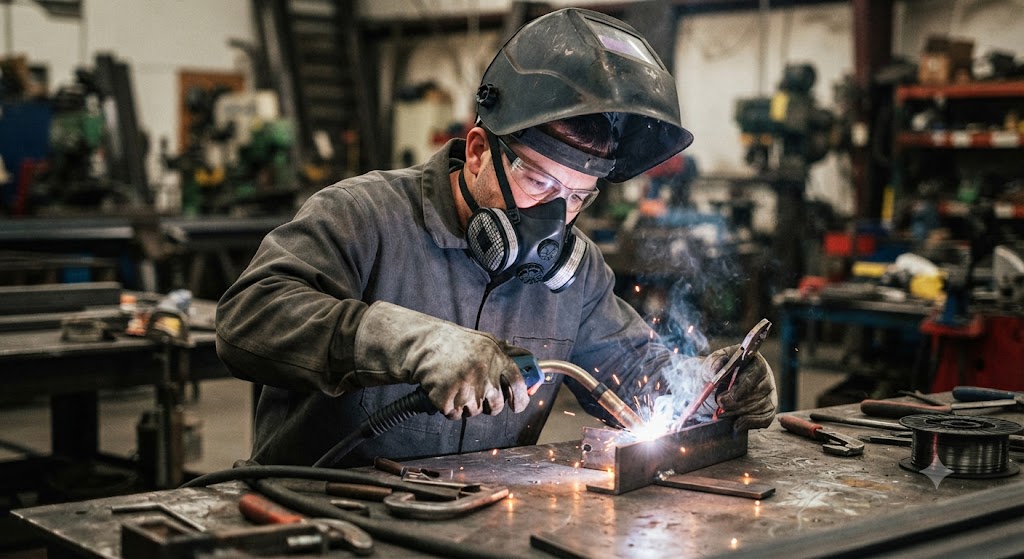
Fiberglass blanket fibers are notorious for skin irritation. When the edges fray, the loose strands are the ones that end up in your arms and on your clothing. This is not just an annoyance: handling a badly frayed fiberglass blanket without gloves or long sleeves can cause a rash from glass filaments working into skin. Silica blankets shed less aggressively than raw fiberglass but still release irritating particles from damaged edges.[^https://forum.millerwelds.com/forum/welding-discussions/12439-welding-blankets]
How to Repair a Fraying Welding Blanket
If your blanket has already started to fray, you have a few practical options:
- Trim and reseal the edge. Remove the frayed margin with a straight cut, then bind the new edge. For fiberglass cloth, use a fiberglass sewing thread rated for the temperature of your blanket to fold over and stitch a hem. High-temperature fiberglass and silica sewing thread is available from industrial sewing suppliers and handles the same temperatures as the blanket itself.[^https://www.eas-fiberglass.net/welding-blanket-sewing-thread/]
- Apply a high-temperature edge tape or coating. Some welders use a thin strip of silicone-coated fiberglass tape folded over the edge to act as a binding. It does not need sewing and stops the fraying quickly. Make sure the tape is rated for the temperatures your blanket sees.
- Replace the blanket with one that has proper edge finishing. For blankets used in continuous production work, a properly hemmed blanket with grommets is a better investment than repeatedly repairing a raw-edge blanket. The edge treatment is part of what you are paying for on a quality blanket.
How to Prevent Fraying on New Blankets
Inspect the edges before buying. A blanket worth its price should have:
- A hemmed or bound perimeter, not raw cut edges
- Reinforcement stitching in the seams, ideally fiberglass or silica thread rated for the same temperature as the cloth
- Brass or stainless grommets on all four sides, spaced for hanging
- A clear temperature rating for the application (fiberglass handles general shop welding; silica is needed for sustained high-heat work and heavy-spatter environments)[^https://www.tarpsnow.com/silica-fabric-weld-blanket.html]
Also store blankets rolled or flat rather than compressed with sharp fold lines. A sharp crease in a fiberglass blanket breaks filaments and creates a new fraying zone that was not there before.
Who should skip raw-edge budget blankets entirely: production welders or fabricators who use blankets daily. The edge degradation happens fast under heavy use, and the cost of fiber contamination in the shop exceeds the savings on a cheap blanket.
The Bottom Line
Welding blanket fraying at the edges is a construction problem, either built-in by a raw-cut budget blanket or caused by storage and handling that breaks the edge fibers. Fix an already-fraying blanket by trimming and rebinding with high-temperature thread or tape, and replace cheap raw-edge blankets with hemmed, grommeted, properly rated replacements for daily work. Handle fiberglass blankets with care regardless, because the fibers that come off the edges are real irritants that belong in the blanket, not in your arms.
Frequently Asked Questions
Why is my welding blanket fraying at the edges? Fiberglass and silica cloth blankets have woven edges that unravel when there is no hem, binding, or reinforcement stitching holding the filaments in place. Dragging and folding accelerates the loss.
How do I fix a fraying welding blanket? Trim back to a clean edge and rebind it with fiberglass sewing thread in a folded hem, or apply high-temperature fiberglass tape folded over the edge as a binding.
Are fraying fiberglass blanket fibers dangerous? They are irritating. Loose glass filaments can cause skin rash and eye irritation. Handle frayed fiberglass blankets with gloves and long sleeves, and work in a ventilated space.
What kind of thread can I use to hem a welding blanket? High-temperature fiberglass sewing thread rated for at least the same temperature as the blanket. Standard polyester or cotton thread will burn through.
What should a quality welding blanket edge look like? Hemmed and seamed perimeter, fiberglass or silica reinforcement stitching, and brass or stainless grommets on all four sides for hanging. Raw cut edges are a sign of a budget product.
Should I fold or roll my welding blanket for storage? Roll it. Sharp fold lines break filaments and create new fraying zones. Store rolled and flat where it will not be compressed.
Is silica cloth better than fiberglass for preventing fraying? Silica cloth sheds less aggressively than raw fiberglass, but edge quality still depends on the hem and stitching construction. Both materials need proper edge finishing.
References
- Welding Blanket Maintenance Practices (Safeprotex, edge care and storage): https://safeprotex.com/blog/welding-blanket-maintenance-practices/
- Silica Fabric Welding Blankets: hemmed/seamed edges and grommet specs: https://www.tarpsnow.com/silica-fabric-weld-blanket.html
- Welding Fire Blanket Sewing Thread (EAS Fiberglass, high-temp thread): https://www.eas-fiberglass.net/welding-blanket-sewing-thread/
- Welding Blankets forum discussion (fiberglass fiber irritation): https://forum.millerwelds.com/forum/welding-discussions/12439-welding-blankets