Welding Cart Buying Guide
For years I ran my MIG welder on a piece of plywood on wheels that I had cobbled together from scrap. The gas bottle sat on the floor next to it with a bungee cord keeping it loosely upright, the cable draped across the floor wherever it landed, and rolling the whole setup from one side of the shop to the other was a two-person operation with a medium probability of the bottle tipping. The day I bought a proper steel welding cart was one of those quiet shop improvements that changed my daily routine more than I expected. If you are looking for a welding cart and trying to figure out what actually matters in the specs, this guide covers everything.
What a Welding Cart Does
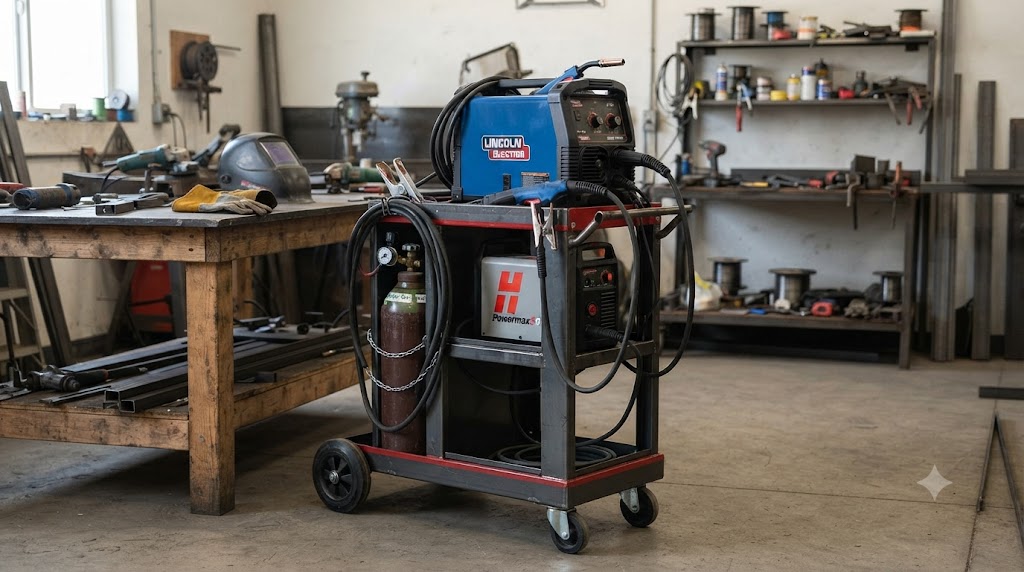
A welding cart is a steel rolling stand designed to hold your welder, your gas cylinder, and your accessories in one organized, mobile package. It puts your welder at a working height instead of on the floor, routes your cables and hoses so they are not draped across the floor and getting rolled over, secures your gas cylinder in an upright position where it belongs, and lets you roll the entire welding setup from one work area to another without a second person or a risky haul.
A good welding cart also gives you somewhere to store consumables, tools, and accessories so you are not hunting for the wire brush or the anti-spatter spray in a pile of miscellaneous shop stuff every time you need it. The organizational benefit is real, even if it does not show up in a spec sheet.
What Welding Cart Should You Buy?
For a home garage with one MIG or multi-process welder and a single gas cylinder, a two-shelf open steel cart in the 150 to 200-pound capacity range with a single cylinder rack and four swivel casters is the standard choice. It handles the weight of the welder, has room for a cable wrap, holds the bottle securely with a chain, and rolls smoothly on a concrete floor. That describes the majority of carts in the YESWELDER, VEVOR, and Klutch product lines.
For a production shop where the cart carries a heavy 300-amp machine, consumables, a tool tray, and a full-size cylinder, step up to a heavy-duty cart with a weight capacity of 300 pounds or more, heavier-gauge steel construction, and a dual cylinder rack if you run two bottles.
For a welder who needs organized consumable storage, a drawer cart adds lockable drawers for tips, wire spools, contact tubes, and gauges. The tradeoff is more weight, higher cost, and harder cleaning if welding debris gets into the drawer slides.
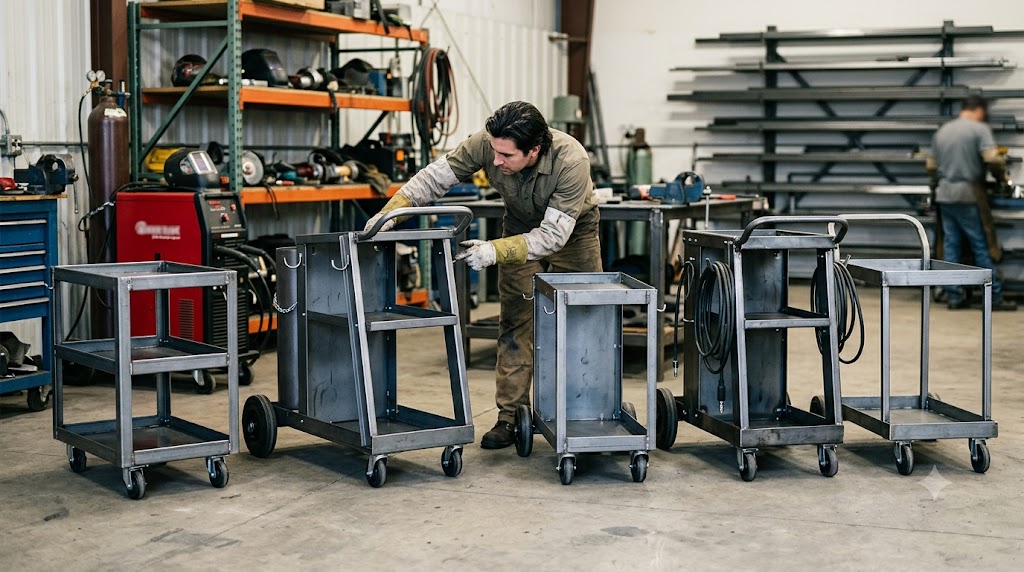
Welding Cart Style Comparison
| Style | Storage | Weight | Best For | Downside |
|---|---|---|---|---|
| Open shelf (2-3 tiers) | Moderate | Light | Home shops, MIG/multi-process | No lockable storage, debris accumulates on shelves |
| Drawer style | High | Heavy | Shops with lots of small consumables | Heavier, more expensive, drawer slides collect debris |
| Cabinet style (enclosed bottom) | High | Heavy | Organized shops, theft prevention | Most expensive, hardest to clean |
| Compact single-shelf | Low | Very light | Small inverter welders, portability | Limited storage, no cylinder rack usually |
Key Buying Factors
Weight capacity. Add the weight of your welder, your full gas cylinder, your consumables, and any tools you plan to store. A large 250-amp MIG welder can weigh 60 to 90 pounds. A full argon or CO2 cylinder adds 50 to 150 pounds depending on size. Make sure the cart’s rated capacity covers the total load with margin.
Gas cylinder rack and safety chains. A cylinder rack that holds your gas bottle upright is non-negotiable. Compressed gas cylinders must be secured to prevent tipping and accidental valve damage. OSHA 1910.101 requires secured storage of compressed gas cylinders. Any welding cart worth buying includes a cylinder rack and at minimum one safety chain. Check that the chain length is adequate for your bottle height and the ring or hook can actually secure the chain.
Caster quality. Four swivel casters let you move in any direction without repositioning. Heavy-duty casters with a larger wheel diameter roll over concrete cracks and shop debris without stopping. Two locking casters let you park the cart securely while welding. Budget carts with small diameter casters on cheap bearings are annoying on anything but perfectly flat floors.
Steel gauge and welding. Thicker steel construction means a more rigid cart that does not flex and creak under load. Look for 14-gauge or heavier steel on the frame and shelf surfaces. The shelf surfaces should have upturned edges to keep items from sliding off.
Cable management. Some carts include a cable wrap hook or guide that keeps the welding cable and ground cable organized when the cart is rolling. This is a small feature with a significant daily quality-of-life benefit.
Powder coat finish. A quality powder coat finish resists rust and welding spatter much better than bare paint. Spatter and slag that land on a powder-coated surface can be chipped off cleanly. Thin paint burns through and rusts quickly.
Brands Worth Knowing
YESWELDER and VEVOR produce the best value-per-dollar welding carts in the current market for home and light commercial use. TOOLIOM makes solid mid-range options with good cylinder rack designs. Klutch and Weldpro offer heavier-duty options with better steel gauge and caster quality for production shops. Lincoln Electric’s K2275 is a classic production-grade cart built specifically for Lincoln machines but dimensionally compatible with most full-size welders.
The Bottom Line
Buy a cart rated well above the total weight you plan to put on it. Prioritize a solid cylinder rack with safety chains over any other feature. Check the caster quality before you buy, as cheap casters are the most common cause of cart frustration on real shop floors. An open shelf cart is the best starting point for most welders. Upgrade to drawers only if you have the consumable organization problem that drawers actually solve.
Frequently Asked Questions
Do I need to secure my gas cylinder to my welding cart? Yes. OSHA 1910.101 requires compressed gas cylinders to be secured to prevent tipping. All welding carts should include a cylinder rack and a safety chain. A falling cylinder can shear the valve and create a dangerous uncontrolled release.
What weight capacity do I need in a welding cart? Add your welder weight, full cylinder weight, and accessories. Most home shop setups total 150 to 250 pounds. Buy a cart rated at or above that total with some margin.
Can a welding cart hold two gas cylinders? Some can. Look for dual cylinder rack configurations on heavier-duty carts. Each cylinder must be individually secured with its own chain.
What is the best welding cart for a MIG welder? A two-shelf open cart with swivel casters, a single cylinder rack, safety chain, and 200-pound-plus capacity covers most home and light commercial MIG setups. YESWELDER and VEVOR make good options in this category.
Are welding cart drawers worth it? If you store a lot of small consumables (tips, contact tubes, wire spools, gauges, electrodes) and want them organized and accessible, yes. If your consumable load is light, the added weight and cost of drawers are not worth it.
How do I keep my welding cart from rolling while I weld? Look for carts with two locking swivel casters. Engage the locks before you start welding so the cart does not creep across the floor when you pull the cable.
References
https://www.osha.gov/laws-regs/regulations/standardnumber/1910/1910.101 https://www.lincolnelectric.com https://www.aws.org
SEO Title: Welding Cart Buying Guide: What to Look For