Welding Cart Cover Guide: Keep Dust, Rust, and Weather Off Your Rig
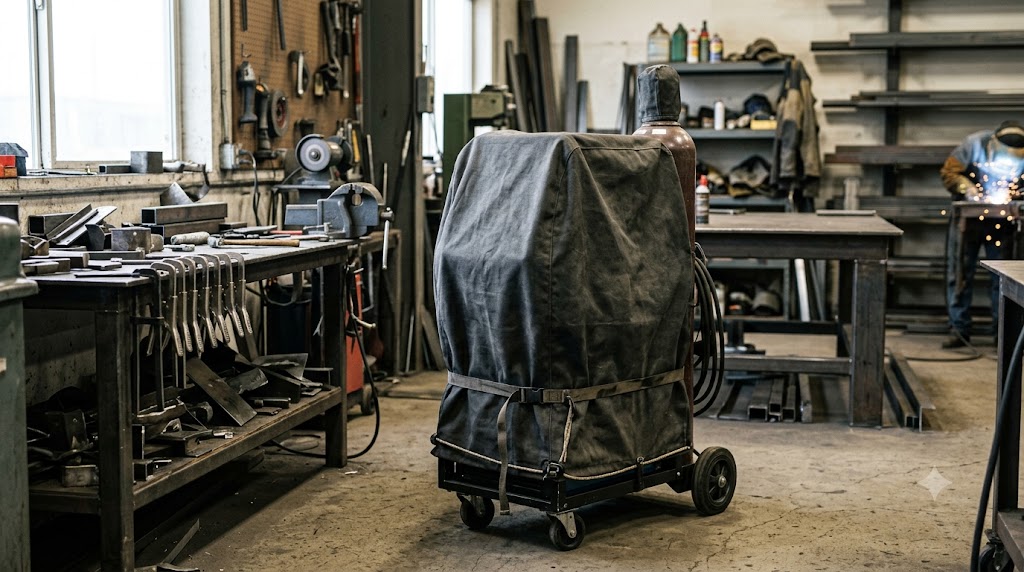
A welder and a loaded cart is a real investment, and most of them sit exposed between jobs, collecting grinding dust, shop grime, and, if the cart lives outdoors or in a damp garage, the moisture that turns bare steel and connectors to rust. A welding cart cover is the cheapest insurance you can buy for that rig. This guide covers what to look for so you buy one that actually fits and lasts, instead of a flimsy sheet that tears in a month.
The short answer: look for a heavy 600D oxford fabric with a waterproof coating, a size that matches your cart’s height and footprint, and closure details like a zipper or elastic hem that keep the cover on and the dust out.
Why cover the cart at all
Three slow killers work on an uncovered welder. Dust from grinding and shop traffic settles into vents, fans, and wire feed mechanisms, where it bakes on and chokes cooling. Moisture, even just humidity, corrodes bare steel, gas fittings, and electrical contacts. And spatter or debris from nearby work can pit and scar the machine’s surfaces. A cover stops all three for the price of a couple of consumables.
If your cart lives outside or in an unheated space, the case is even stronger, because condensation cycles are what quietly ruin connectors and controls over a season.
What to look for in a cover
Fabric weight and waterproofing
The number that matters most is the denier. A 600D oxford fabric is the sweet spot for shop covers: heavy enough to resist tears and abrasion, light enough to handle easily. Pair that with a genuine waterproof coating (often described as a triple-layer or PU coating) so rain and condensation bead off instead of soaking through. Thin, uncoated covers are the ones that tear at the corners and let moisture wick through.
The right size
Measure your cart before you buy: height with the machine and any bottle or rack, plus the length and width of the footprint. A cover that is too small will not close over the top, and one that is far too big flaps, traps its own condensation, and snags. Common cart covers run in the range of roughly 32 to 40 inches tall and 20 inches deep, but your rig sets the number, so measure it rather than guess.
Closure and fit details
- A zipper makes getting the cover on and off a loaded cart far easier and seals the opening.
- An elastic or drawcord hem hugs the bottom so wind and dust cannot get underneath.
- UV resistance matters if the cart ever sees sunlight, so the fabric does not go brittle.
- Breathability or a snug-but-not-sealed fit helps avoid trapping condensation against the machine.
The trap to avoid
Do not just throw any tarp or a cheap grill cover over a hot machine. Two mistakes cause most regret. First, covering a welder that is still warm traps moisture underneath and can hold heat, so always let the machine cool before covering. Second, buying purely on price gets you a thin, uncoated cover that shreds at the seams and leaves you shopping again in a month. Spend once on a 600D coated cover sized to your cart.
A quick sourcing note
Heavy-duty 600D oxford cart covers are widely sold, often listed with dimensions like roughly 39 by 20 by 39 inches and described as waterproof and dustproof for TIG, MIG, and plasma carts. Because the exact model that fits best depends on your cart’s measurements, buy by your measured dimensions and by the 600D waterproof spec rather than by a photo. If a listing does not state the fabric denier and a waterproof coating, treat that as a reason to keep looking.
The verdict
A welding cart cover is small money against dust, rust, and weather damage to a machine worth far more. Buy 600D oxford with a real waterproof coating, size it to your measured cart with a little margin, and favor a zipper and elastic hem for a fit that stays put. Let the machine cool before you cover it, skip the flimsy bargain covers, and your rig will look and run better for years.
Frequently asked questions
Do I really need a welding cart cover? If your welder collects grinding dust or ever sees moisture, yes. A cover blocks dust, corrosion, and debris for a fraction of the cost of repairs, and it matters most for carts stored outdoors or in damp spaces.
What fabric is best for a welding cart cover? A 600D oxford fabric with a waterproof coating. It resists tears and abrasion while shedding rain and condensation. Thin, uncoated covers fail quickly.
How do I size a welding cart cover? Measure your cart’s height (including bottles or racks), length, and width, then buy a cover that matches with a little margin. Too small will not close, and far too big flaps and traps condensation.
Can I use a grill cover or tarp instead? In a pinch, but purpose-made cart covers fit better and seal better. Avoid thin uncoated covers, and never cover a machine that is still warm.
Should I cover a welder that is still hot? No. Let it cool first. Covering a warm machine traps heat and moisture underneath, which encourages the corrosion you are trying to prevent.
What closures should I look for? A zipper for easy on and off, plus an elastic or drawcord hem to hug the bottom so wind and dust cannot get underneath.
References
- ALCO Custom Covers, Welder Cart Covers (waterproof cover construction and purpose): https://www.alcocovers.com/product/welder-cart-covers/
- Strongarm, Welder Cover Custom (fabric options, waterproofing, and NFPA-701 flame resistance note): https://www.strongarmstore.com/products/welder-cover-custom
URL slug: welding-cart-cover-guide Excerpt: Dust, moisture, and spatter quietly wreck an uncovered welder. Here is how to pick a welding cart cover that lasts: 600D waterproof oxford, sized to your measured cart, with a zipper and elastic hem.