Welding Cart Wheels Locking Up: Causes, Fixes, and Maintenance
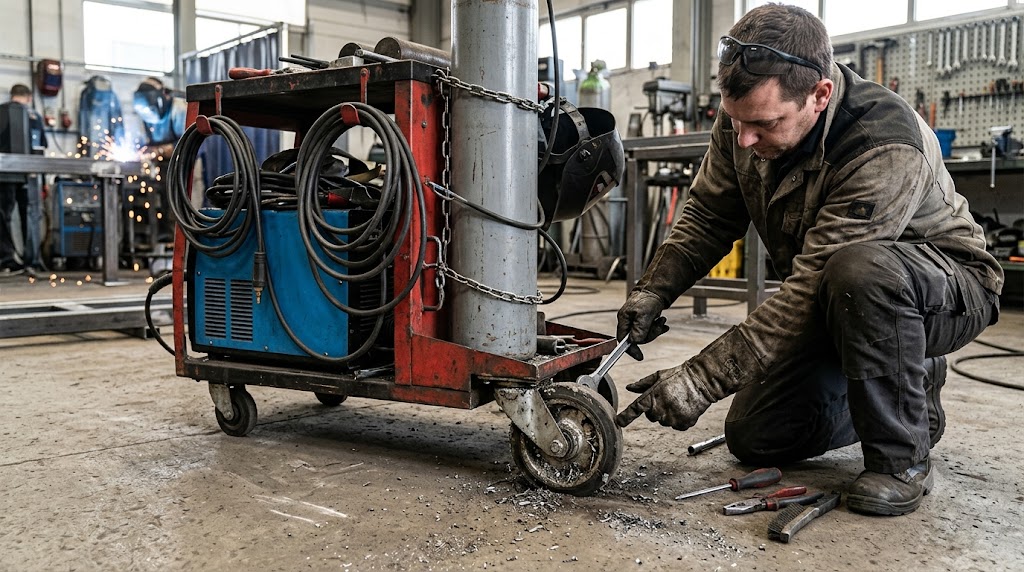
A welding cart that will not roll, or rolls with so much resistance you are dragging it instead of pushing it, turns a useful tool into an obstacle. Welding cart wheels locking up is overwhelmingly a maintenance issue rather than a structural failure, and in most cases it takes less than twenty minutes and a few dollars of lubricant to restore full movement. Here is how to diagnose the cause, fix it, and keep it from happening again.
Why Welding Cart Casters Lock Up
Casters on a welding cart live in one of the harshest shop environments: spatter, grinding grit, steel dust, rust, and temperature swings. The locking-up has a short list of causes.
Seized or dry bearings. The wheel bearings and swivel raceway need lubrication to turn freely. When lubricant ages, dries out, or is contaminated with grinding dust, the bearing surfaces grind together and resistance builds until the wheel barely moves or does not move at all.[^https://castercentral.com/blogs/blog/lubricate-caster-wheels]
Spatter, wire, or debris in the wheel. Spatter can pack into the gap between the wheel and the housing, and short lengths of wire, debris, and hardened grit wedge into the same space. A caster that was rolling fine yesterday can lock overnight when something hard gets in there. Turn the wheel upside down and look into the axle and housing gap before assuming it is a bearing problem.
Rust in the swivel raceway. The swivel raceway, the ring assembly that allows the caster to turn in any direction, is particularly vulnerable to rust in a shop with welding moisture or condensation. Rust seizes the races and can feel exactly like a dead bearing.
Overloaded casters. Casters have rated load capacities, and a welding machine, cylinder rack, and tools combined can exceed the rating of the original hardware cart casters. An overloaded caster presses its bearing surfaces together harder than they were designed for, accelerating wear and eventual seizing.
The Fix
- Clean the caster first. Use compressed air or a stiff brush to clear grit, spatter, and debris from the wheel gap and the swivel housing. Remove any wire or foreign objects jammed in the wheel.
- Apply penetrating lubricant to break the seize. Spray WD-40 or a silicone-based penetrant generously into the wheel axle and the swivel raceway. Work the wheel and swivel back and forth by hand to work the penetrant into the bearing surfaces. This frees rust and dried lubricant and restores movement on most seized casters.[^https://castercentral.com/blogs/blog/lubricate-caster-wheels]
- Follow with a proper lubricant. WD-40 is a penetrant and cleaner, not a long-term lubricant. After the caster moves freely, apply a proper grease: silicone spray for lighter-duty casters, or grease through the zerk (grease) fitting if your heavy-duty casters have them.[^https://thecasterguy.com/2024/10/29/how-to-grease-heavy-duty-casters/] Pump grease into the zerk on the swivel raceway and wheel axle until fresh grease appears from the fitting, which confirms the old contaminated grease has been pushed out.
- Check the load rating. If the casters are overloaded, the fix is not more grease, it is replacing the casters with ones rated for the actual load. Foam-filled or steel-wheel replacements are a common upgrade for welding carts that got heavier over time.[^https://www.reddit.com/r/harborfreight/comments/16gzzec/caster_maintenance/]
The Preventive Maintenance Schedule
Lubricate your cart casters every six months under normal shop use, and monthly if the cart is in a wet or heavily contaminated environment.[^https://castercentral.com/blogs/blog/lubricate-caster-wheels] The two-minute job of spraying and working the swivel avoids the twenty-minute job of freeing a completely seized caster. Wipe off excess lubricant after applying to avoid attracting more grinding grit to the same surfaces.
Who should skip repair and replace: casters that are cracked, have severely damaged bearings, or are structurally bent. A replacement set of quality locking and swiveling casters is cheap and an upgrade worth making if the originals were marginal from the start.
The Bottom Line
Welding cart wheels locking up is a lubrication and contamination problem in almost every case. Clean out the debris, hit the axle and swivel with penetrating lubricant, follow with proper grease or silicone, and check the load rating while you are at it. Do that twice a year before the wheels lock rather than after, and a welding cart rolls freely for the life of the shop. The ten minutes of maintenance is almost insultingly simple for how much it changes the experience of actually using the cart.
Frequently Asked Questions
Why are my welding cart wheels locking up? Usually dry or seized bearings from lack of lubrication, spatter or debris jammed in the wheel, rust in the swivel raceway, or overloaded casters.
How do I free a seized welding cart caster? Spray penetrating lubricant (WD-40 or silicone spray) into the wheel axle and swivel housing, work it back and forth by hand, then follow with proper grease. Clear any debris or spatter first.
What lubricant should I use on welding cart casters? WD-40 as a penetrant to free seizing, followed by silicone spray for lighter casters or grease through the zerk fitting for heavy-duty ones. WD-40 alone is not a lasting lubricant.
How often should I lubricate welding cart wheels? Every six months under normal shop use, or monthly in wet or heavily contaminated environments.
What is a zerk fitting on a caster? A small grease fitting (also called a nipple fitting) on heavy-duty casters through which grease is injected with a grease gun. Pump grease until fresh grease appears at the fitting to confirm the old lubricant has been flushed out.
Can overloading cause casters to lock? Yes. Overloaded casters press their bearing surfaces harder than they are rated for, accelerating wear. If you have added a welder, cylinder, and tools to a basic cart, check the load rating and upgrade the casters if needed.
When should I replace the casters instead of fixing them? When they are cracked, have visibly damaged bearings, or are structurally bent. Replacement casters rated for your actual load are cheap and solve the problem permanently.
References
- How to Lubricate Caster Wheels: Caster Maintenance Tips (Caster Central): https://castercentral.com/blogs/blog/lubricate-caster-wheels
- How to Grease Heavy Duty Casters (The Caster Guy, zerk fitting procedure): https://thecasterguy.com/2024/10/29/how-to-grease-heavy-duty-casters/