Welding Cart with Drawers and Storage Compared
I made the switch from a basic open-shelf welding cart to a drawer cart after the third time I found my consumable bag had been knocked off the shelf, spilling contact tips across the floor. You do not realize how many small pieces live in a welding setup until they are scattered. The drawer cart solved that problem completely. But the switch is not without tradeoffs, and whether a drawer welding cart makes sense for you depends entirely on what your actual storage problem is. This guide gives you a complete comparison.
What Makes a Drawer Welding Cart Different
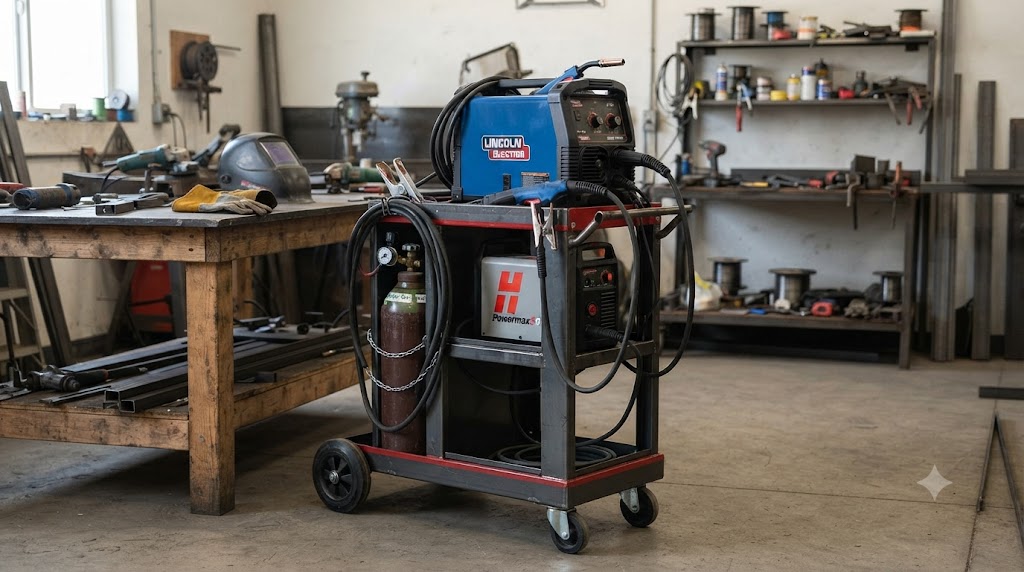
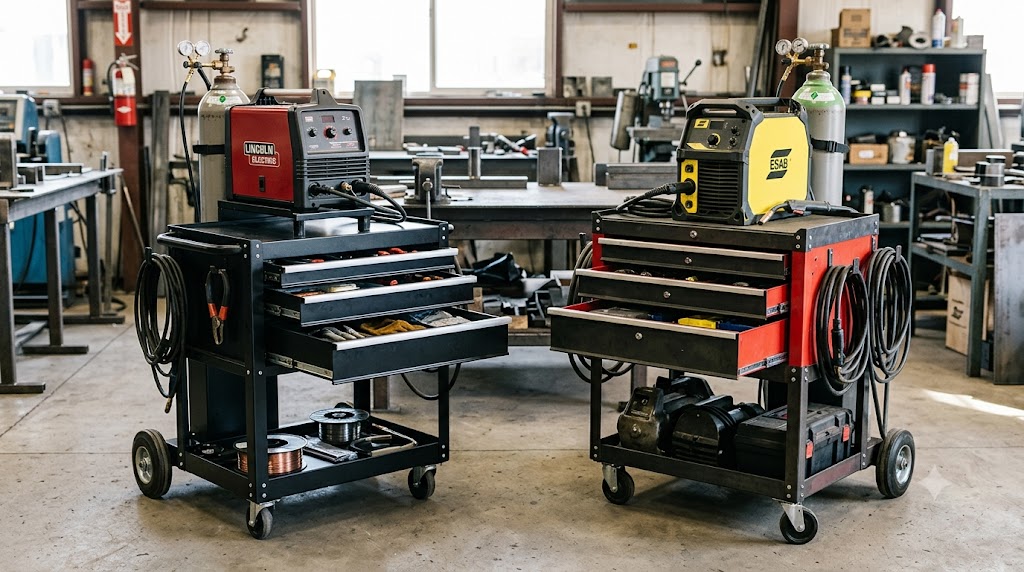
A drawer welding cart adds one or more lockable drawers to the standard welding cart structure. Instead of open shelves where accessories slide around and can fall off, the drawers provide enclosed, organized storage for consumables, tools, and accessories. Most drawer carts still include a gas cylinder rack and the same basic rolling frame as an open-shelf cart, but the lower storage area is replaced by a bank of drawers.
The organizational benefit is real. When everything has a drawer and a place, you stop wasting time hunting for the wire brush, the spare tips, the anti-spatter spray, and the spare contact tubes. Experienced production welders know that shop efficiency lives and dies on how many steps you take to find something you use every ten minutes. A drawer cart cuts that search time to nearly zero.
The tradeoffs are equally real. Drawer carts are heavier, more expensive, harder to clean when welding debris infiltrates the drawer slides, and the drawers themselves add maintenance overhead that an open shelf simply does not have.
Drawer Cart vs Open Shelf Cart vs Cabinet Cart
| Feature | Open Shelf Cart | Drawer Cart | Cabinet Cart |
|---|---|---|---|
| Consumable organization | Low, items slide around | High, everything has a drawer | High, enclosed and lockable |
| Cleanliness of storage | Low, debris accumulates on shelves | Moderate, debris can enter drawers | High, enclosed surfaces protect contents |
| Weight | Light | Moderate to heavy | Heavy |
| Cost | Lowest | Moderate | Highest |
| Cleaning and maintenance | Easy, wipe shelves | Moderate, clean drawer slides | Harder, enclosed areas trap debris |
| Lockable storage | No | Yes, on most models | Yes |
| Visibility of stored items | Full visibility | Only when open | Only when open |
| Best for | Minimal consumable load | High consumable load, production | Tool security, shared shops |
Who Benefits Most from a Drawer Welding Cart
You will benefit most from a drawer cart if you store a large number of small consumables. If your welding setup includes multiple wire spool sizes, a range of contact tips and nozzles, a set of gauges and regulators you cycle between jobs, electrodes in multiple sizes, marking tools, a wire brush, anti-spatter spray, and spare liner sections, a drawer cart is the right organizational tool. That is the profile of a production MIG welder or a fabrication shop professional.
If your setup is a single MIG welder with one wire spool, one set of contact tips, and a wire brush, an open-shelf cart serves you just fine. The drawer cart solves a problem you do not have yet, and the added weight and cost are not justified.
Key Buying Factors for Drawer Welding Carts
Number of drawers. Most drawer carts in the consumer and light commercial tier come with two to four drawers. More drawers allow more specific organization but add weight. Four drawers suits most production welding consumable sets.
Drawer depth and capacity. A shallow drawer holds tips and small tools. A deeper drawer holds a spare wire spool, a set of gauges, or a full electrode box. Check actual interior drawer dimensions before buying, not just the number of drawers.
Lockable drawers. In a shared shop environment, lockable drawers protect consumables and tools. The lock quality varies significantly between budget and mid-range carts. Check that the lock mechanism is metal, not plastic, and that the key retains correctly.
Drawer slide quality. Cheap drawer slides bend under load, stick when debris enters the track, and become annoying very quickly in a production environment. Ball-bearing drawer slides cost more but operate smoothly under load and resist debris contamination better than plain stamped slides.
Steel gauge of the frame. Heavier gauge steel means a more rigid cart that does not flex when a heavy drawer is pulled out. Budget drawer carts with thin-gauge frames flex noticeably under load.
Cylinder rack. Even on a drawer cart, the cylinder rack and safety chain are non-negotiable. Every drawer cart should include a cylinder rack that holds the bottle upright with a chain.
Brands Worth Knowing
YESWELDER produces drawer carts in the mid-range category with solid drawer construction and good cylinder rack integration. TOOLIOM makes a popular four-drawer cart that has well-regarded ball-bearing slides in its price tier. VEVOR offers heavier-duty drawer options with thicker steel and a more robust frame for production environments. For home shop use, any of the mid-tier brands produce a drawer cart that outlasts the price point.
The Bottom Line
Buy a drawer cart if you have the consumable load that drawers actually organize. Do not buy a drawer cart because it looks more professional than an open shelf cart. The extra weight, extra cost, and drawer maintenance are only worth the tradeoff if your consumable variety is high enough to fill the drawers with things you use regularly. If you are there, a four-drawer cart with ball-bearing slides and a quality cylinder rack is one of the most satisfying organizational upgrades you can make to a production welding setup.
Frequently Asked Questions
How many drawers should a welding cart have? For most production MIG setups, three to four drawers provides enough organization for consumables without making the cart unwieldy. Home hobbyists with minimal consumable loads do not need more than two.
Are welding cart drawers lockable? Most mid-range and above drawer welding carts include a lock. Check that the lock is metal-keyed rather than plastic, and that all drawers lock from a single key for convenience.
Do drawer slides on welding carts get jammed with weld debris? They can. Weld spatter and grinding dust can accumulate in open slide tracks. Ball-bearing enclosed slides resist this better than open stamped slides. Clean the slides periodically with compressed air.
Can I use a welding cart drawer to store wire spools? Only if the drawer interior is deep and wide enough for your spool size. Check the interior dimensions of the deepest drawer against your most common spool diameter before buying.
Is a drawer welding cart worth the extra cost for a home hobbyist? Only if you have a large consumable variety that needs organization. For occasional home use with a single MIG welder, an open-shelf cart is the more practical and economical choice.
What is the weight capacity of a typical drawer welding cart? Most consumer and light commercial drawer carts are rated in the 200 to 350-pound range. Add up your welder, cylinder, and contents to make sure you stay within the rating.
How do I clean a drawer welding cart? Wipe the exterior with a rag and brush spatter off the frame. For the drawers, remove contents, wipe interior surfaces, and blow out the slide tracks with compressed air. Clean the cylinder rack and check that the safety chain is in good condition.
References
https://www.osha.gov/laws-regs/regulations/standardnumber/1910/1910.101 https://www.lincolnelectric.com
SEO Title: Welding Cart with Drawers vs Open Shelf vs Cabinet