Welding Magnets Buying Guide
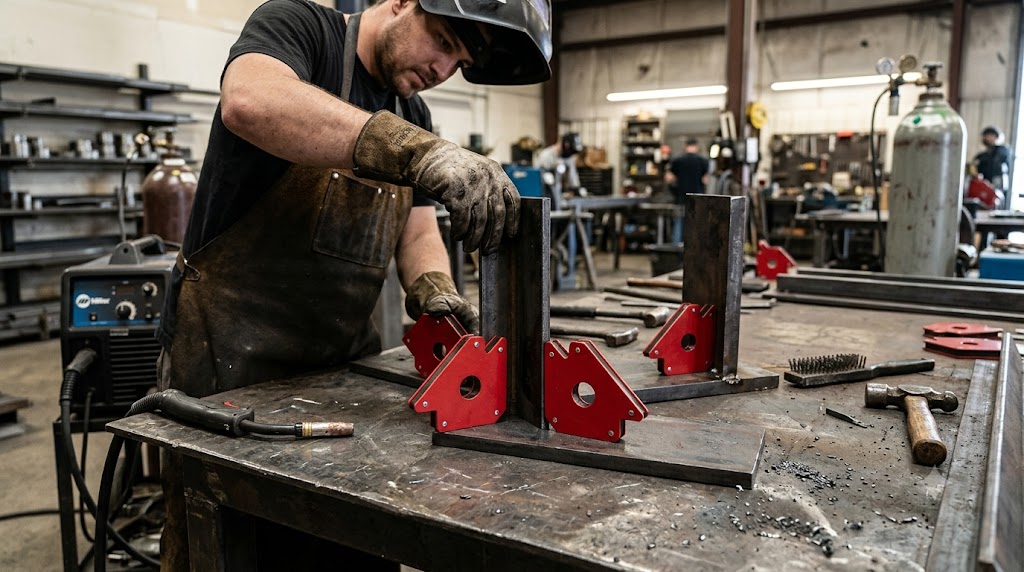
I cannot count the number of times a set of welding magnets saved me from having to build a third hand out of scrap steel and clamps. You are trying to hold a frame corner at ninety degrees, one piece wants to slide, the other wants to tip, and you only have two hands. A set of arrow magnets locks both pieces in place so you can tack without babysitting the fit-up. If you are buying welding magnets for the first time or upgrading from a cheap set that lets your work creep, this guide covers every type, what holding power actually means in practice, and the one important material limitation you need to know before you buy.
What Welding Magnets Are
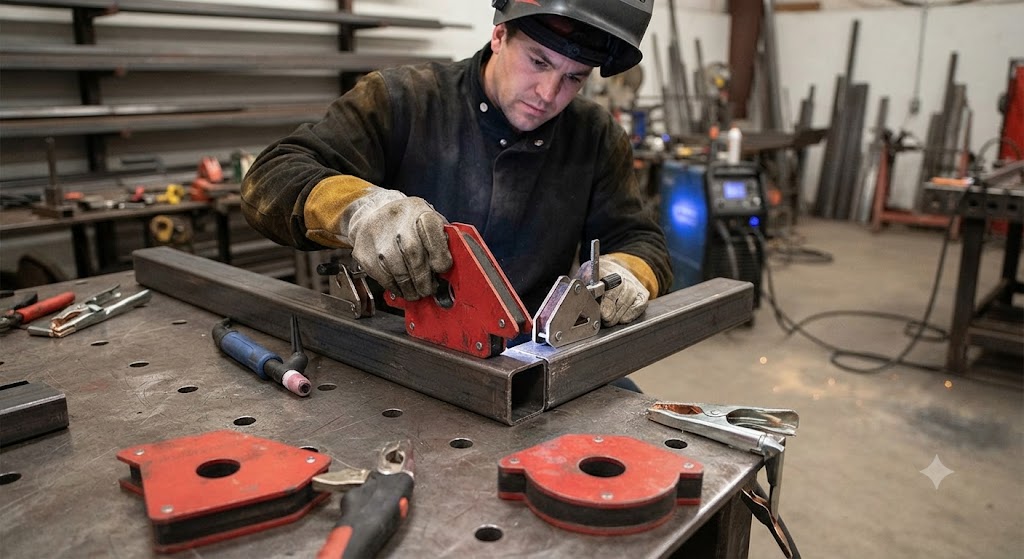
Welding magnets are permanent magnets, or switchable magnetic devices, that hold steel workpieces at fixed angles for tacking and fit-up. They attach directly to the steel surface, hold the parts in position while you tack, and then release so you can remove them before running the full weld.
The basic idea is simple: instead of using a helper or a complex jig setup to hold two pieces of steel at a ninety-degree corner, you place a welding magnet at the joint and it holds both pieces in position at the angle you need. Welding magnets are not clamps. They do not apply clamping force that squeezes pieces together. They hold position by adhering magnetically to both surfaces at once, which means joint gap control still requires clamps or tack welds.
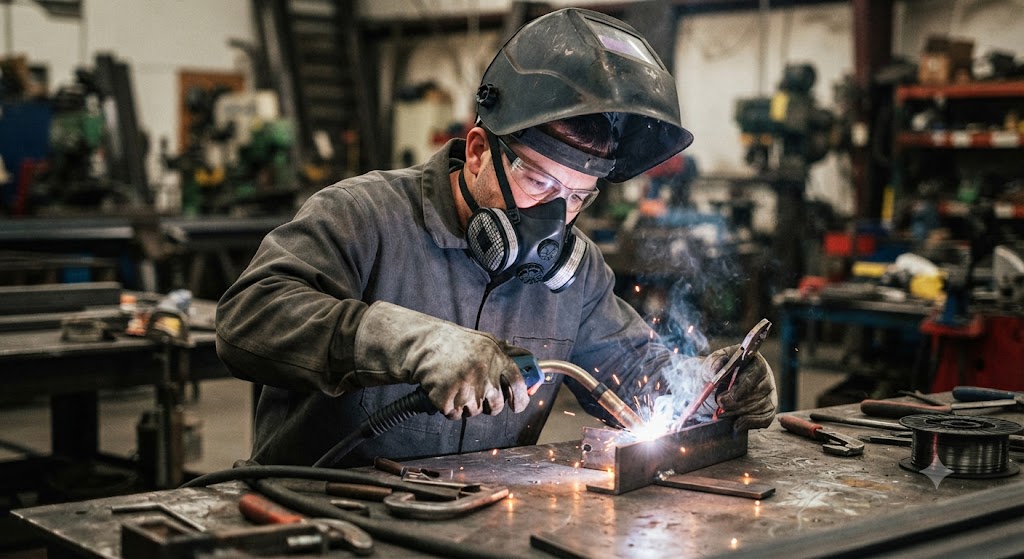
Welding magnets are a fit-up aid, not a final fixturing tool. Use them to get parts positioned and tacked, then remove them before welding near the magnet since prolonged arc heat damages permanent magnets and spatter can weld the magnet to your workpiece.
Which Welding Magnet Should You Buy?
For a beginner building their first set, buy a pair of 50-pound arrow magnets with 45, 90, and 135-degree angle positions. They cover the most common angles, they are affordable enough to buy in pairs, and they work for tubing, angle iron, flat bar, and most common fabrication scenarios. A pair of these will handle ninety percent of the fit-up tasks in a home shop.
For precision square work like welding table frames, fixture builds, or anything requiring a reliably true ninety-degree corner, add a Strong Hand Tools multi-angle or TOOLIOM adjustable magnetic square. These are purpose-built for precision rather than just convenience, and they make a genuine difference in the squareness of your final weld.
For any shop where you regularly put magnets up and need to pull them off cleanly without fighting the holding force, an on/off switchable magnet like the Magswitch style is the best workflow upgrade you can make. You flip the handle to release the magnetic field entirely, and the magnet drops off the workpiece with no fighting. After your first switchable magnet, you will never want to go back to pulling fixed magnets off steel by brute force.
Welding Magnet Types Compared
| Type | Typical Holding Power | Angles | On/Off Switch | Best For |
|---|---|---|---|---|
| Arrow magnet | 25 to 100 lb | Fixed: 45, 90, 135 degrees | No | General fit-up, beginners |
| Hexagon magnet | 50 to 100 lb | Multiple fixed faces | No | Multi-angle tacking |
| Adjustable angle magnet | 25 to 75 lb | Adjustable 0 to 180 degrees | No | Non-standard angles |
| Switchable (Magswitch style) | 50 to 200 lb | Fixed per model | Yes | High volume shops, production |
| Magnetic V-block | 25 to 75 lb | V-groove for round stock | No | Pipe and round bar fit-up |
Key Buying Factors
Holding power. Rated in pounds of pull force. A 25-pound magnet works for light tubing and thin flat bar. For heavier structural steel and larger sections, buy 50-pound or higher. Note that holding power is measured on a clean flat steel surface at room temperature. Spatter-covered steel, rust, and curved surfaces all reduce holding power significantly.
Angle options. Arrow magnets typically offer 45, 90, and 135-degree positions on the two flat faces and the inside corner. This covers most common fabrication angles. If you regularly work non-standard angles, an adjustable angle magnet is worth adding to the set.
On/off switch value. A fixed permanent magnet holds its full force all the time, which makes placement fast but removal a wrestling match on large sections of steel. An on/off switchable magnet lets you place it with the field off, position your workpiece, then switch it on to hold. Removal is equally easy. For production environments and anyone who uses magnets dozens of times a day, the switchable design dramatically reduces fatigue and frustration.
Material limitation. Welding magnets work on ferromagnetic metals only: carbon steel, cast iron, and some stainless steel grades. They do NOT work on austenitic stainless steel (304, 316), aluminum, copper, or any non-ferrous material. This is the number one source of disappointment for new buyers. If you are welding stainless steel or aluminum, welding magnets are not your fit-up tool.
Spatter accumulation. Weld spatter sticks to magnets. After extended use, a magnet covered in spatter loses holding power and can mark your workpiece. Clean magnets regularly with a wire brush and keep them out of the direct spatter zone during welding.
Brands Worth Knowing
Strong Hand Tools produces some of the most precise magnetic squares and multi-angle magnets on the market. If precision is more important than raw holding power, Strong Hand is the right choice. Magswitch invented the switchable welding magnet category and their products are the professional standard. YESWELDER and TOOLIOM both produce affordable fixed arrow magnet sets that work well for home shops and light fabrication. Lincoln Electric offers a basic magnetic holder set that is widely distributed through welding supply channels.
The Bottom Line
Start with a pair of 50-pound arrow magnets. Add a switchable magnet when you find yourself wrestling fixed magnets off your workpiece daily. Add a precision magnetic square when fit-up accuracy becomes your limiting factor. Do not buy welding magnets for stainless steel or aluminum fabrication, where they will not work. Handle your magnets clean, keep them out of the direct arc zone, and they will outlast most other tools in your shop.
Frequently Asked Questions
Do welding magnets work on stainless steel? Only on ferritic stainless steel grades like 430. Common austenitic grades like 304 and 316 are not magnetic and welding magnets will not hold them.
What holding power do I need for welding magnets? For tubing and light sections up to 1/8-inch wall, 25 to 50 pounds is enough. For heavier structural steel and larger sections, 75 to 100 pounds or more gives more secure positioning.
Can I weld near a welding magnet? You can tack near a welding magnet but prolonged arc heat will demagnetize a permanent magnet over time. Remove magnets before running full production welds near them.
What is a switchable welding magnet? A switchable magnet, like the Magswitch design, uses a rotating internal magnet to switch the external field on and off. When switched off, the magnet holds nothing and lifts easily. When switched on, it holds its rated load. This makes placement and removal dramatically easier than fighting a fixed permanent magnet.
How do I clean welding magnets? Brush weld spatter and steel dust off with a stiff wire brush. Wipe the holding faces with a clean rag to restore contact area. Keep magnets away from grinding dust, which can accumulate and reduce holding power.
Can I use welding magnets on aluminum? No. Aluminum is not ferromagnetic and welding magnets will not adhere to it at all.
Are cheap welding magnets from Amazon or Harbor Freight worth buying? For home hobby use at light scales, yes. Budget magnets from YESWELDER and TOOLIOM produce adequate holding power for home shop work. For production environments where the magnets are used multiple times per day, the switchable Magswitch design or Strong Hand Tools precision magnets are worth the additional investment.
References
https://www.osha.gov https://www.stronghandtools.com https://www.magswitch.com.au
SEO Title: Welding Magnets Buying Guide