Welding Respirator Filter Replacement Schedule: When to Change P100 Filters
A respirator is only as good as the filter in it, and the question every welder eventually asks is a reasonable one: how do I know when to replace the filter? The honest answer is different for particulate filters, which most welders use for fume protection, and for gas or vapor cartridges, and confusing the two rules leads either to wasting money or to wearing a filter that is no longer protecting you. This welding respirator filter replacement schedule guide explains both types clearly so you can build a real change-out plan.
The Two Types and Why They Have Different Rules
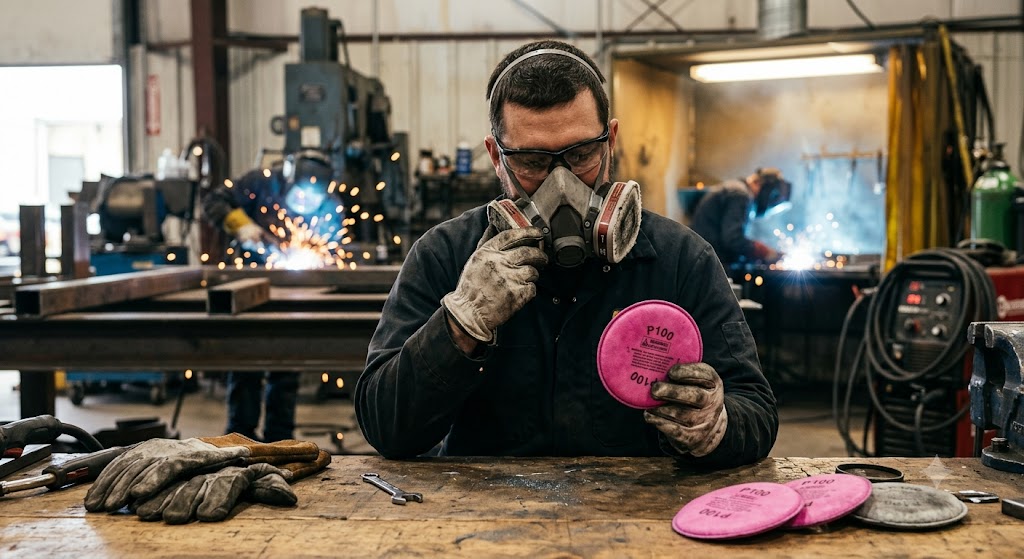
P100 particulate filters work like a physical strainer, trapping particles (welding fume, metal dust, grinding particles) as air passes through the media. Because they trap particles rather than absorbing them, they do not have a chemical saturation limit. They keep filtering until the media is physically clogged with particles or the filter is physically damaged.[^https://pksafety.com/blogs/pk-safety-blog/when-should-i-change-my-respirator-filter]
Gas and vapor cartridges work like a sponge, absorbing gases such as organic vapors, isocyanates, or carbon monoxide into activated charcoal granules. Once the charcoal is saturated, gases pass through without being absorbed, which is often undetectable by feel until you smell breakthrough.[^https://pksafety.com/blogs/pk-safety-blog/when-should-i-change-my-respirator-filter] These require a formal change-out schedule based on concentration, duration, and temperature, per OSHA 29 CFR 1910.134.[^https://www.osha.gov/etools/respiratory-protection/change-schedules]
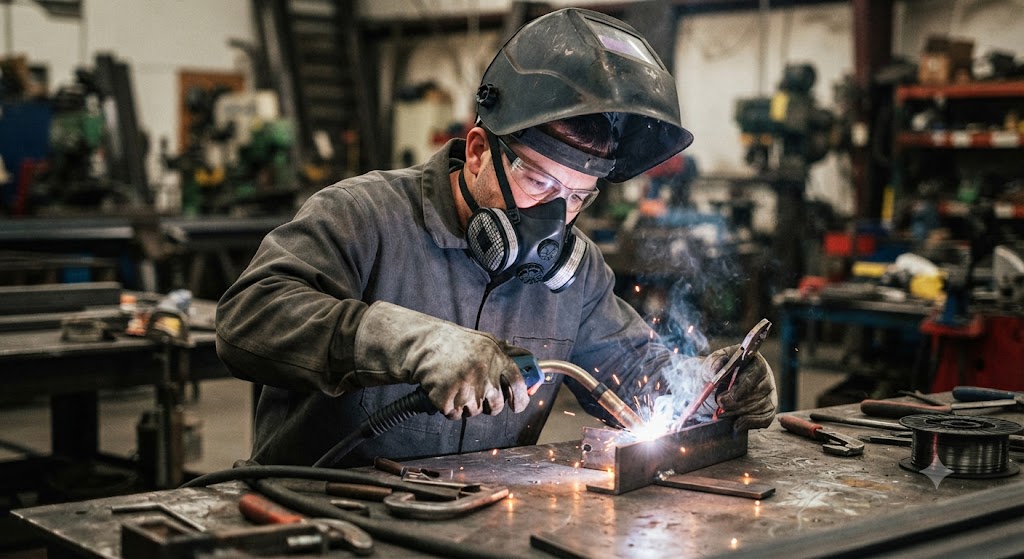
Most welding fume is particulate, so most welders are using P100 particulate filters. Combination cartridges (P100 plus organic vapor) are used when welding on coated, painted, or galvanized metal where gas exposure is also a concern.
When to Replace P100 Particulate Filters
For P100 welding filters, there is no mandatory calendar-based replacement. OSHA and NIOSH guidance is clear: replace P100 particulate filters when breathing resistance noticeably increases, when the filter is physically damaged (torn media, cracked housing), or when it becomes contaminated with oil, moisture, or solvents that could compromise the media.[^https://pksafety.com/blogs/pk-safety-blog/when-should-i-change-my-respirator-filter][^https://wcsafety.com/blogs/reference/respirator-cartridge-change-out-schedule]
3M’s general guidance for its P100 filters is roughly six months for the soft disc style and twelve months for the hard shell, unless they reach end-of-service sooner due to resistance increase, damage, or soiling.[^https://www.reddit.com/r/Masks4All/comments/16cpyuw/how_often_do_you_change_filters_on_p100/] Think of those as maximum expected service lives under typical conditions, not as guaranteed change intervals: a filter used in heavy production welding may need replacement in weeks; one used a few hours a week in a clean shop can last the full year.
The GVS Elipse P100, for example, lists a shelf (storage) life of five years for the mask and filters, but storage life is not the same as service life once the filter is in use.[^https://www.gvs.com/en/catalog/elipse-p100-niosh-respirator]
The Practical Test
A simple field test for P100 filters: put on the respirator and breathe normally. If it is noticeably harder to breathe through than when the filter was new, the media is loaded and it is time to replace. You should not have to fight the filter to take a full breath.
When to Replace Gas and Vapor Cartridges
Gas and vapor cartridges need a change-out schedule established by the employer or welder, based on the contaminant, concentration, and exposure time. OSHA requires this schedule to be written down for any contaminant without a reliable odor warning at concentrations below the OSHA limit.[^https://www.osha.gov/etools/respiratory-protection/change-schedules] For organic vapors where breakthrough can be smelled, change the cartridge as soon as you detect odor inside the mask. For gases without a good odor warning, use the 3M Service Life Calculator or the manufacturer’s guidance to set a time-based change-out.
Combination Cartridges for Galvanized and Coated Metal Welding
Welding on galvanized steel, zinc-coated metal, or painted/coated surfaces releases both particulates and gases. For these applications, a P100 plus organic vapor combination cartridge is appropriate. Change the cartridge on the gas-cartridge schedule (not the P100 schedule), because the gas element can saturate while the particulate filter still has life in it.
One Rule That Never Bends
Only use the filter or cartridge specified by the respirator manufacturer and certified for your model. Substituting a different brand’s filter, even if it appears to fit, means the respirator is no longer NIOSH approved as a system, because NIOSH certification covers the entire respirator and filter combination together, not each piece independently.[^https://www.reddit.com/r/Welding/comments/1fgtkcq/niosh_approved_knockoff_p100_respirator_filters/] This matters for both protection and legal compliance.
Who can skip a strict written schedule: welders doing light, occasional work with a P100 particulate-only filter on clean mild steel, who simply replace on resistance increase. A formal written schedule is required under OSHA’s respiratory protection program for workplace situations, not personal occasional use.
The Bottom Line
For P100 particulate welding filters, the replacement trigger is increased breathing resistance, physical damage, or contamination, not a fixed calendar date. Replace roughly every six to twelve months of typical use at the latest, sooner if breathing resistance increases or the filter is soiled. For gas and vapor cartridges, follow a written change-out schedule before breakthrough occurs. Use only the manufacturer’s approved filters to keep your NIOSH certification intact, and replace on the conservative side: the cost of a new filter is trivial compared to inhaling fumes through a spent one.
Frequently Asked Questions
How often should I replace my welding respirator P100 filter? Replace when breathing resistance noticeably increases or the filter is damaged or contaminated. 3M’s rough guidance is six months (soft disc) to twelve months (hard shell) maximum, but heavy use shortens that.
Do P100 filters expire? They have a shelf life (GVS Elipse, for example, rates 5 years), but once in use, replace based on breathing resistance and condition, not solely on a calendar.
When should I replace gas and vapor cartridges? On a written change-out schedule based on contaminant type and exposure, or at first odor breakthrough for organic vapors. OSHA requires this schedule for workplace use.
Can I use a different brand’s filter in my respirator? No. Only use the filter specified by your respirator’s manufacturer. Mixing brands removes NIOSH approval from the respirator system.
Do I need a different filter for galvanized steel welding? Yes. Galvanized and coated metal releases gases as well as particulates. Use a P100 plus organic vapor combination cartridge and change it on the gas-cartridge schedule.
How do I know if my P100 filter is loaded? Put on the respirator and breathe normally. If it is noticeably harder to breathe through than when new, the media is loaded. Replace it.
What is OSHA’s change-out schedule requirement? OSHA 29 CFR 1910.134 requires employers to establish a filter change-out schedule for gas and vapor cartridges where the contaminant has no reliable odor warning before the OSHA limit is exceeded.
References
- P100 Filter Lifespan: When to Change Respirator Filters (PK Safety): https://pksafety.com/blogs/pk-safety-blog/when-should-i-change-my-respirator-filter
- OSHA Respirator Change Schedules (29 CFR 1910.134): https://www.osha.gov/etools/respiratory-protection/change-schedules
- Respirator Cartridge Change-Out Schedule (WC Safety, P100 particulate rule): https://wcsafety.com/blogs/reference/respirator-cartridge-change-out-schedule
- GVS Elipse P100 NIOSH Respirator (shelf life and filter specs): https://www.gvs.com/en/catalog/elipse-p100-niosh-respirator