Welding Rod Oven Buying Guide
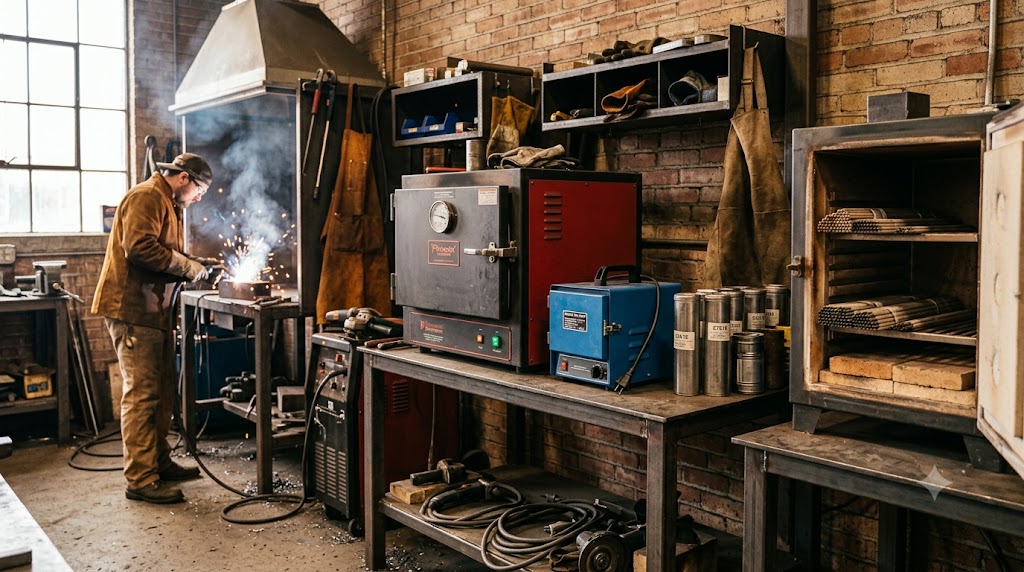
Here is a fact that catches a lot of stick welders off guard: your low-hydrogen rods are quietly absorbing moisture from the air right now, and wet rods make weak welds. Open a fresh can of 7018, leave the rods out on the bench for a day in a humid shop, and they can pick up enough moisture to cause porosity and cracking in your welds, no matter how good your technique. A welding rod oven keeps those rods dry and at temperature so they perform the way they were designed to. This guide covers who actually needs one, how to use it, and which to buy.
A welding rod oven is a heated storage box that keeps low-hydrogen electrodes like 7018 dry, preventing the moisture pickup that causes weld cracking and porosity. Portable ovens suit the field and small shops; bench ovens hold more. Here is how to choose.
Why rod ovens exist
Moisture is the enemy of low-hydrogen electrodes, and a rod oven fights it:
- It keeps rods dry, holding them above the temperature where they absorb atmospheric moisture.
- It prevents weld defects, since moisture in the rod releases hydrogen into the weld, causing porosity and cracking.
- It keeps rods ready, warm and code-ready straight from the oven.
- It protects your investment in rods that would otherwise be degraded or thrown out.
For low-hydrogen work, dry rods are not optional, and an oven is how the pros keep them that way.
Direct answer: what to look for
When choosing a welding rod oven, weigh these features:
- The right temperature range, with holding ovens around 250 to 300 degrees F for 7018 and higher-temp ovens for rebaking.
- Capacity matched to how many rods you keep on hand, from small portable units to larger bench ovens.
- Portability versus size, a light carry oven for the field or a bigger stationary oven for the shop.
- Good insulation and a tight lid to hold temperature efficiently.
- A voltage that matches where you will run it (typically 115 V for small ovens).
Strong choices include the YESWELDER portable rod oven and the Lincoln HydroGuard portable electrode oven.
Do you actually need one?
An honest question, since not every welder does. If you weld only occasionally with low-hydrogen rods and buy small quantities, you can get by without an oven by keeping rods in a sealed container with desiccant and only opening a few at a time. But if you do any structural, code, or critical work with 7018, or you go through low-hydrogen rods regularly, a rod oven is worth having, because it keeps your rods reliably dry and ready in a way that ziplock bags cannot match over time. Even serious hobbyists who care about weld quality find a small portable oven pays off. So the honest line is: casual users with careful storage can skip it, but anyone doing real low-hydrogen work should own one. Match the decision to how much and how critically you weld.
Storage temperatures and rebaking
Understanding the temperatures helps you use an oven correctly. Low-hydrogen rods like 7018 are typically held at around 250 to 300 degrees F in a rod oven, which keeps them dry and ready. Other electrodes have different needs: rods like 6013 and 7014 are usually stored much cooler, around 100 to 130 degrees F, while cellulose rods like 6010 and 6011 actually want to keep some moisture and should be stored dry at room temperature, not baked. There is also a difference between holding and rebaking. A holding oven keeps already-dry rods dry; if rods have gotten wet, restoring them (rebaking) takes a much higher temperature, often several hundred degrees for an hour or more, which calls for a higher-temp bench oven rather than a small holding oven. Baking rods in a kitchen oven is a common stopgap but is not ideal and cannot hit proper rebake temperatures. Know which rods you run and whether you need holding or rebaking.
Portable versus bench ovens
The two main formats suit different needs. Portable ovens are small, light, and often 115 V, holding a modest quantity of rods (commonly around 10 to 15 pounds) with a handle to carry them to the job or move them around the shop; they are the right choice for field work, small shops, and hobbyists. Bench ovens are larger and stationary, holding far more rods and often offering higher temperatures suitable for rebaking as well as holding, which suits busy shops and anyone processing a lot of low-hydrogen rod. If you weld in the field or keep only a modest stock, a portable oven is the practical pick; if you run a production shop or need to rebake wet rods, a bench oven earns its space. Many welders start with a portable oven and add a bench unit only if their volume grows.
Which rod ovens to buy
Here are two dependable portable options.
- YESWELDER portable welding rod oven (15 lb) is a light, temperature-controlled oven adjustable from about 85 to 300 degrees F, holding 15 pounds of rods up to 14 inches, with a carry handle for the field or shop. Its limitation is that it is a holding oven, not a high-temp rebake unit.
- Lincoln HydroGuard portable electrode oven (10 lb) is a rugged 10 pound portable oven preset to 300 degrees F with premium fiberglass insulation, a rod elevator, and a power indicator, from a trusted welding brand. The trade-off is a preset temperature rather than an adjustable one.
How to choose: for adjustable temperature and a bit more capacity, the YESWELDER. For a rugged, name-brand oven preset for 7018, the Lincoln HydroGuard. For rebaking wet rods or high-volume shops, step up to a higher-temp bench oven.
Who should skip a rod oven: occasional welders who buy small quantities of low-hydrogen rod and store them sealed with desiccant, opening only a few at a time.
The bottom line
Low-hydrogen rods absorb moisture from the air, and wet rods cause porosity and cracking no matter how well you weld, which is exactly why a rod oven exists. It keeps 7018 and similar electrodes dry and ready at around 250 to 300 degrees F, protecting both your welds and your rods. Casual users with careful sealed storage can get by without one, but anyone doing structural, code, or regular low-hydrogen work should own a rod oven. Portable ovens like the YESWELDER and Lincoln HydroGuard suit the field and small shops; bench ovens hold more and can rebake wet rods. Match the oven to your rods, your volume, and where you weld, and your low-hydrogen work will run the way it should.
FAQ
Do I really need a welding rod oven? If you do structural, code, or regular low-hydrogen (7018) work, yes, because it keeps rods reliably dry and ready in a way sealed bags cannot match over time. Occasional welders who buy small quantities can get by storing rods sealed with desiccant and opening only a few at a time.
What temperature should 7018 rods be stored at? Low-hydrogen rods like 7018 are typically held around 250 to 300 degrees F in a rod oven, which keeps them dry and ready to use. That is holding temperature; restoring rods that have gotten wet (rebaking) requires much higher temperatures in a suitable bench oven.
What is the difference between a holding oven and rebaking? A holding oven keeps already-dry rods dry at around 250 to 300 degrees F. Rebaking restores rods that have absorbed moisture and needs a much higher temperature, often several hundred degrees for an hour or more, which calls for a higher-temp bench oven rather than a small portable holding oven.
Can I store all welding rods in a rod oven? No. Low-hydrogen rods like 7018 belong in a heated oven, and rods like 6013 and 7014 are stored cooler (around 100 to 130 degrees F). But cellulose rods like 6010 and 6011 want to keep some moisture and should be stored dry at room temperature, not baked, so match storage to the electrode type.
Portable or bench rod oven, which should I get? A portable oven (often 115 V, holding around 10 to 15 pounds) suits field work, small shops, and hobbyists, and is easy to carry. A bench oven holds far more and often reaches rebaking temperatures, suiting busy shops and high rod volume. Many start with a portable oven and add a bench unit if volume grows.
Can I use a kitchen oven for welding rods? A kitchen oven is a common stopgap for keeping rods warm, but it is not ideal: it cannot reliably hit or hold proper rebake temperatures and mixes food space with shop materials. For dependable holding and especially for rebaking wet rods, a purpose-built rod oven is the right tool.
References
- Lincoln Electric HydroGuard portable electrode oven specifications, including preset temperature and capacity (manufacturer), lincolnelectric.com.
- Hobart and Lincoln Electric guidance on low-hydrogen electrode storage, holding temperatures, and rebaking (manufacturers), hobartbrothers.com, lincolnelectric.com.
- AWS guidance on storage and conditioning of low-hydrogen SMAW electrodes (industry standards), aws.org.