Why Are Welding Cart Top Shelves Built at an Angle?
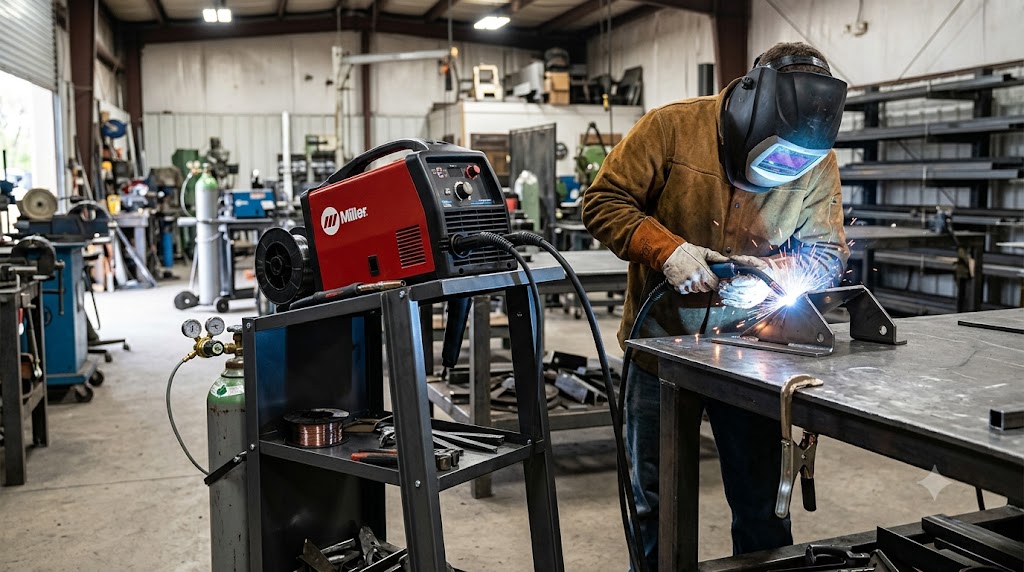
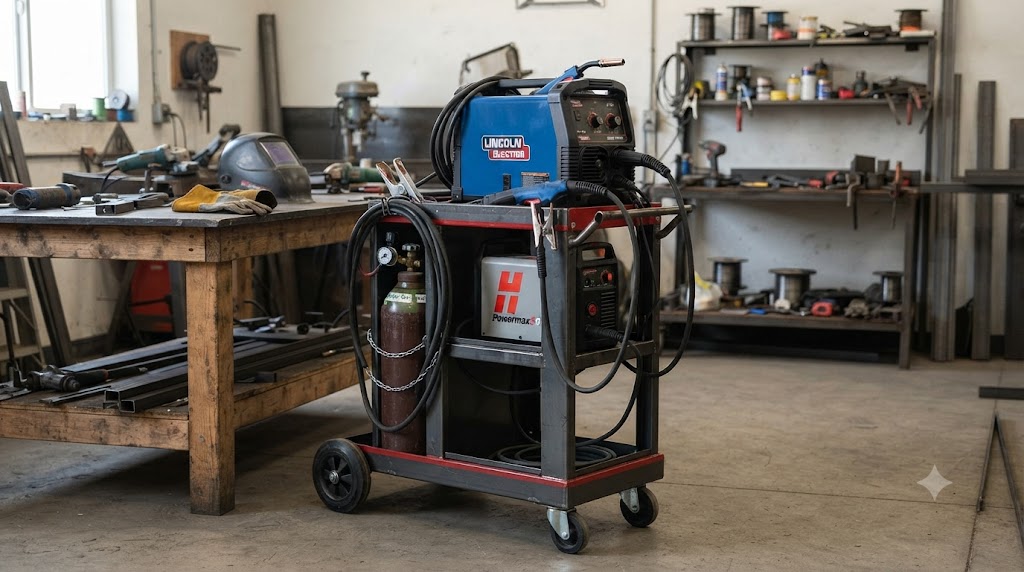
The first welding cart you really look at, you notice it. That top shelf is not flat. It tilts back a few degrees, like a music stand, and once you see it you cannot unsee it, because nearly every commercial cart and half the homemade ones do the same thing. It looks almost like a mistake, or a styling flourish. It is neither.
Welding cart top shelves are built at an angle mainly so you can see and reach the machine’s controls. Small welders sit low to the ground on a cart, and tilting the top shelf back rotates the front panel up toward your eyes, so the dials, switches, and readouts are easy to read and adjust without crouching. There are a couple of useful side benefits too, but visibility is the reason that comes up again and again from the people who build these carts.
The main reason: you can actually see the dials
Stand next to a compact MIG machine sitting flat on a low cart shelf and try to read the wire-speed and voltage settings. You are looking down at the top edge of the panel at a bad angle. Tilt that shelf back a few degrees and the whole control face rotates up to meet your eyes. Welders on the Hobart Weld Talk boards and WeldingWeb say it plainly: because the welder sits close to the ground, angling it upward makes it easier to see and reach the controls. On the Garage Journal forums the same point comes up over and over, that tilting the machine face-up simply makes it easier to use.
That is the whole origin of the design. It is ergonomics for a machine that would otherwise force you to bend over every time you change a setting.
The cable benefit: an easier bend for the leads
There is a real secondary reason, and it is about your cables. When the machine tilts back, the welding leads and gun come off the front of the machine at a gentler angle instead of taking a tight downward bend right at the outlet. Builders on Garage Journal point out that the incline helps avoid a tight upward bend of the cable, which lets the wire move more freely when you are feeding, and that a bend-free cable simply feeds better. On a MIG machine especially, anything that reduces kinking near the drive is worth having.
Note what this is not: it is not about gas flow. Shielding gas is under pressure, so it does not care how the hose runs. The cable-angle benefit is about mechanical bend radius and wire feed, not gas delivery.
The stability question: does the tilt keep the welder from sliding off?
This one is partly true and often misunderstood. A flat shelf can let a machine “walk” forward and off the front edge as the cart shakes over a rough floor. Welders have pointed out that a shelf tilted back makes the machine settle toward the rear instead, so it walks against the frame rather than off the front. So the backward tilt does help keep the welder planted during transport.
But do not confuse the tilt with proper securing. The angle is a helpful bias, not a restraint. You still want the machine strapped or chained on the cart, and your gas cylinder secured with its own chains on the rear shelf. The tilt reduces the odds of a slow creep off the edge; it does not replace a strap.
Is it just styling or cheaper to build?
There is a grain of truth to the “styling and manufacturing” theory. One long-time builder joked the slope mostly keeps people from piling junk on top of the welder, and another noted an angled shelf can mean fewer pieces to fabricate, lowering cost. Those are real minor factors. But they are side effects. The function, seeing the controls and easing the cable bend, is why the design became standard, and it is why people who build their own carts copy the angle on purpose.
If you are building your own cart
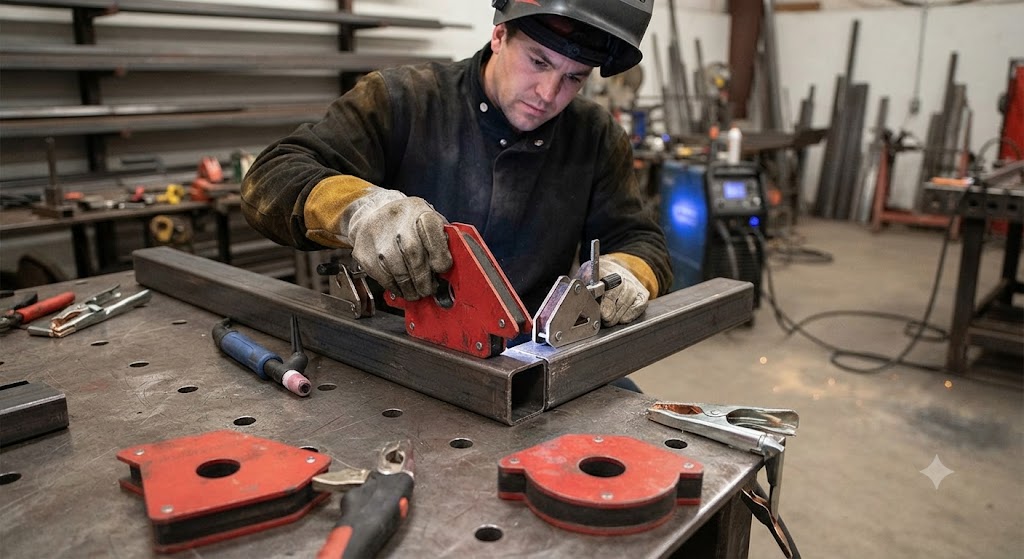
A few practical notes drawn from how experienced builders approach it:
- A few degrees is plenty. You are rotating the control face up toward standing eye level, not building a ramp. A modest backward tilt does the job.
- Tilt the machine shelf, secure the bottle upright. The angled shelf is for the welder. Your shielding gas cylinder should stand upright on the rear shelf, chained in two places.
- Use angle iron for the frame. Angle-iron shelf supports let you set a clean, consistent tilt and carry serious weight; welders report properly trussed shelves rated to hundreds of pounds.
- Mind the cable exit. Position the machine so the leads come off the front without a hard kink. That is the feed benefit, so do not undo it with a tight strap right at the outlet.
The bottom line
The angle is not decoration and it is not an accident. A welding cart’s top shelf tilts back so you can read and reach the controls on a low-sitting machine, with the bonus of a gentler cable bend for smoother feeding and a slight tendency to keep the machine from walking off the front. Style and build cost are minor extras, not the point. If you build your own, copy the tilt, and still strap everything down.
FAQ
Why are welding cart top shelves built at an angle instead of flat? Mainly for visibility. Small welders sit low on a cart, and tilting the top shelf back rotates the control panel up toward your eyes so you can read and adjust the dials without crouching.
Does the angle help with cable feed or just visibility? Both. The primary reason is seeing the controls, but the tilt also lets the leads come off the machine at a gentler bend, which helps the wire feed more freely, especially on MIG machines.
Does angling the shelf help prevent the welder from sliding off during transport? Somewhat. A backward tilt biases the machine to settle against the frame rather than walk off the front edge on a shaky floor. It is a helpful tendency, not a substitute for strapping the machine down.
Is this purely a styling choice or functional? Mostly functional. Reduced build cost and discouraging clutter on top are minor side effects, but the design became standard because it makes a low machine easier to see, reach, and cable up.
What angle should a DIY welding cart shelf be? A modest few-degree backward tilt is enough to rotate the control face toward standing eye level. You are aiming for readability, not a steep ramp.
Should the gas cylinder shelf be angled too? No. Keep the cylinder upright on the rear shelf and chain it in two places. Only the machine shelf benefits from a tilt.
References
- Hobart Weld Talk Message Boards and WeldingWeb community documentation on welding cart design (welder-reported rationale for angled shelves).
- The Garage Journal forum builder discussions on welding cart shelf tilt, control access, and cable bend radius.