Welding Helmet vs Welding Face Shield: What Each One Is Actually For
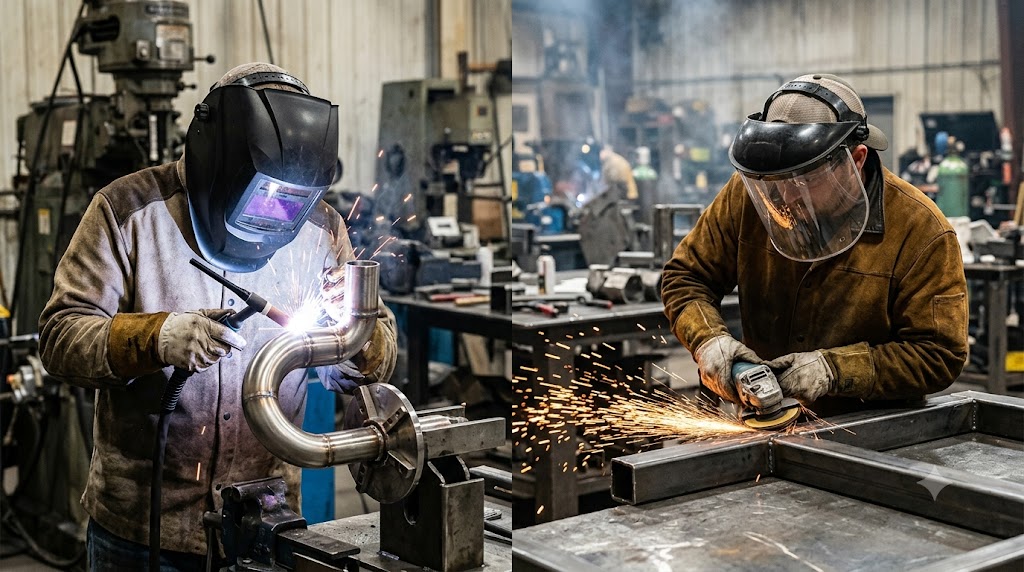
Somewhere online, someone is about to strike an arc wearing a clear face shield, and they are going to hurt their eyes. The confusion between a welding helmet and a welding face shield is one of the most dangerous mix-ups a new welder can make, because the two look related but protect against completely different things. A welding face shield guards your face from flying debris and light radiation during grinding and some cutting. A welding helmet shields your eyes from the intense ultraviolet and infrared radiation of an electric arc. One is not a cheaper version of the other, and knowing the difference protects your sight.
A welding face shield is a clear or lightly tinted visor, usually on ratcheting headgear, built for grinding, chipping, and light cutting where the hazard is impact and debris. A welding helmet is a full hood with a dark, shaded lens, either passive or auto darkening, built to block the harmful radiation of an arc. The key spec difference is the lens: a face shield does not carry the deep welding shade that protects against arc flash, while a helmet does.
The short answer up front: use a welding helmet for any arc welding, no exceptions, and use a face shield for grinding and light-duty tasks. They are complementary tools, not substitutes, and the smart shop owns both.
The difference that matters most
The critical distinction is radiation. An electric welding arc throws intense ultraviolet and infrared light that can burn your corneas, the injury welders call arc eye or flash burn, and only a properly shaded welding lens blocks it. OSHA points to the ANSI Z87.1 standard and amperage-based shade selection for exactly this reason. A standard clear face shield has no welding shade, so wearing one to arc weld leaves your eyes exposed to the very radiation that causes the damage.
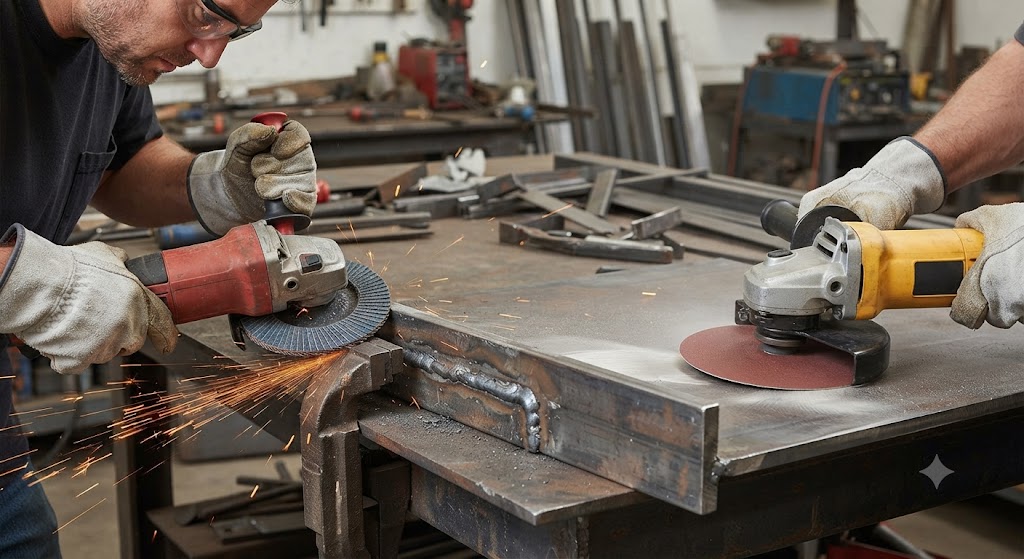
A face shield solves a different problem: impact. When you grind, chip slag, or do light cutting, the hazard is flying particles and debris, and a clear impact-rated visor is the right tool. It is not trying to block arc radiation because those tasks do not produce a welding arc.
When to use each
Jackson Safety F4XP face shield: for grinding, not welding
The Jackson Safety F4XP face shield is a good example of what a face shield does well. It pairs a wraparound clear window with ratcheting 370 Speed Dial headgear, is ANSI Z87.1 rated for high impact, and is built for grinding, cutting, and general work where debris is the danger.
The flaw, and it is the whole point of this article, is that it offers no arc welding protection. Its clear window will not shield your eyes from arc radiation. Skip it entirely for any arc welding, and use it for the grinding and cleanup that happens around the weld.
Use a welding helmet for the arc
For any arc process, MIG, TIG, or stick, you need a helmet with a proper welding shade,such as the Lincoln Viking 3350 with its variable shade 5 to 13 and auto darkening lens. This is the tool that blocks the ultraviolet and infrared radiation a face shield cannot touch.
The only real drawback of a helmet is that it is overkill for pure grinding, where flipping a whole hood up and down is slower than a dedicated face shield. That is precisely why the two tools coexist rather than compete.
How they compare
| Feature | Welding face shield | Welding helmet |
|---|---|---|
| Main hazard covered | Impact and debris | Arc radiation (UV and IR) |
| Lens | Clear or lightly tinted | Deep welding shade |
| Right for arc welding | No | Yes |
| Right for grinding | Yes | Only with grind mode or flip-up |
The table makes the relationship obvious. They protect against different hazards, so the question is never which is better, but which task you are doing.
Can a face shield ever be used for welding
There is one narrow exception that causes a lot of confusion: certain shaded face shields exist for gas welding, oxy-fuel cutting, and light plasma work, carrying a low welding shade for those specific low-radiation tasks. Those are not the same as a clear grinding face shield, and none of them are rated for electric arc welding. For any electric arc process, the answer stays the same: wear a welding helmet. Do not talk yourself into a shaded face shield for MIG, TIG, or stick.
The bottom line
A welding helmet and a welding face shield are teammates, not rivals. The helmet blocks the arc radiation that damages your eyes, so it is mandatory for all arc welding, while the face shield handles impact and debris during grinding and light-duty work. Own both, reach for the helmet the instant an arc is involved, and never let the fact that a face shield is cheaper and lighter tempt you into using it where only a welding lens will keep your sight intact.
Frequently asked questions
Is a face shield as safe as a welding helmet? Not for welding. A standard face shield protects against impact and debris but has no welding shade, so it cannot block the arc radiation that a helmet is designed to stop. For arc welding, only a helmet is safe.
When do welders use a face shield instead of a helmet? For grinding, chipping slag, and light cutting, where the hazard is flying debris rather than arc radiation. A clear impact-rated face shield is the right tool for those tasks.
Can a face shield be used for arc welding? No. A clear grinding face shield leaves your eyes exposed to the ultraviolet and infrared radiation of an arc. Always use a welding helmet with a proper shade for any arc process.
What is arc eye? Arc eye, or flash burn, is a painful burn to the cornea caused by the intense ultraviolet light of a welding arc. A properly shaded welding lens prevents it, which is why a face shield is not enough for welding.
Do I need both a helmet and a face shield? Many welders do, because fabrication mixes welding and grinding. A helmet handles the arc and a face shield handles the grinding, or a flip-up helmet combines both functions in one piece of gear.
Are there shaded face shields for welding? There are low-shade face shields for gas welding, oxy-fuel cutting, and light plasma work, but none are rated for electric arc welding. For MIG, TIG, or stick, use a welding helmet.