Brazing Rod Flux: When You Need It and When You Don't
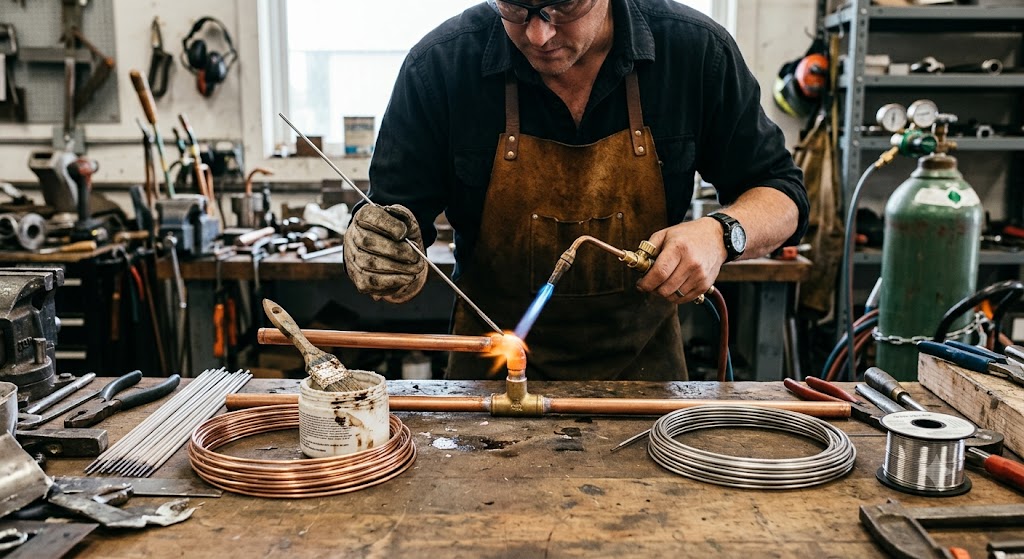
Here is a mistake that ruins more brazed joints than bad technique: skipping the flux, or using the wrong one. You heat the metal, touch the rod, and instead of flowing into the joint the filler just balls up and sits there like water on a waxed car. That is oxidation winning. Flux is the referee that keeps oxygen out of the fight long enough for the filler to bond, and knowing when you need it (and when you genuinely do not) is half of good brazing.
Brazing flux is a chemical cleaner that prevents oxidation and helps the filler flow during brazing, and most brazing needs it, with one key exception: copper-phosphorus rods self-flux on copper-to-copper joints. You can apply flux separately or use a flux-coated rod. Here is how to choose and use it.
What flux actually does
Flux is not glue and it is not filler. It does three specific jobs, all at once, while the joint heats:
- Cleans the joint chemically, dissolving the thin oxide layer that forms on hot metal.
- Blocks oxidation, shielding the surfaces from oxygen so fresh oxide cannot form as the temperature climbs.
- Helps the filler flow (wetting), so the molten rod spreads and is drawn into the joint by capillary action instead of beading up.
Without flux, oxide forms faster than the filler can bond, and the joint fails to wet. That is the balled-up rod you see when someone skips it.
Direct answer: when do you need flux?
Match the flux decision to the rod and metals:
- Silver (BAg) rods on steel, stainless, brass, copper: yes, use flux (white paste flux is the common all-purpose choice).
- Copper-phosphorus (BCuP) rods on copper to copper: no separate flux needed, the phosphorus self-fluxes.
- Copper-phosphorus rods on copper to brass: yes, flux the brass side (the zinc in brass needs it).
- Bronze (RBCuZn) rods on steel and cast iron: yes, unless the rod is flux-coated.
- Stainless, carbide, or long heating cycles: use a high-temperature black flux, which lasts longer under heat than white flux.
So the only reliable no-flux case is copper-phosphorus on copper-to-copper. Almost everything else needs flux.
Separate flux vs flux-coated rods
You have two ways to get flux into the joint, and each has its place:
- Separate flux (paste or powder) is brushed onto the joint and rod before heating. It gives you control over coverage and works with bare rods, which is the traditional approach for silver brazing.
- Flux-coated rods have the flux baked onto the rod, so you skip the brushing step. They are convenient for bronze brazing steel and cast iron, though the coating absorbs moisture, so keep them dry and sealed.
For most silver brazing, a jar of paste flux and bare rod gives the best control. For quick bronze repair work, a flux-coated rod saves a step.
White vs black flux
Not all paste flux is the same, and picking the right one matters when the heat climbs:
- White paste flux is the all-purpose, low-temperature choice, active over roughly 1,050 to 1,600 degrees Fahrenheit. It suits most silver brazing on copper, brass, bronze, steel, and cast iron. It is not for aluminum, magnesium, or titanium.
- Black (high-temperature) flux stays active to higher temperatures and lasts longer under prolonged or localized heating. Reach for it on stainless steel, carbide, heavy parts, and long heat cycles where white flux would burn off too soon.
A telltale sign to watch: quality paste flux turns clear (transparent) as it nears brazing temperature, which is your cue that the joint is hot enough to apply the rod.
Cleaning up and safety
Two things people forget. First, remove the flux residue after brazing, because leftover flux is often corrosive and can attack the joint over time. Hot water and a brush usually work while the part is still warm. Second, ventilate: flux fumes are irritating, so braze with good airflow or fume extraction. These small habits protect both the joint and you.
Which flux and flux products to buy
Here are dependable options covering separate flux and flux-coated rods.
- Harris Stay-Silv white paste brazing flux (1 lb jar) is the all-purpose low-temperature flux for silver brazing copper, brass, bronze, steel, and cast iron, giving smooth coverage and clear control. Its limitation is that it is not for aluminum, magnesium, or titanium, and it burns off faster than black flux on long heat cycles.
- SÜA low-fuming bronze flux-coated brazing rod bakes the flux onto the rod for torch brazing steel and cast iron, so you skip the separate flux step. The trade-off is that the coating absorbs moisture, so keep the rods dry and sealed.
- Harris 0 phos-copper brazing rod is the self-fluxing copper-to-copper rod that needs no flux at all on copper joints, thanks to its phosphorus content. Its limitation is that it self-fluxes only on copper, so copper-to-brass still needs flux, and it is not for steel or iron.
How to choose: for silver brazing a range of metals, keep a jar of white paste flux and bare rod. For quick bronze repairs, a flux-coated rod is convenient. For copper-to-copper plumbing, a self-fluxing phos-copper rod skips flux entirely. Add black flux only if you braze stainless, carbide, or run long heat cycles.
The bottom line
Brazing flux prevents oxidation and helps the filler flow, and most brazing needs it, with the one reliable exception being copper-phosphorus rods on copper-to-copper joints. Use white paste flux for general silver brazing, black flux for stainless and long heat cycles, and flux-coated rods when you want to skip the brushing step. Watch for the flux turning clear as your temperature cue, clean off the corrosive residue afterward, and ventilate. Get the flux right and the filler flows like it should.
FAQ
Do all brazing rods need separate flux? No. Most do, but copper-phosphorus (BCuP) rods self-flux on copper-to-copper joints and need no separate flux there. Flux-coated rods also carry their own flux. Silver (BAg) and bronze rods on steel, stainless, or brass do need flux.
What is flux-coated brazing rod? It is a rod with the flux baked onto the surface, so you do not have to brush flux on separately. It is convenient for bronze brazing steel and cast iron. Keep flux-coated rods dry, because the coating absorbs moisture over time.
Can you braze without flux? Only in specific cases: copper-phosphorus rods on copper-to-copper joints self-flux, and flux-coated rods carry their own flux. For silver or bronze brazing on steel, stainless, or brass, you need flux, or the filler will not flow.
What is the difference between white and black brazing flux? White paste flux is a low-temperature, all-purpose flux for most silver brazing. Black flux stays active at higher temperatures and lasts longer under prolonged or localized heat, making it better for stainless steel, carbide, and heavy parts.
Why does my brazing rod ball up instead of flowing? Usually because of oxidation or missing flux. Without flux, oxide forms faster than the filler can bond, so the rod beads up instead of wetting the joint. Apply the right flux and make sure the base metal, not just the rod, is hot enough.
Do you need to clean off brazing flux after? Yes. Leftover flux residue is often corrosive and can attack the joint over time. Remove it with hot water and a brush, ideally while the part is still warm. Ventilate while brazing, since flux fumes are irritating.
References
- Harris Products Group, Stay-Silv white and black paste brazing flux documentation, including active temperature ranges and metal compatibility (manufacturer), harrisproductsgroup.com.
- American Welding Society brazing flux fundamentals and AWS filler metal classifications, aws.org.
- Lincoln Electric and Miller Electric brazing flux and process guidance (manufacturers), lincolnelectric.com, millerwelds.com.