Cast Iron Welding Rod: The Complete Buying Guide
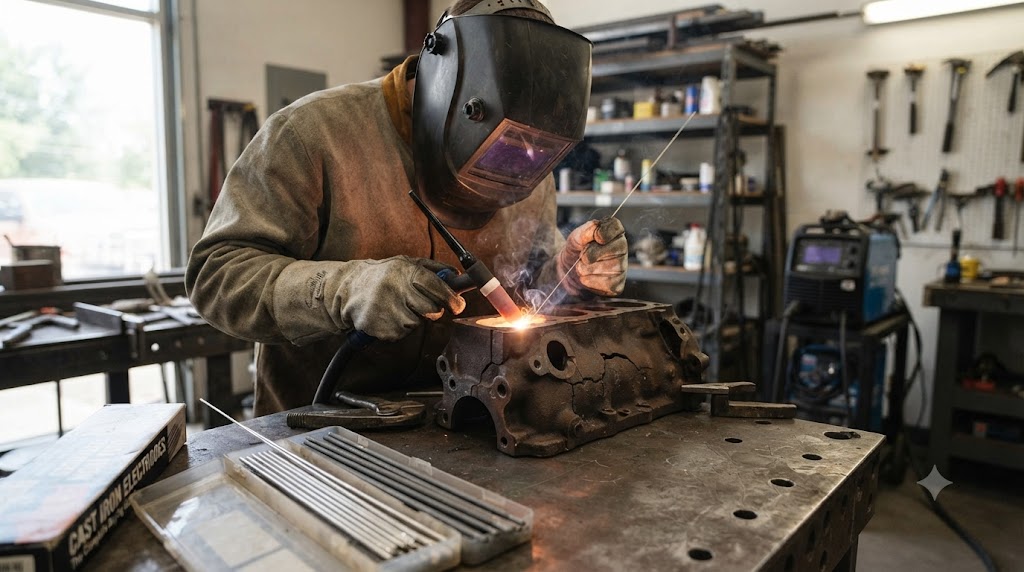
A cracked cast iron part has ended more weekend projects than almost anything else in the shop. You strike an arc on an old engine block or a broken bracket, feel good about the bead, and watch a fresh crack race right alongside your weld as it cools. Cast iron fights back. The rod you choose, and how you manage the heat, is the difference between a lasting repair and a bigger break.
The best cast iron welding rod for most repairs is a nickel-based electrode, either pure nickel (roughly 99 percent, classified ENi-CI) or a 55 percent nickel iron blend (ENiFe-CI). Nickel rods produce welds that are machinable and better able to handle cast iron’s tendency to crack, and most jobs also need preheat and slow cooling to succeed. Here is how to choose and how to give the repair a fighting chance.
Why cast iron is so hard to weld
Cast iron is high in carbon, which makes it hard, brittle, and prone to cracking when it heats and cools quickly. Weld it with an ordinary mild steel rod and the weld zone can turn glass-hard and crack, and the surrounding metal can crack too from thermal shock. That is why cast iron gets its own family of rods and its own procedure. The goal is a weld that stays soft enough to machine and flexible enough to survive the stresses of cooling.
Nickel is the answer because nickel weld metal tolerates the carbon pickup from cast iron and stays machinable, unlike a steel rod that would leave a rock-hard, brittle bead.
Direct answer: which cast iron rod should you buy?
For most cast iron repairs, buy a nickel-based rod, and choose between two grades:
- Pure nickel (about 99 percent, ENi-CI): produces the most machinable weld and is the go-to for smaller repairs and jobs where you will machine or drill the weld afterward. It is the more forgiving choice for thin or intricate castings.
- 55 percent nickel iron (ENiFe-CI): stronger and more crack-resistant than pure nickel, better for larger, thicker, or higher-stress repairs, and it uses less nickel per stick.
A simple rule: reach for pure nickel when machinability and forgiveness matter most, and 55 percent nickel iron when strength on a thicker or highly stressed casting matters more. For gray iron castings, both work; for high-stress or dirtier iron, many welders lean on the 55 percent blend.
Preheat and cooling: the part people skip
The rod is only half the job. Cast iron repairs usually need thermal management:
- Preheat the casting before welding (a moderate, even preheat) to reduce the temperature shock the weld causes. Follow the rod maker’s guidance for your part; large or complex castings especially benefit.
- Weld in short beads and peen them while warm to relieve stress, rather than laying one long hot pass.
- Cool slowly. Wrap the part or bury it in sand or under a welding blanket so it cools gradually. Fast cooling is what cracks cast iron.
Skipping preheat and slow cooling is the single most common reason a nickel-rod cast iron repair still cracks. The rod gives you machinable, crack-tolerant weld metal; the procedure keeps the base metal from cracking around it.
Can you weld cast iron with 6011?
You will see this asked constantly, and the honest answer is that 6011 is a steel rod, not a proper cast iron rod. In an emergency some welders use 6011 to build up or tack cast iron because its digging arc burns through the oil and dirt castings soak up, but the resulting weld is hard, brittle, and hard to machine, and it is prone to cracking. Treat 6011 as a last-resort field patch, not a real repair. For a repair you want to hold, use a nickel rod and proper preheat.
Which cast iron rod to buy
Blue Demon’s nickel 99 line is widely available and comes in both stick and TIG form, which covers most home and shop repairs.
- Blue Demon ENi-CI Nickel 99 stick electrodes are a strong choice for stick-welding gray iron castings and joining cast iron to mild or stainless steel. The high nickel content keeps the weld machinable, which matters if you need to drill or mill the repair. Its limitation is that pure nickel is best on smaller or lower-stress repairs; very large, high-stress castings may do better with a 55 percent nickel iron rod.
- Blue Demon ERNi-CI Nickel 99 TIG rod is the pick if you are TIG welding cast iron and want precise control on a clean, accessible repair, again giving readily machinable welds. TIG demands cleaner prep and more skill than stick, so it is best when you can grind the area clean and control heat carefully.
How to choose between them: use the stick electrode for general repairs, dirty or awkward castings, and field work, and the TIG rod when you can prep the metal clean and want maximum control. For big, heavily stressed castings, consider stepping up to a 55 percent nickel iron rod instead of pure nickel.
Who should skip nickel rods: nobody doing a real cast iron repair, honestly. The only time to leave them on the shelf is a throwaway part where a quick 6011 patch is truly good enough. For anything you want to last, nickel plus preheat is the answer.
The bottom line
Cast iron cracks because it is hard and brittle, so the winning combination is a nickel rod plus careful heat management. Choose pure nickel (about 99 percent) for machinable, forgiving repairs and 55 percent nickel iron for stronger, higher-stress jobs. Preheat the casting, weld in short peened beads, and cool it slowly. Do that and a broken casting can come back to life; skip the procedure and even the best rod will crack.
FAQ
What rod is best for welding cast iron? A nickel-based rod. Pure nickel (about 99 percent, ENi-CI) gives the most machinable, forgiving weld for smaller repairs, while 55 percent nickel iron (ENiFe-CI) is stronger and better for larger, higher-stress castings.
Do you need to preheat cast iron before welding? Usually yes. A moderate, even preheat reduces thermal shock, and slow cooling afterward prevents cracking. Skipping preheat and slow cooling is the most common cause of a failed cast iron repair.
Can you weld cast iron with 6011? Only as a rough, last-resort patch. 6011 is a steel rod that leaves a hard, brittle, hard-to-machine weld prone to cracking on cast iron. For a lasting repair, use a nickel rod with preheat.
What is the difference between pure nickel and 55 percent nickel rod? Pure nickel (99 percent) welds are the most machinable and forgiving, best for smaller or intricate repairs. 55 percent nickel iron is stronger and more crack-resistant for larger, higher-stress castings, and uses less nickel per stick.
Why are cast iron welds prone to cracking? Cast iron is high in carbon, making it hard and brittle and sensitive to fast heating and cooling. Rapid cooling and hard weld metal both cause cracks, which is why nickel rods and slow cooling are used.
Can you TIG weld cast iron? Yes, with a nickel TIG rod on clean, well-prepped metal and careful heat control. TIG gives precise results on accessible repairs, but stick is more forgiving on dirty or awkward castings.
References
- Blue Demon / Welding Material Sales, ENi-CI and ERNi-CI Nickel 99 cast iron electrode specifications and procedures (manufacturer documentation).
- Lincoln Electric and Hobart Brothers cast iron welding and nickel electrode guidance, including preheat and cooling practice (manufacturer documentation).
- AWS A5.15 nickel-based cast iron electrode classifications (ENi-CI, ENiFe-CI).