Tungsten Electrode Types: Thoriated vs Ceriated vs Lanthanated vs Pure
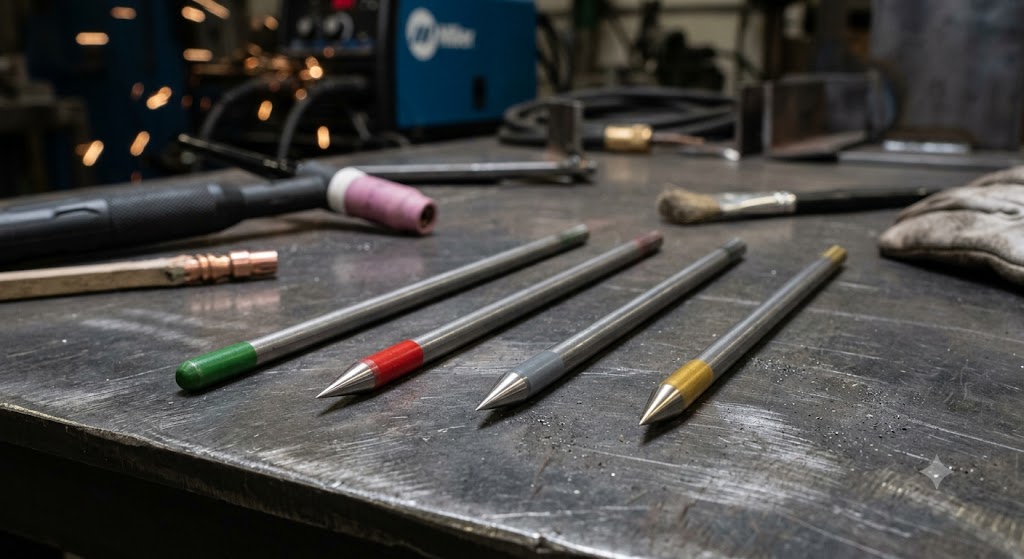
Walk up to a rack of tungsten electrodes and you are met with a rainbow of painted tips: red, blue, grey, green, gold, white. It looks like a code, because it is one. Each color tells you what was mixed into the tungsten and, by extension, what current and metal it is built for. Learn the code and the rack stops being intimidating; ignore it and you will grab a red electrode for an aluminum job and wonder why the arc fights you.
Tungsten electrode types are identified by a color-coded tip that marks the oxide added to the tungsten, with the main types being thoriated (red), ceriated (grey), lanthanated (blue or gold), and pure (green). Each type suits certain currents and metals: some are AC/DC all-rounders, some are DC specialists, and one is an AC classic. Here is what each color means and when to use it.
Why the additives matter
Pure tungsten can carry a TIG arc, but adding a small percentage of a metal oxide dramatically improves how it performs: easier arc starting, better stability, higher current capacity, and a tip that holds its shape. The type and amount of oxide (thorium, cerium, lanthanum, and others) is what separates the electrodes, and the painted color code is simply a quick way to identify which is which.
The practical takeaway is that the color is not decoration. It tells you the electrode’s personality: which current it likes, which metals it welds, and how it behaves at low or high amperage.
The color code chart
Here are the common types and what they are for. Note that color codes can vary slightly by standard and region, so confirm against the box.
| Type | Common color | Current | Best for |
|---|---|---|---|
| Pure tungsten | Green | AC | Aluminum on transformer AC machines |
| 2% Thoriated | Red | DC | Steel and stainless, long life (radioactive) |
| 2% Ceriated | Grey | AC and DC | Low to medium amperage, thin material |
| 1.5% / 2% Lanthanated | Gold / Blue | AC and DC | All-around use, all metals |
| Zirconiated | White | AC | Aluminum, resists contamination |
The two most useful for most welders are lanthanated (the all-rounder) and ceriated (the low-amp specialist), with thoriated still common for DC steel.
Thoriated (red): the DC workhorse
Thoriated tungsten, marked red, was America’s default for decades and is still widely used. It is durable, long-lasting, and stable for DC welding of steel, stainless, copper, nickel, and titanium. Its drawback is important: thorium is radioactive, so grinding it creates dust you should not breathe. Use proper ventilation and dust collection, avoid ingesting the dust, and many welders have moved to lanthanated or ceriated to sidestep the concern entirely. Thoriated is also not ideal for AC, so it is a DC specialist, not an all-rounder.
Ceriated (grey): the low-amp specialist
Ceriated tungsten, marked grey (formerly orange), is prized for low and medium amperage work. It starts easily at low currents and stays stable, which makes it ideal for thin sheet metal, small parts, and orbital tube and pipe welding. It is not radioactive and works on both AC and DC. The one caution: at high amperage the cerium oxide migrates to the tip too quickly and loses its benefit, so ceriated is not the choice for heavy, high-current work. For delicate, precise welding, though, it is hard to beat.
Lanthanated (blue or gold): the all-rounder
Lanthanated tungsten, marked blue (2%) or gold (1.5%), is the modern all-purpose favorite. It delivers excellent arc starts, holds a sharpened point, handles high current without spitting, stays stable at both low and high amperage, and works on all metals in both AC and DC. Adding lanthanum oxide also boosts current capacity compared with pure tungsten. For a welder who wants one electrode that does nearly everything well, lanthanated is the answer, which is why it has largely displaced pure and thoriated as the default recommendation.
Pure (green) and zirconiated (white): the AC options
Two more round out the set:
- Pure tungsten (green) is the traditional AC electrode, used mainly for aluminum and magnesium on older transformer machines, where it forms a stable balled tip. It starts and runs less easily than the alloyed types on modern inverters, so it has faded in popularity, but it still has a following for classic AC aluminum work.
- Zirconiated (white) is an AC electrode that resists contamination and holds a balled tip well, favored where weld purity matters and tungsten spitting into the puddle must be avoided.
Both are AC-focused, unlike the AC/DC versatility of lanthanated and ceriated.
Which tungsten types to buy
Most welders are well served by one all-rounder plus a low-amp option.
- 2% Lanthanated tungsten electrodes (blue, 3/32 inch, 10-pack) are the all-purpose choice, running on AC and DC across all metals with easy starts and a stable arc. Their limitation is that a dedicated DC-steel user chasing maximum electrode life may still prefer thoriated.
- 2% Ceriated tungsten electrodes (grey, 3/32 inch, 10-pack) handle low and medium amperage precision work on thin material beautifully. The trade-off is they are not suited to high-amperage welding.
- 2% Thoriated tungsten electrodes (red, 3/32 inch, 10-pack) are the long-life DC option for steel and stainless. The catch is the radioactive thorium, so grind with ventilation and dust collection.
How to choose: start with 2% lanthanated for nearly everything, add ceriated for thin, low-amp work, and add thoriated only for heavy DC steel where you want long electrode life and will grind carefully.
Who should skip thoriated: welders focused on aluminum (AC) or those who prefer to avoid the radioactive additive. Lanthanated covers AC and DC without thorium.
The bottom line
Tungsten electrode colors are a code worth learning: red thoriated is the durable DC steel workhorse (radioactive, grind carefully), grey ceriated is the low-amp precision specialist, blue or gold lanthanated is the AC/DC all-rounder that does nearly everything, and green pure and white zirconiated are the AC classics for aluminum. For most people, 2% lanthanated plus a set of ceriated covers the work. Match the color to your current and metal, and the arc rewards you.
FAQ
What is the difference between red and blue tungsten? Red is 2% thoriated, a durable DC specialist for steel and stainless that contains radioactive thorium. Blue is 2% lanthanated, an all-purpose electrode that works on both AC and DC across all metals without a radioactive additive.
Is thoriated tungsten dangerous? Thorium is radioactive, and grinding thoriated tungsten creates dust you should not breathe or ingest. Used with proper ventilation and dust collection it is manageable, but many welders choose lanthanated or ceriated to avoid the concern entirely.
Which tungsten is best for aluminum TIG? Aluminum is welded on AC, so use an AC-capable electrode. 2% lanthanated (blue) is the modern all-around choice for AC. Pure tungsten (green) is the traditional AC electrode for older transformer machines, and zirconiated (white) resists contamination on AC.
What is the best all-around tungsten electrode? 2% lanthanated (blue) is widely considered the best all-around type because it runs on AC and DC, welds all metals, starts easily, holds a point, and resists spitting at high current.
What is ceriated tungsten used for? Ceriated (grey) tungsten excels at low to medium amperage DC work, such as thin sheet metal, small parts, and orbital tube and pipe welding, thanks to easy low-amp arc starts. It is not recommended for high amperage.
Do tungsten color codes ever vary? Yes. Color codes are largely standardized but can vary slightly by manufacturer, standard, and region, and ceriated was formerly coded orange before grey. Always confirm the type against the box or manufacturer marking.
References
- The Fabricator, Guidelines for tungsten electrodes and color types (industry publication), thefabricator.com.
- Miller Electric, All About Tungsten in TIG Welding: Types, Selection and Use (manufacturer), millerwelds.com.
- ESAB tungsten electrode types and current options table, plus AWS A5.12 classification, esab.com.