Welding Gloves Smell Bad: How to Clean and Deodorize Them
You know the smell. You reach into your toolbox, pull out your gloves, and get hit with something between a campfire and a locker room. Burnt leather, trapped sweat, and months of forge smoke compressed into two palm-sized pieces of cowhide.
Welding gloves smell bad for the same reason they work: they absorb everything. That is the job. But absorbing everything means they hold on to it, and without regular care, a pair of quality gloves becomes something you dread putting on.
Here is the good news. Leather welding gloves can be cleaned and deodorized without ruining them, and the process takes less time than most welders expect.
Why welding gloves smell so bad
Leather is porous. Every sweat session, every session near the arc, every contact with oil or grease goes into the fiber of the glove. The heat from welding opens those pores wide, drawing in moisture and burning residues that standard cleaning cannot reach.
The main culprits:
- Sweat. Bacteria break down the proteins in sweat and produce the sour smell most welders notice first.
- Smoke and fume residue. Zinc, metal oxides, and flux fumes bind to leather fibers. These are the sharp, acrid notes underneath the sweat.
- Mold. Gloves stored damp after a shift develop a musty odor quickly, especially in sealed toolboxes or lockers with no airflow.
What you need before you start
You do not need specialized welding equipment to clean leather gloves. Most of what works is already in the shop or available at any grocery store:
- Saddle soap (bar or paste form)
- Baking soda
- Soft cloth or sponge
- Warm water
- Leather conditioner (neatsfoot oil or a commercial product)
- A dry, well-ventilated space
UV shoe sanitizers work well for ongoing maintenance once the gloves are clean, especially for stubborn bacterial odors that survive cleaning.
Step-by-step: how to clean welding gloves
Step 1: Dry them first. If the gloves are damp from use, let them air dry completely before cleaning. Cleaning wet leather can cause it to stiffen permanently as it dries a second time.
Step 2: Brush off loose debris. Use a soft brush or dry cloth to remove loose spatter, dust, and surface grime. Do not use a wire brush: it will scratch the leather surface.
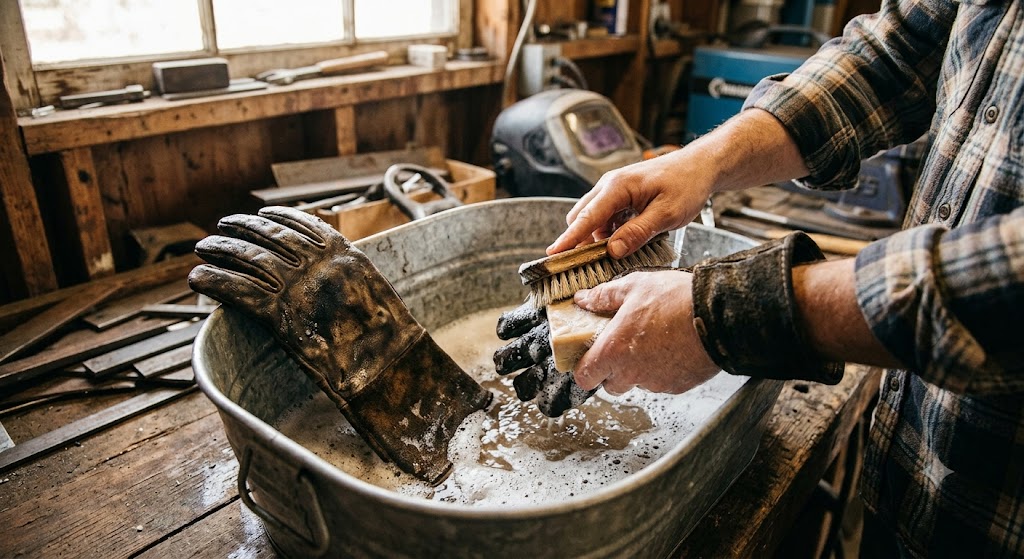
Step 3: Apply saddle soap. Dampen a soft cloth with warm water and work a small amount of saddle soap into a light lather. Apply in small circles, working into the palm and finger areas where grime concentrates. Avoid soaking the leather. A light, even coating is what you are after.
Step 4: Wipe clean and let dry. Wipe away the soap with a clean damp cloth. Do not rinse under running water. Set the gloves in a warm, ventilated spot away from direct heat. Do not put them near a heater or in sunlight: rapid drying causes cracking.
Step 5: Treat the odor with baking soda. Once dry, place the gloves in a sealable bag or container with a generous amount of baking soda. Leave them overnight. Baking soda pulls trapped odors from the leather without damaging it. Shake them out and air them for an hour before using.
Step 6: Condition the leather. Leather dries out after cleaning. Apply a thin coat of neatsfoot oil or leather conditioner with a soft cloth, working it into the palm and back of the glove. Let it absorb for at least an hour before using. This step prevents the cracking and stiffness that follow aggressive cleaning.
Can you machine wash welding gloves?
No. Machine washing leather welding gloves destroys them. The agitation, heat, and prolonged water exposure cause the leather to shrink, harden, and crack. The stitching weakens, and the protective properties of the leather are lost. There is no recovery after a machine wash cycle.
The same goes for the dryer. Even a low heat cycle will harden leather gloves to the point of uselessness.
Ongoing maintenance that prevents the smell
Cleaning reactive is harder than cleaning proactive. A few habits extend the life of your gloves and keep the smell manageable:
- Air them out after every shift. Open them flat and hang or lay them in a dry spot with airflow. Never store them damp inside a closed toolbox.
- Rotate pairs if possible. Giving gloves 24 hours to dry and air between uses prevents bacterial buildup significantly.
- Condition every three to four months. Even gloves that are not washed regularly benefit from conditioning to stay pliable.
- Use a UV sanitizer wand occasionally. A brief UV pass on the inside of the glove kills the surface bacteria responsible for the worst odors without any moisture.
When to replace instead of clean
Saddle soap and baking soda fix most odor problems, but some gloves are past saving. Replace them when:
- The leather is visibly cracked through the palm or fingers.
- The stitching is failing at the stress points near the thumb or index finger.
- The odor is deeply embedded and does not respond to two rounds of baking soda treatment.
- The palm material has thinned to the point where heat transfer is noticeable.
A fresh pair of gloves is a safety item, not a luxury. When the leather stops doing its job, the cost of replacement is far smaller than the cost of a burn.
Frequently asked questions
Why do welding gloves smell so bad? Leather absorbs sweat, smoke, and metal fume residue during welding. Heat opens the leather pores and drives these materials deep into the fibers. Bacteria break down the organic material over time, producing the strong odor most welders notice.
How do you clean welding gloves without ruining the leather? Use saddle soap applied with a damp cloth, not water poured directly on the gloves. Work in light circles, wipe clean, air dry away from direct heat, and condition with neatsfoot oil or leather conditioner once dry.
Can you machine wash welding gloves? No. Machine washing destroys leather welding gloves. The heat, agitation, and prolonged moisture cause the leather to shrink, harden, and crack permanently. Hand clean only.
Does baking soda work on leather gloves? Yes. Baking soda is one of the most effective odor treatments for leather that is already clean. Place the gloves in a sealed bag with baking soda overnight, then shake out and air. It draws out bacterial odors without damaging the leather.
How often should you clean welding gloves? For light use, once a month is reasonable. For daily shop use or heavy sweating, a light wipe-down with a damp cloth after each use and a full cleaning every two to three weeks prevents buildup from setting in permanently.
Can cracked welding gloves still be deodorized and used? The smell can be treated even on cracked gloves, but cracked leather is a safety issue. Cracks expose the stitching and the inner liner, reduce thermal protection, and can catch and hold spatter. If the leather is cracked through the protective zones, replace the gloves regardless of how well they smell.
References
- American Welding Society (AWS), welding hand protection guidelines
- Occupational Safety and Health Administration (OSHA), personal protective equipment requirements for welding
- Leather Industry Association technical notes on leather care and conditioning