What Is Duty Cycle in Welding? Explained
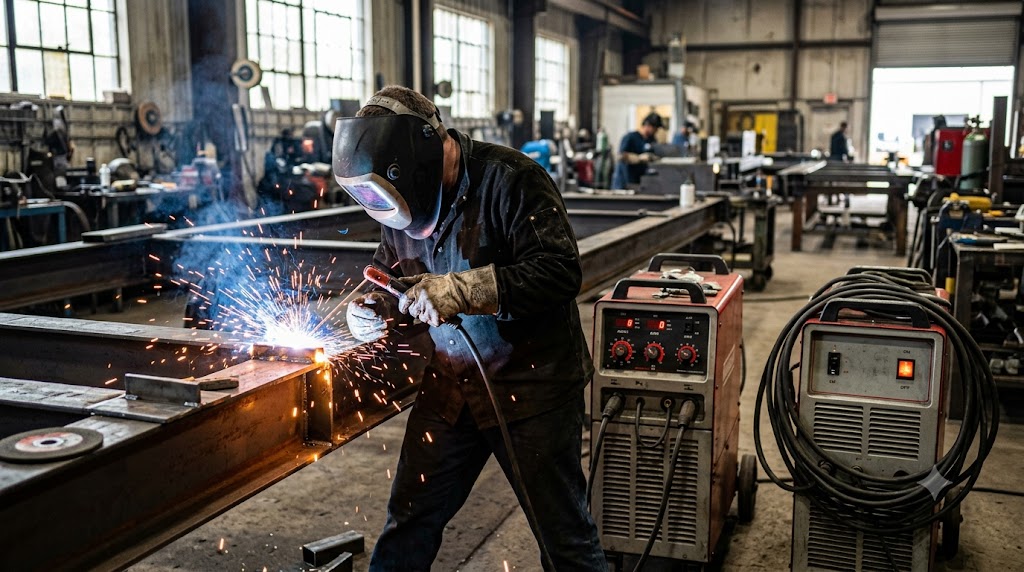
You are laying a long bead, everything is going great, and then the machine just quits on you. The thermal light comes on and you stand there waiting for it to cool down. What you ran into is duty cycle, one of the most important numbers on a welder’s spec sheet and one of the most misunderstood. Get it wrong and you buy a machine that keeps shutting off mid-weld. This explainer covers what duty cycle is, how to read it, why it changes with amperage, and what it means for the machine you choose.
Duty cycle is the percentage of a set time period, usually ten minutes, that a welder can operate continuously at a given amperage without overheating. A 30 percent duty cycle at 200 amps means you can weld for 3 minutes, then must let it cool for 7. Here is how it works.
What duty cycle tells you
Duty cycle describes how long a machine can run before it needs to rest:
- It is a percentage of a standard time period.
- The period is usually ten minutes in most ratings.
- It is tied to a specific amperage, stated with the rating.
- It protects the machine from overheating during long welds.
In short, it tells you how much of a ten-minute stretch you can actually be welding at a given output.
Direct answer: how duty cycle works
Here is how to read a duty cycle rating:
- The number is a percentage of a ten-minute cycle you can weld.
- The rest of the cycle is cooling time the machine needs.
- It is stated at a specific amperage, for example 30 percent at 200 amps.
- 30 percent at 200 amps means weld 3 minutes, cool 7 minutes.
- Exceeding it trips the machine’s thermal protection, which stops output.
So a duty cycle rating always pairs a percentage with an amperage, and both matter.
Why duty cycle exists
Duty cycle exists because welding generates a lot of heat inside the machine, not just in the arc. The transformer or inverter, along with other components, heat up as they push out welding current, and if they got too hot they would be damaged. Duty cycle is the manufacturer’s safe limit: it tells you how much of a ten-minute period the machine can run at a given amperage before its internal parts need time to shed that heat. Most machines have a thermal overload protection that automatically cuts the output if you exceed the duty cycle, then restores it once things cool, which is the shutdown that surprises people mid-weld. Rather than a flaw, this is the machine protecting itself. Knowing the duty cycle lets you plan your work, or choose a machine that can keep up, instead of getting stopped unexpectedly.
Why duty cycle changes with amperage
A key point that trips people up is that duty cycle is not a single number, it changes with the amperage. The same machine will have a higher duty cycle at lower amperage and a lower duty cycle at higher amperage, because higher current makes more heat inside the machine, so it can sustain that output for less of the cycle. A welder might be rated, say, 30 percent at 200 amps but 60 percent at a lower current and effectively 100 percent (continuous) at a modest setting. This is why comparing machines only by their peak amperage is misleading; you have to look at the duty cycle at the amperage you will actually weld at. A machine that hits high amps but only at a low duty cycle may not suit long production welds, while the same machine can run all day at a lighter setting.
What duty cycle means for choosing a machine
Duty cycle should shape which machine fits your work, based on how you actually weld. For a home hobbyist doing short welds on thin material with breaks in between to reposition and clean, a modest duty cycle is often plenty, since the natural pauses give the machine time to cool. For production work, long beads, or thick material where you weld continuously for extended stretches, you want a higher duty cycle at your working amperage so the machine keeps up without tripping out. The practical approach is to figure out the amperage your typical work needs, then check the machine’s duty cycle at that amperage, not just its maximum. One more note: duty cycle ratings assume a stated ambient temperature, so welding in a hot shop can reduce the real-world duty cycle, and some machines are rated on a different time base, so check whether a rating uses the common ten-minute cycle.
The bottom line
Duty cycle is the percentage of a ten-minute period a welder can run at a given amperage before it needs to cool, so a 30 percent rating at 200 amps means weld for 3 minutes and rest for 7. It exists to protect the machine’s internal parts from overheating, which is why exceeding it trips the thermal protection and stops your weld. Crucially, duty cycle changes with amperage, higher at lower current and lower at higher current, so you have to read it at the amperage you actually use, not just the machine’s peak output. Match the duty cycle to how you weld, light and intermittent or long and continuous, and you will pick a machine that keeps up with your work instead of leaving you waiting.
FAQ
What does a 60 percent duty cycle mean? A 60 percent duty cycle means that within a ten-minute period, the welder can operate for 6 minutes at the stated amperage and then needs 4 minutes to cool. The rating is always tied to a specific amperage, so 60 percent at a given current tells you how much of each ten-minute cycle you can actually be welding at that output.
Why does my welder shut off during long welds? Most likely you exceeded its duty cycle. When a machine runs longer than its rated duty cycle at a given amperage, its internal parts overheat and the thermal overload protection automatically cuts the output to prevent damage. Once it cools, output returns. Welding at a lower amperage, or choosing a machine with a higher duty cycle, avoids these interruptions.
Does duty cycle change with amperage? Yes. Duty cycle is higher at lower amperage and lower at higher amperage, because higher current generates more heat inside the machine. A welder might be rated 30 percent at its high amperage but 60 percent or even continuous at lower settings. That is why you should always check the duty cycle at the amperage you plan to weld at, not just the peak.
What duty cycle do I need? It depends on how you weld. For short welds on thin material with pauses to reposition, a modest duty cycle is usually fine because the breaks let the machine cool. For long continuous beads, thick material, or production work, you want a higher duty cycle at your working amperage so the machine does not trip out. Match the rating to your typical work.
Is duty cycle measured over ten minutes? Most commonly, yes. The standard duty cycle rating is based on a ten-minute period, so the percentage tells you how many of those ten minutes you can weld at the stated amperage. Be aware that some machines, particularly certain imports, may use a different time base, so it is worth confirming the rating is on the usual ten-minute cycle when comparing machines.
Does room temperature affect duty cycle? Yes. Duty cycle ratings assume a specified ambient temperature, so welding in a hot shop or outdoors in high heat can reduce the machine’s real-world duty cycle, since it has a harder time shedding internal heat. Good airflow, clean vents, and cooler surroundings help a machine reach its rated duty cycle, while a hot, cramped space can cause it to trip sooner.
References
- Miller Electric, understanding welder duty cycle (manufacturer), millerwelds.com.
- Lincoln Electric guidance on duty cycle and thermal overload protection (manufacturer), lincolnelectric.com.
- ESAB references on duty cycle ratings and amperage (manufacturer), esab.com.