What Is Weld Undercut? Causes Explained
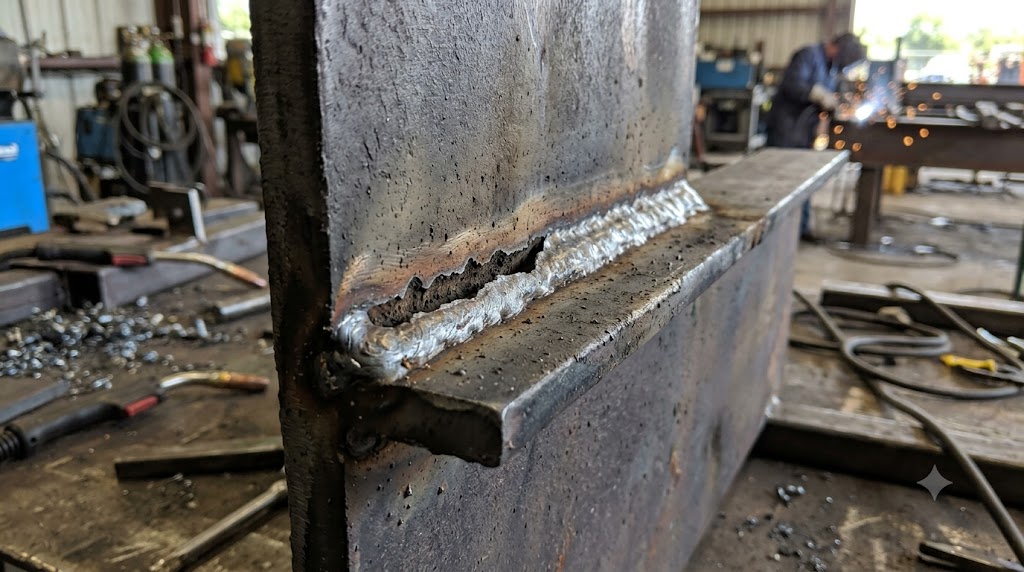
Run your finger along the edge of a weld and feel a groove where the bead meets the base metal, a little trench that never got filled. That is undercut, and it is one of the sneakiest weld defects because the weld itself can look fine while a weak notch hides right at the toe. Undercut cuts into the base metal’s thickness and gives cracks a place to start. This explainer covers what weld undercut is, what causes it, how to prevent it, and how much is actually acceptable.
Weld undercut is a groove melted into the base metal along the toe or edge of a weld that is not filled by weld metal. It reduces the joint’s thickness and creates a stress point. Here is why it happens and how to avoid it.
What undercut is
Undercut is a groove at the edge of the weld:
- It forms at the weld toe, where the bead meets the base metal.
- It is a notch, melted into the base metal but left unfilled.
- It reduces thickness, thinning the base metal at the joint.
- It concentrates stress, giving cracks a place to begin.
Because it sits at the edge rather than in the bead, undercut is easy to overlook, which is part of what makes it dangerous.
Direct answer: what causes undercut?
Undercut happens when too much heat melts the base metal edge and not enough weld metal fills it back. The main causes are:
- Excessive travel speed, so the pool cannot fill the melted edge.
- Too high amperage or heat, melting more base metal than needed.
- Incorrect torch or work angle, directing heat at the toe.
- Arc length too long, spreading and misplacing the heat.
- Poor weaving technique, not pausing at the toes to fill them.
Every one of these leaves the melted edge of the base metal without enough weld metal to fill it.
Why undercut forms
The mechanism is a mismatch between melting and filling. The arc melts the base metal at the edges of the joint, and the weld pool is supposed to flow in and fill that melted area back up to a smooth profile. Undercut happens when the base metal melts but the weld metal does not fill it, leaving a groove. Too much heat, from high amperage or a long arc, melts more base metal at the toe than the pool can replace. Moving too fast means the pool passes by before it can wet in and fill the edge. A bad angle points the arc’s force at the toe and blows the molten metal away from where it is needed. In every case, the fix is to balance the heat and the fill so the melted edge is properly refilled.
How to prevent undercut
Preventing undercut comes down to controlling heat, angle, arc length, and travel speed. Set the amperage and voltage to match the material thickness rather than running hotter than needed, since excess heat is a leading cause. Slow down enough that the weld pool can flow into and fill the toes; rushing is a common culprit. Hold the correct torch and work angle so the arc places metal into the joint instead of blasting the edges. Keep a short, consistent arc length so the heat stays where you aim it. And when weaving, pause briefly at each side so the pool fills the toe before you move back across. A helpful drill is to run a bead on scrap with the amperage set slightly lower than usual and a deliberate pause at each toe, which trains the pool to wet in and fill the edges.
How much undercut is acceptable?
A common and practical question is whether a little undercut is allowed, and often the answer is yes, within limits set by the welding code. Under structural welding codes like AWS D1.1, a small, shallow undercut is generally acceptable, while deeper undercut is limited to short accumulated lengths, and beyond those limits it must be repaired. The key point is that the acceptable amount is defined by the code and the material thickness and loading, not by opinion, and it is the engineer and specification that set the requirement for a given job. So a hairline of shallow undercut may pass on many welds, but you should always know the criteria you are working to, and treat undercut as something to minimize rather than accept.
The bottom line
Undercut is a groove melted into the base metal at the toe of a weld and left unfilled, thinning the joint and creating a stress point where cracks can start. It forms when there is too much heat or speed and not enough fill, from excessive amperage, fast travel, a long arc, or a poor angle. Prevent it by matching heat to the metal, slowing down so the pool fills the toes, holding the right angle and a short arc, and pausing at the edges when weaving. Small, shallow undercut is often acceptable within code limits, but since it weakens the joint, the goal is always to keep it to a minimum or eliminate it entirely.
FAQ
What causes undercut in welding? Undercut is caused by too much heat melting the base metal edge combined with not enough weld metal filling it back. Common causes are excessive travel speed, amperage or voltage set too high, an incorrect torch or work angle, an arc that is too long, and weaving without pausing at the toes. All leave the melted edge unfilled as a groove.
How do you prevent undercut when MIG welding? Match your amperage and voltage to the material thickness instead of running too hot, and slow your travel enough that the pool fills the toes. Hold the correct gun angle so metal goes into the joint rather than blasting the edges, keep a short consistent arc, and pause briefly at each side when weaving. Correct heat, angle, and speed prevent most undercut.
Is a small amount of undercut acceptable? Often yes, within limits set by the welding code. Structural codes like AWS D1.1 generally allow shallow undercut, and permit slightly deeper undercut only for short accumulated lengths, with anything beyond that requiring repair. The acceptable amount depends on the code, material thickness, and loading, so you should know the criteria for your job rather than guessing.
Why is undercut dangerous if the weld looks fine? Because undercut sits at the edge of the weld, not in the bead, so the weld can look good while a notch hides at the toe. That notch reduces the base metal’s thickness and concentrates stress, giving cracks a place to start. Since it is easy to overlook, undercut can weaken a joint that otherwise appears sound.
Does undercut always need to be repaired? Not always. Shallow undercut within the limits of the governing code is acceptable and does not need repair. Undercut deeper than the code allows, or longer than the permitted accumulated length, must be repaired, usually by cleaning and rewelding the area. Whether repair is required depends on the code, the thickness, and how the joint is loaded.
What is the difference between undercut and porosity? Undercut is a groove melted into the base metal at the weld toe and left unfilled, a surface profile problem at the edge. Porosity is gas trapped inside or on the weld as it solidifies, leaving holes. Undercut comes from too much heat or speed and poor fill, while porosity comes from gas and contamination. Both weaken the weld but have different causes and fixes.
References
- The Fabricator, understanding acceptable welding undercut and AWS D1.1 limits (industry), thefabricator.com.
- PrimeWeld and UNIMIG guidance on undercut causes and prevention (manufacturers), primeweld.com, unimig.com.au.
- American Welding Society references on undercut acceptance criteria (industry), aws.org.