Why Do Welding Gloves Smell So Bad (and How to Fix It)
You peel off your gloves at the end of a shift and there it is, that sour, funky reek that clings to your hands and somehow gets worse by the week. You start wondering if it is the fumes, the metal, something toxic soaking into the leather. The truth is less alarming and a lot more fixable than it smells.
Welding gloves smell bad because of trapped sweat and the bacteria and mildew that feed on it inside the leather, not because of welding fumes or metal. Your hands sweat heavily inside thick leather gloves, the leather holds that moisture, and microbes break it down into the odor you smell. The fix is to dry them properly and treat the leather, and the mistake that ruins gloves is soaking them.
What is actually causing the smell
Strip away the guesswork and it comes down to biology. Leather welding gloves are thick and insulating, so your hands sweat a lot inside them. That sweat soaks into the porous leather and does not dry quickly, especially if you toss the gloves in a bag or a dark drawer between jobs. Bacteria and mildew thrive in that warm, damp, dark environment, and their byproducts are the smell.
Notice what is not on the list: welding fumes and metal residue are not the main culprits. The odor is coming from the inside of the glove, from your own perspiration and the microbes living on it, which is why the smell is worst on the palm and finger areas that contact your skin.
Fix 1: dry them out, every time
Most odor problems are really moisture problems. If the gloves never fully dry, the bacteria never stop.
- Air them out after every use. Do not seal damp gloves in a closed bag or bin. Let air reach them.
- Sun and fresh air help. Setting them out to dry in sunlight airs them out and the light discourages microbial growth. Just do not bake leather in extreme heat for hours, which dries it too hard.
- Never dry leather with high direct heat, like on a heater or in a dryer. That cracks and stiffens the hide.
Simply drying them properly between uses solves a surprising share of glove odor before you try anything else.
Fix 2: absorb the odor
Once they are dry, pull the smell out with a dry absorber.
- Baking soda or unscented baby powder sprinkled inside the gloves overnight absorbs both moisture and odor. Shake it out in the morning.
- Repeat as needed. For stubborn gloves, a few nights running makes a real difference.
This is gentle on leather because it stays dry, which is exactly what leather wants.
Fix 3: clean the leather (carefully)
If drying and deodorizing are not enough, clean the leather itself, without drowning it.
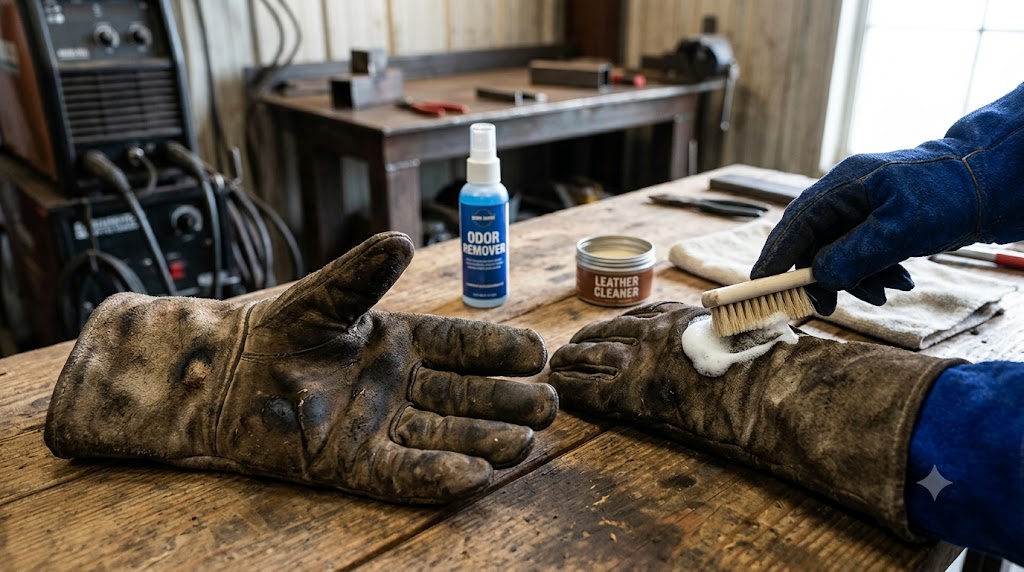
- Saddle soap with a lightly damp cloth or a quick cold-water wash can clean grime from the surface. Use cold water, work quickly, and do not soak the gloves through.
- A 50/50 white vinegar and water wipe on the interior helps kill odor-causing bacteria. Wipe, do not saturate, and let the gloves air dry fully afterward. The vinegar smell fades as they dry.
- Condition afterward. Cleaning can pull oils from the leather, so a light leather conditioner keeps them supple.
The mistakes that make it worse
A few well-meant fixes backfire, and they are worth calling out because they can wreck the gloves:
- Do not fully soak or submerge leather gloves. Soaking drives water deep into the hide, and as it dries the leather stiffens, cracks, and can smell even worse. Wipe and spot clean instead.
- Do not use olive oil, vegetable oil, or other food oils to condition them. Those oils can go rancid inside the leather, which actually rots it and creates a new, worse smell. Use a proper leather conditioner.
- Do not machine wash or machine dry them. The agitation and heat destroy leather gloves.
- Do not seal them wet. Trapping damp gloves in a bag is how the smell started in the first place.
The honest reality
Here is the part nobody likes: welding gloves are consumables, and even with perfect care, heavily used leather gloves eventually hold odor you cannot fully banish. Good habits dramatically extend how long they stay fresh and usable, but a pair you have soaked in sweat daily for a couple of years may simply be done. That is not a failure of your cleaning, it is the nature of leather that lives in sweat and heat. When they are cracked, hardened, or permanently rank, replace them; your hands and your nose have earned it.
Quick routine
- Air dry gloves after every use, in fresh air or sun, never on high heat.
- Sprinkle baking soda or baby powder inside overnight to absorb odor.
- For deeper cleaning, wipe with saddle soap or a 50/50 vinegar-water solution, do not soak.
- Condition the leather after any wet cleaning.
- Never use food oils, never machine wash, never store them damp and sealed.
FAQ
Why do my welding gloves smell so bad? Trapped sweat inside the leather feeds bacteria and mildew, and their byproducts create the odor. It comes from your perspiration and microbes, not from welding fumes or metal.
Is the smell from welding fumes or chemicals? No. The smell originates inside the glove from sweat and bacteria. That is why it is strongest on the palm and fingers that touch your skin.
Can I wash welding gloves to get rid of the smell? You can lightly clean them with saddle soap or a quick cold-water wash, and wipe the interior with a 50/50 vinegar-water solution, but never soak or machine wash leather gloves. Always let them air dry fully.
What is the easiest way to deodorize welding gloves? Dry them thoroughly, then sprinkle baking soda or unscented baby powder inside overnight to absorb moisture and odor. Repeat for stubborn cases.
Why shouldn’t I use olive oil on leather gloves? Food oils like olive or vegetable oil can turn rancid inside the leather, rotting it and creating a worse smell. Use a proper leather conditioner instead.
Can I put welding gloves in the washing machine or dryer? No. Machine washing and machine drying, and high direct heat in general, will crack, stiffen, and ruin leather gloves. Clean by hand and air dry.
References
- Waylander Welding, leather welding glove care and cleaning guidance (manufacturer documentation).
- RX Safety, guidance on cleaning and deodorizing leather work and welding gloves (industry supplier documentation).
- General leather-care standards on avoiding food oils, soaking, and high-heat drying of leather goods.