Lincoln Viking 2450 Not Darkening: Troubleshooting
When you strike an arc and the lens stays clear, a Lincoln Viking 2450 not darkening feels like a disaster, but it almost never is. The 2450 uses the same auto-darkening system as the rest of the Viking family, which means the same short list of causes and the same quick fixes apply. Work through them in order and you will have the helmet back in service in minutes, without guessing or throwing parts at the problem.
What controls darkening on the 2450
The 2450’s lens darkens when its arc sensors detect the flash and signal the liquid crystal shutter to switch shade. That process depends on four things working together: the CR2450 batteries, the arc sensors, the sensitivity and delay settings, and the solar assist cell. When the lens will not darken, one of those four is almost always the reason, and they are easy to check one at a time.
The quick answer: the three-step fix
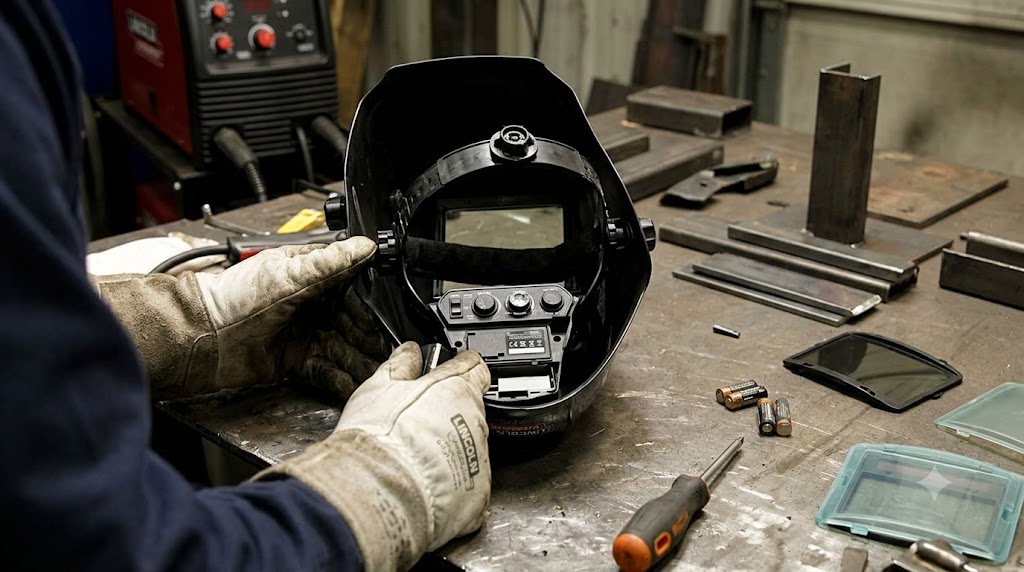
If your Viking 2450 is not darkening, do these in order. First, install fresh CR2450 batteries, because a weak cell is the most common and cheapest cause. Second, clean the arc sensors and the outside cover lens, since spatter, dust, or a grimy plate blocks the sensors from seeing the arc. Third, raise the sensitivity dial and set a reasonable delay, because a low sensitivity setting will fail to trigger, especially on low amperage TIG. If the lens darkens after any step, you are done. If it still will not respond after all three, the cartridge likely needs replacing.
This is the same fix used on the 3350 and other Vikings, so if you own more than one, the routine is identical.
Cause 1: weak batteries
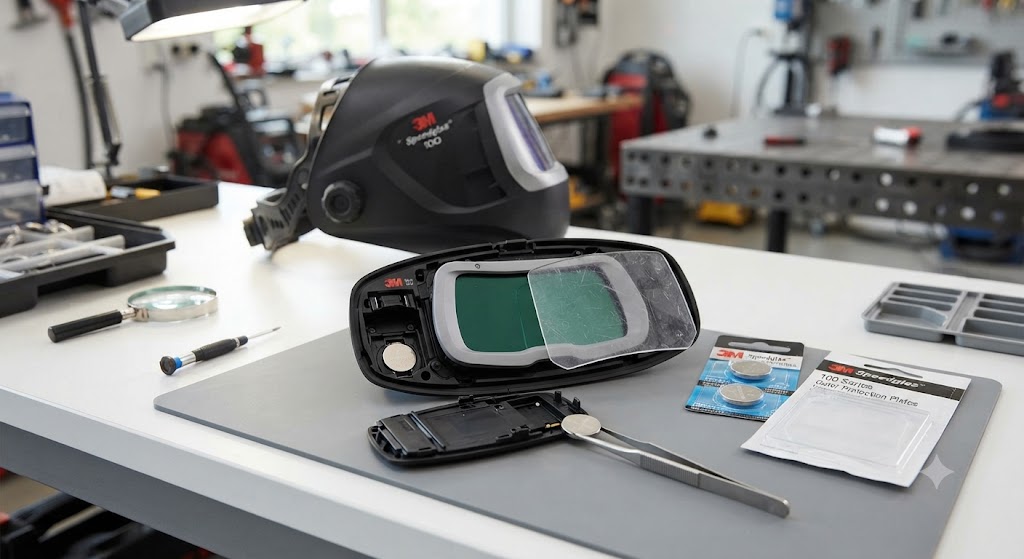
The most frequent reason a 2450 stops darkening is a tired CR2450 battery. Swap in fresh, quality cells and clean the contacts. A weak battery can also cause slow or flickering darkening before it fails entirely, so treat any lag as a cue to replace it.
Cause 2: blocked or dirty sensors
The arc sensors need a clear view of the flash. Spatter buildup on the cover lens, shop dust, or a sticker over a sensor will cause intermittent or total failure. Wipe the sensors clean and replace a heavily pitted outside cover lens so the sensors can do their job.
Cause 3: sensitivity set too low
If the helmet darkens on high amperage MIG or stick but not on low amp TIG, the sensitivity is the problem. Turn it up until the lens triggers reliably at your amperage. If the lens clears between tacks too quickly, lengthen the delay to suit your work.
When it is the lens, not the settings
If fresh batteries, clean sensors, and higher sensitivity all fail to bring the lens back, the auto-darkening cartridge has reached the end of its life. Replacing it is far cheaper than a new helmet and restores full function. A lens that is stuck dark, cracked, or leaking is also a replace-now item, because a compromised lens no longer meets the ANSI Z87.1 protection the helmet is certified to provide.[^https://www.osha.gov/sites/default/files/publications/OSHAFACTSHEET-EYEPROTECTION-DURING-WELDING.pdf]
Getting the 2450 back to work
A Lincoln Viking 2450 not darkening is nearly always a battery or a dirty sensor, and both are two minute fixes. Follow the order, batteries, sensors, sensitivity, and you will resolve the vast majority of cases at the bench. Reserve a cartridge replacement for when the simple steps come up empty, and never keep welding behind a lens you do not fully trust.
Frequently asked questions
Why is my Viking 2450 not darkening? Most often a weak CR2450 battery or dirty arc sensors. Replace the batteries, clean the sensors and cover lens, and raise the sensitivity. If it still fails, the cartridge likely needs replacing.
Is this the same fix as the 3350? Yes. The 2450 uses the same auto-darkening system, so the battery, sensor, and sensitivity checks are identical across the Viking line.
When should I replace the lens versus the battery? Try the battery first, since it is the most common and cheapest cause. Replace the cartridge only after fresh batteries, clean sensors, and higher sensitivity all fail.
My helmet works on MIG but not TIG. Why? Low amperage TIG produces a weaker arc. Increase the sensitivity until the lens triggers reliably.
Can a low battery cause flickering? Yes. A weak CR2450 often causes slow or flickering darkening before it stops the lens entirely. Replace it.
Is it safe to weld if the lens is unreliable? No. Stop and fix the cause first. An unreliable lens does not guarantee proper eye protection.
References
- Lincoln Electric, VIKING 2450 Series Auto-Darkening Welding Helmets: https://www.lincolnelectric.com/en/Products/k3028-4
- U.S. Occupational Safety and Health Administration, Eye Protection During Welding: https://www.osha.gov/sites/default/files/publications/OSHAFACTSHEET-EYEPROTECTION-DURING-WELDING.pdf