Welding Helmet Guide for Plasma Cutting
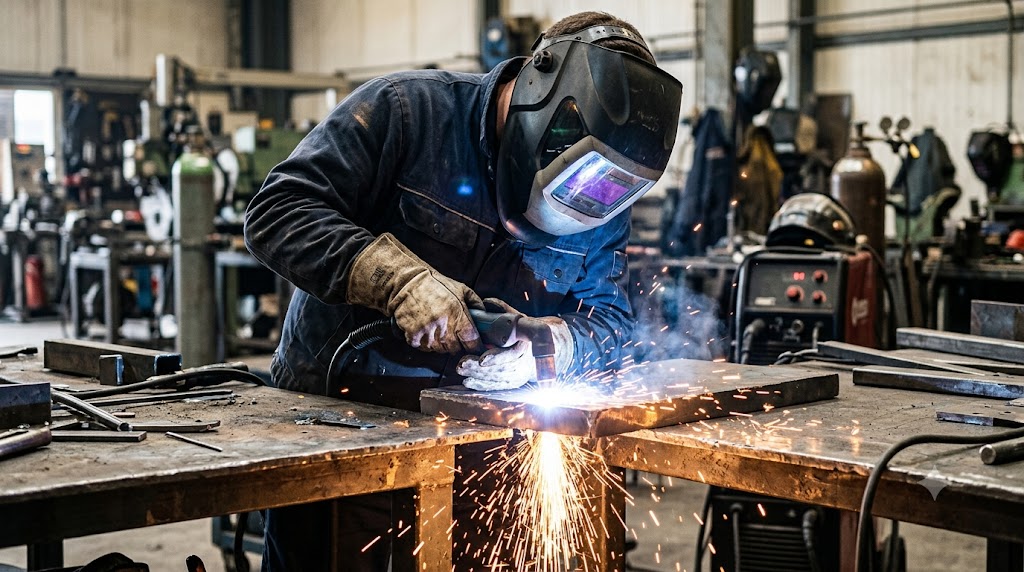
The plasma torch fires and your first instinct is to look away. Not because the arc is exotic, but because most hobbyists have been told the wrong thing about shade requirements — either that any dark lens works or that you need full welding protection. The truth is specific, and getting it wrong means either a lens too dark to track the cut or a lens too light to protect against the UV the plasma arc is putting out at volume.
Plasma cutting generates intense ultraviolet and infrared radiation along the entire kerf, not just at an electrode. The arc is high-frequency, and the UV output at 60 amps on a handheld plasma cutter is meaningfully higher than the UV from an oxy-acetylene torch doing the same cut. A welding helmet works for plasma cutting. In fact, for cuts above about 50 amps, it’s the recommended tool. What matters is having the right shade.
A welding helmet is appropriate for plasma cutting when its auto-darkening filter covers the shade range required for your amperage. Per OSHA 1915.153 Table I-1, plasma arc cutting requires a minimum shade 8 for light cutting under 300 amps, shade 9 for 300 to 400 amps, and shade 10 for 400 to 800 amps. The vast majority of handheld plasma cutters operate under 100 amps, which puts them firmly in the shade 8 minimum range. Any quality auto-darkening helmet with a lower range of shade 5 or below, combined with a sensitivity setting for the plasma arc’s UV signature, will cover that range comfortably.
Can You Use a Welding Helmet for Plasma Cutting?
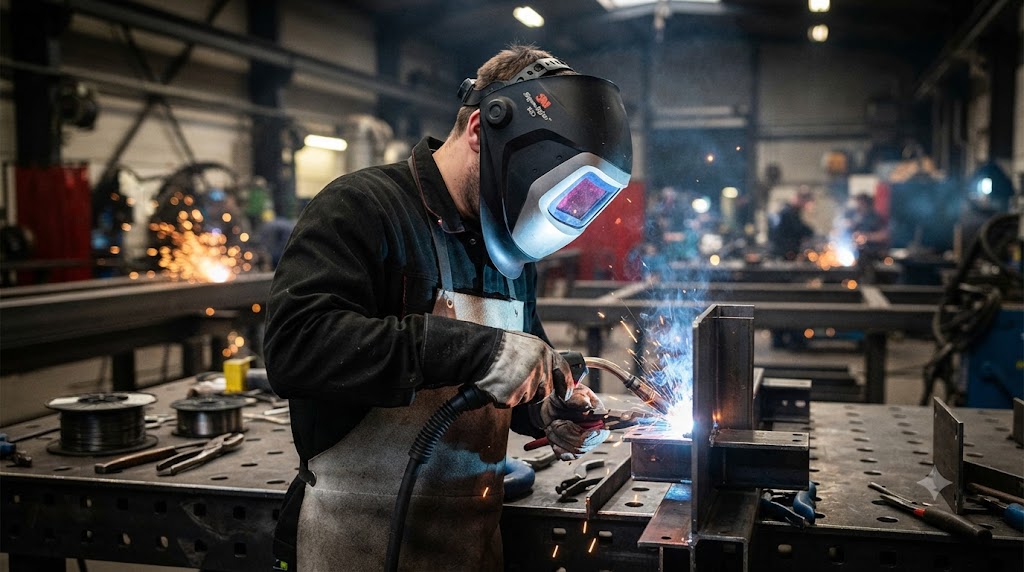
Yes, and for most production cutting it’s the better choice over cutting goggles. A full helmet protects your face, neck, and ears from UV exposure and from the molten dross that plasma cutting throws. Goggles protect only your eyes. If you’re doing more than occasional short cuts, a welding helmet with a variable-shade ADF gives you better protection, better visibility of the cut line, and the ability to use grind mode for cleanup work between cuts.
The one scenario where a welding helmet is overkill is handheld plasma cutting under 20 amps with a drag shield where the arc is fully hidden by the shield. In that case, shade 5 cutting glasses technically meet minimum protection requirements. For anything over 20 amps with an open arc, use a welding helmet.
What Shade Do You Use for Plasma Cutting?
OSHA 1915.153 Table I-1 provides the definitive reference for shade requirements in maritime/shipyard environments and is the most commonly cited federal standard for welding PPE shade selection:
| Plasma Cutting Type | Amperage | Minimum Shade (OSHA 1915.153) |
|---|---|---|
| Light | Under 300A | 8 |
| Medium | 300-400A | 9 |
| Heavy | 400-800A | 10 |
For typical shop and fabrication use with handheld plasma cutters (20 to 80 amps), shade 8 is both the OSHA minimum and a practical working shade. You can see the cut line, track the kerf, and get enough contrast to stay on layout lines. Pushing to shade 9 at 80 to 100 amps is reasonable when the arc is particularly visible or you’re cutting thicker plate where the arc is more exposed.
Shade 5 is sometimes mentioned for plasma cutting in older references and general-industry contexts (OSHA 1910.133 vs. the maritime-specific 1915.153). The key distinction: if your arc is hidden by a drag tip or shield, some interpretations allow lower shades. For open-arc plasma cutting, shade 8 is the correct minimum per the best available OSHA guidance.
Two Helmets That Cover Plasma Cutting Well
ESAB Sentinel A50
The Sentinel A50’s shade range runs from 5 to 13, which means it covers the full spectrum of plasma cutting amperages with room to spare. The True Color ADF gives you better contrast on the cut line than a standard green-tint lens — you can see the orange-white plasma column and the molten dross trail more distinctly, which helps you maintain a consistent travel speed.
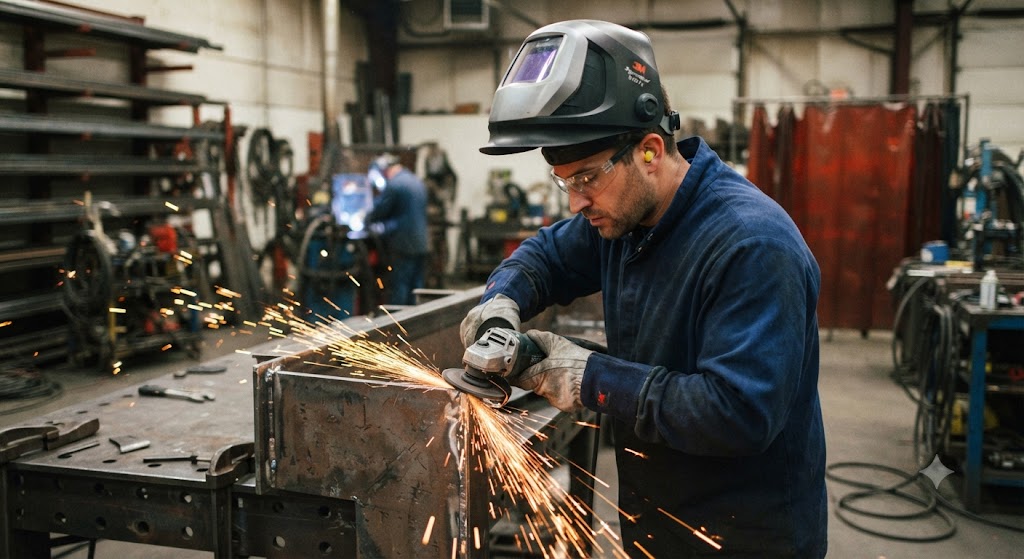
For plasma cutting specifically, the A50’s grind mode (activated by an external button at shade 3) is a genuine quality-of-life feature. You cut, flip to grind mode for cleanup with a flap disc, flip back to weld mode for the next cut. No lifting the helmet in between.
The flaw: at shade 5 (the lower end of its range), the A50’s true-color ADF provides noticeably more visible light transmission than a standard shade 5 filter glass. For low-amperage plasma cutting this is an asset, but welders who expect the same dim view they got from a fixed-shade #5 glass will find the light state brighter than expected. It’s not unsafe — it’s different.
A verified live listing: ESAB Sentinel A50
Lincoln Electric Viking 3350
The Viking 3350 with 4C lens technology is the other strong option for welders who also do plasma cutting. The wide shade range (5-13), four arc sensors, and 12.5 square-inch viewing area make it versatile enough to move between TIG welding, MIG, and plasma cutting without changing helmets. The 4C lens reads the plasma column in a warmer, more natural color than a standard ADF, which helps with tracking the cut on thinner material.
For plasma cutting, the large viewing area is particularly useful. Plasma cuts often run long, and a wider lens lets you see where the cut is going without repositioning your head as frequently.
The flaw: the Viking 3350 is a premium-tier helmet at a price point that’s harder to justify if your primary use is plasma cutting rather than TIG welding. If plasma is your main process and welding is secondary, you’re paying for features (4C clarity, X6 headgear) that earn their cost in TIG work but add up to more than needed for plasma alone.
A verified live listing: Lincoln Electric Viking 3350
Head-to-Head for Plasma Cutting
| Feature | ESAB Sentinel A50 | Lincoln Viking 3350 |
|---|---|---|
| Shade range | 5-13 | 5-13 |
| Viewing area | 3.93” x 2.36” | 12.5 sq. in. |
| Arc sensors | 4 | 4 |
| Grind mode | Yes (external button) | Yes |
| Best for | Cutting + TIG combo use | Wide-view production cutting |
| Flaw | Bright light state surprises some users | Cost-heavy for cutting-only use |
Do You Need a Welding Helmet for Plasma Cutting?
Yes, for any cutting above 20 amps with an open arc. The UV output from a plasma arc at 40 to 80 amps is significant enough that unfiltered exposure — even a brief one — can cause photokeratitis (welder’s flash). Shade 5 cutting glasses protect you at the low end of the plasma range. A welding helmet with shade 8 is the right tool for most fabrication cutting. The face and neck protection that a full helmet provides is a bonus that becomes meaningful when you’re cutting overhead or at an angle that throws dross toward your face.
FAQ
Can you use a welding helmet for plasma cutting? Yes. A welding helmet with a variable-shade ADF covering shade 8 is appropriate for plasma cutting under 300 amps. It provides better face and UV protection than cutting goggles and lets you move between cutting and welding without changing PPE.
Do you need a welding helmet for plasma cutting? For plasma cutting above 20 amps with an open arc, yes. Below 20 amps with a fully enclosed drag tip, shade 5 cutting glasses technically meet minimum requirements. For anything beyond brief low-amperage cuts, a welding helmet is the safer and more practical choice.
What shade should you use for plasma cutting? OSHA 1915.153 sets shade 8 as the minimum for light plasma cutting under 300 amps, shade 9 for 300-400 amps, and shade 10 for 400-800 amps. For typical handheld plasma work at 20-80 amps, shade 8 is both the minimum and a comfortable working shade.
Can I use the same helmet for welding and plasma cutting? Yes, if the helmet covers shade 5-13. Most auto-darkening helmets sold for TIG or MIG welding have shade ranges that comfortably cover plasma cutting amperages. A helmet with a grind mode button makes the transition between cutting and grinding faster.
Is shade 5 enough for plasma cutting? Shade 5 is sometimes cited for very low-amperage plasma cutting (under 20A) where the arc is hidden by a drag shield. For open-arc plasma cutting at typical shop amperages (40-80A), shade 8 is the OSHA 1915.153 minimum and the appropriate working shade.
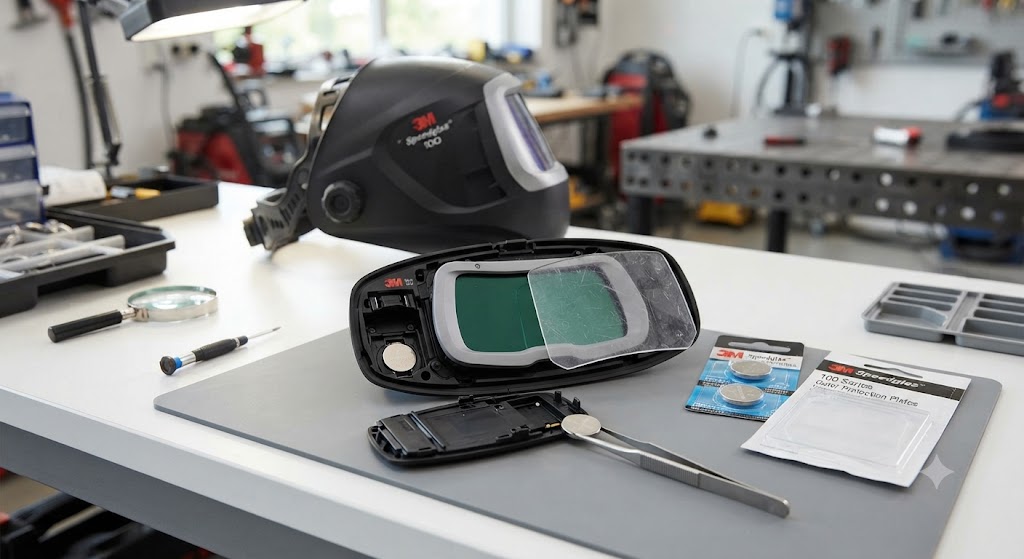
Does plasma cutting damage welding helmet lenses? Plasma cutting throws molten dross that can pit or frost outer cover lenses faster than TIG welding does. Replace cover lenses when you see any pitting or haze. Both the Sentinel A50 and Viking 3350 use tool-free cover lens replacement systems.
What ANSI standard covers plasma cutting eye protection? ANSI Z87.1 covers the performance requirements for filter lenses. OSHA 1915.153 specifies the minimum shade numbers for plasma cutting operations in maritime/shipyard employment, and OSHA 1910.133 applies to general industry. Both reference ANSI Z87.1-compliant equipment.
References
- https://www.osha.gov/laws-regs/regulations/standardnumber/1915/1915.153
- https://www.osha.gov/sites/default/files/publications/OSHAFACTSHEET-EYEPROTECTION-DURING-WELDING.pdf
- https://www.esab.com
- https://www.lincolnelectric.com
URL slug: welding-helmet-for-plasma-cutting Excerpt: Plasma cutting requires at minimum shade 8 for open-arc cuts under 300 amps, per OSHA 1915.153. A welding helmet with variable shade 5-13 and four arc sensors handles the full range. Here’s what to choose and why.