How to Choose the Right Welding Helmet Shade for Your Amperage
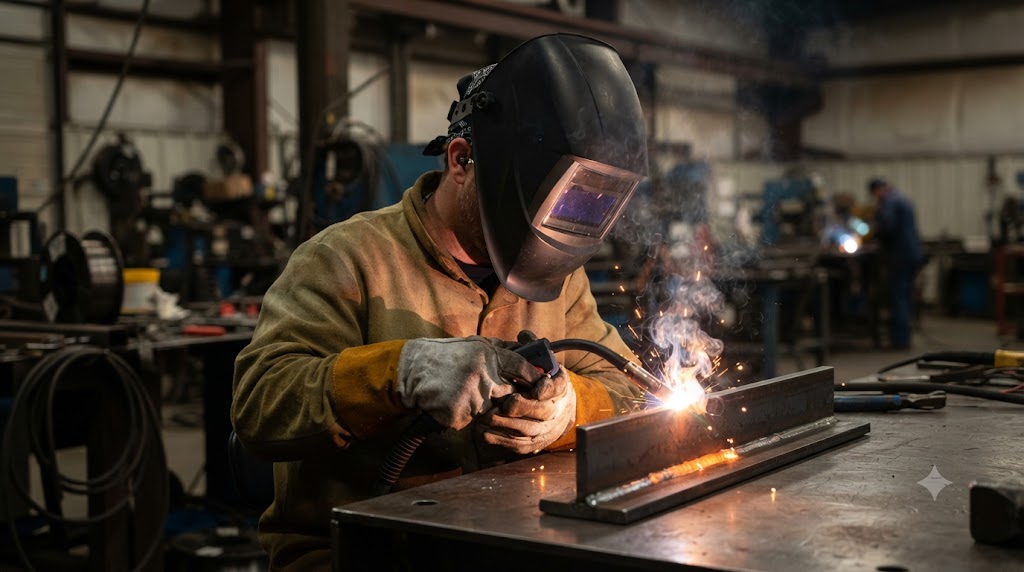
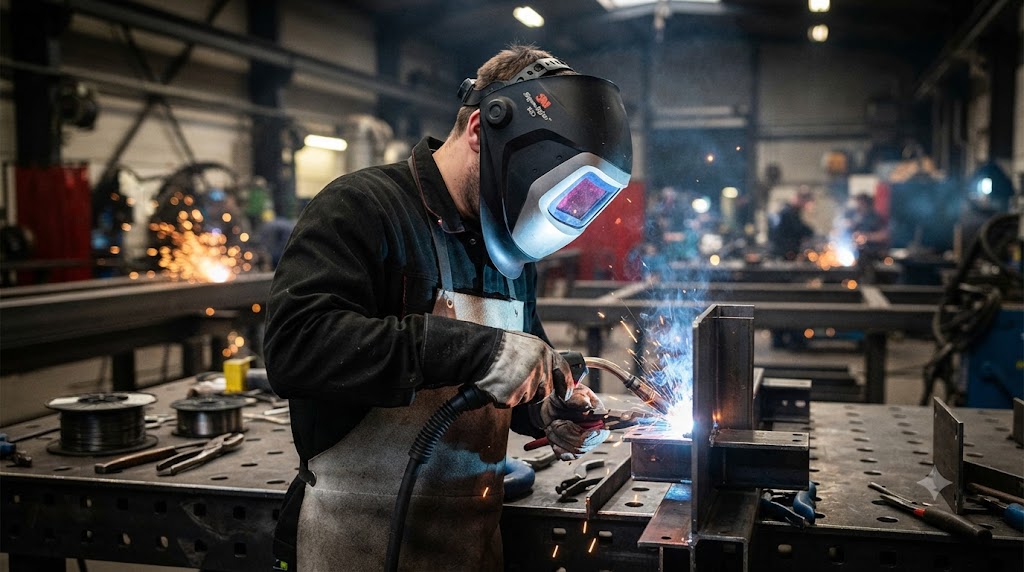
You can weld with the wrong shade. The arc fires, the bead goes down, and you walk away thinking everything is fine. What you do not feel is the UV accumulating in your corneas over the shift. What you notice is the headache by 2 PM and the eye soreness that fades overnight and comes back the next day you weld.
Shade selection is not about comfort. It is about matching the intensity of the arc to the optical density of the filter between the arc and your eyes. Get it right and you can work all day without strain. Get it consistently wrong and the damage is slow and cumulative.
What the shade number means
The shade number on a welding lens describes its optical density: how much light the filter allows through. Shade 3 allows significantly more light through than shade 13. Each increment reduces the transmitted light by a defined amount.
For welding, the relevant shades run from approximately 5 to 13. The correct shade for any given weld is primarily determined by the amperage of the arc. Higher amperage means a more intense arc, which requires a darker shade to reduce it to a safe viewing level.
The relationship is not linear across all processes. MIG, TIG, and stick produce arcs of different character at the same amperage, and each process has its own shade recommendation at a given current level.
The OSHA-referenced shade chart
OSHA’s guidance on filter lens shade numbers (based on ANSI Z87.1 and AWS recommendations) provides minimum shade values by process and amperage. These are minimums: you can always use a darker shade if you prefer, as long as you can still see the puddle clearly.
Shielded Metal Arc Welding (Stick / SMAW)
| Amperage | Minimum shade |
|---|---|
| Under 60A | 7 |
| 60A to 160A | 8 |
| 160A to 250A | 10 |
| 250A to 550A | 11 |
Gas Metal Arc Welding (MIG / GMAW) and Flux-Core (FCAW)
| Amperage | Minimum shade |
|---|---|
| Under 60A | 7 |
| 60A to 160A | 10 |
| 160A to 250A | 10 |
| 250A to 500A | 10 |
Note: MIG with steel wire at higher amperages tends to run with more arc intensity than the current alone suggests. Many experienced MIG welders use shade 11 at currents above 200A as a comfort preference.
Gas Tungsten Arc Welding (TIG / GTAW)
| Amperage | Minimum shade |
|---|---|
| Under 50A | 8 |
| 50A to 150A | 8 |
| 150A to 500A | 10 |
TIG produces a cleaner, more concentrated arc than MIG or stick. Some TIG welders prefer a slightly lighter shade within the safe range because the arc is less visually intense and a lighter shade makes puddle reading easier.
Plasma Arc Cutting
| Amperage | Minimum shade |
|---|---|
| Under 20A | 6 |
| 20A to 40A | 7 |
| 40A to 60A | 8 |
| 60A to 80A | 9 |
Plasma cutting produces a very bright, high-UV arc relative to its amperage. Do not use a shade designed for welding at the same amperage: plasma cutting requires its own shade selection.
Oxy-Acetylene Welding and Cutting
| Application | Minimum shade |
|---|---|
| Light cutting (under 1 inch) | 3 to 4 |
| Medium cutting (1 to 6 inch) | 4 to 5 |
| Heavy cutting (over 6 inch) | 5 to 6 |
| Light welding | 4 to 5 |
| Medium welding | 5 to 6 |
| Heavy welding | 6 to 8 |
How auto-darkening helmets handle shade selection
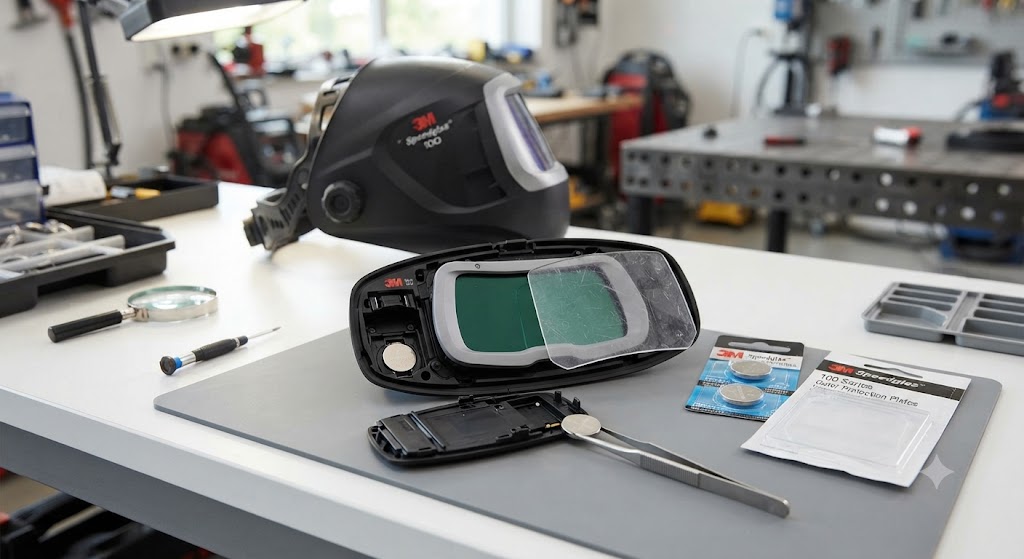
An auto-darkening helmet with a shade range of 9 to 13 covers most stick, MIG, and TIG applications. The shade is set via a dial or digital control, and the helmet switches to that shade when it detects an arc.
Pay attention to your helmet’s shade range and make sure it covers your process. A helmet with a 9 to 13 range cannot be used for plasma cutting at lower amperages, which may require shade 6 to 8. A helmet with a 5 to 13 range handles everything in the chart above.
The variable shade on an auto-darkening helmet is continuous, not stepped, meaning you can set it to shade 10.5 just as easily as shade 10 or 11. Use this to fine-tune visibility at the puddle: if you are struggling to read the puddle at shade 11, try 10.5. If your eyes feel strained at 10, go to 10.5.
Does the shade chart change between processes?
Yes. This is the mistake that causes most shade errors. A welder who runs stick at 150A (shade 8 minimum) and switches to MIG at the same amperage may assume the same shade applies. It does not. MIG at 150A has a higher minimum recommendation than stick at the same current level.
Always re-check the chart when you switch processes. A single auto-darkening setting is not correct for all processes at all amperages.
Is OSHA’s chart different from manufacturers’ recommendations?
Minorly. OSHA references the same ANSI Z87.1 and AWS tables that helmet manufacturers use. Some manufacturers recommend slightly higher minimum shades than OSHA’s table as a conservative safety margin, particularly for modern high-powered inverter welders. When there is any conflict between the OSHA table and the manufacturer’s recommendation, use the more protective (darker) shade.
Frequently asked questions
What welding helmet shade should you use for 200 amps? For stick at 200 amps, minimum shade 10. For MIG at 200 amps, minimum shade 10. For TIG at 200 amps, minimum shade 10. Most welders running at 200 amps across all processes use shade 10 as the standard setting, with the option to go to 11 if the arc feels visually intense.
Does the shade chart change between MIG, TIG, and stick welding? Yes. At the same amperage, MIG typically requires a higher minimum shade than TIG, and stick falls between them depending on current. Always use the process-specific column when reading the shade chart.
Is OSHA’s shade chart different from the manufacturer’s recommendation? Minimally. Both are based on ANSI Z87.1 and AWS standards. Manufacturers sometimes recommend slightly darker shades as a conservative margin. When in doubt, use the darker recommendation.
Can you use a shade that is too dark? Yes, and it is common. A shade that is too dark makes the puddle difficult to see, which causes poor weld quality and increases eye strain from squinting. Within the safe range above the minimum, use the lightest shade where you can see the puddle clearly.
What shade should I use for grinding? Grinding does not produce UV radiation the way welding does. Most auto-darkening helmets have a grind mode that sets the lens to a light shade, typically shade 3 or 4, for visibility while grinding. This is not a welding shade and should not be used for any arc process.
What if I need to weld at both 50A and 250A in the same session? Adjust the shade between tasks. An auto-darkening helmet makes this straightforward: turn the shade dial between setups. Welding at a minimum shade appropriate for 250A (shade 10 to 11) while running at 50A is safe but unnecessarily dark. Welding at 50A shade (shade 8) while running 250A is under-protected.
References
- Occupational Safety and Health Administration (OSHA), Filter Lens Shade Numbers for Protection Against Radiant Energy, Table E-2
- American National Standards Institute (ANSI) Z87.1, current edition
- American Welding Society (AWS), welding safety and health
- National Institute for Occupational Safety and Health (NIOSH), welding fume and radiation hazard documentation