Welding Helmet Won't Turn On: The Full Troubleshooting Checklist
You strike an arc, and nothing happens. No darkening, no test light, no life at all. When a welding helmet won’t turn on, it is genuinely alarming, but the cause is almost always something small and fixable rather than a dead cartridge. Auto-darkening helmets are designed to power up automatically at the strike of an arc, so when the lens stays clear and unresponsive, you work a short checklist from the simplest causes to the rarest. Here it is, in the order a seasoned welder would run it.
Start With the Obvious: Power
Most helmets combine a replaceable coin cell with a solar assist, and the auto-on feature relies on both. Two power issues cause the majority of dead helmets:
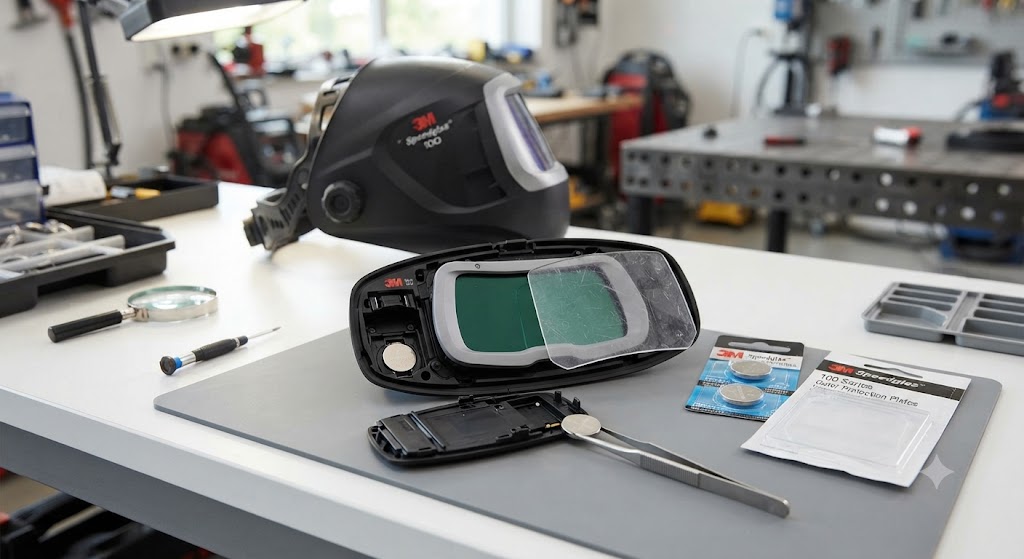
- A leftover battery pull-tab. Brand new helmets often ship with a small insulating plastic tab under the battery to preserve shelf life. If your new hood is completely dead, look for that tab and pull it out. This one trips up more first-time owners than any other cause.
- A dead or missing battery. Fit a fresh coin cell of the correct size, usually a CR2450, seated with correct polarity.[^Check on Amazon] A helmet stored for months can arrive with a flat cell even if it is new.
Then Check the Contacts and Connection
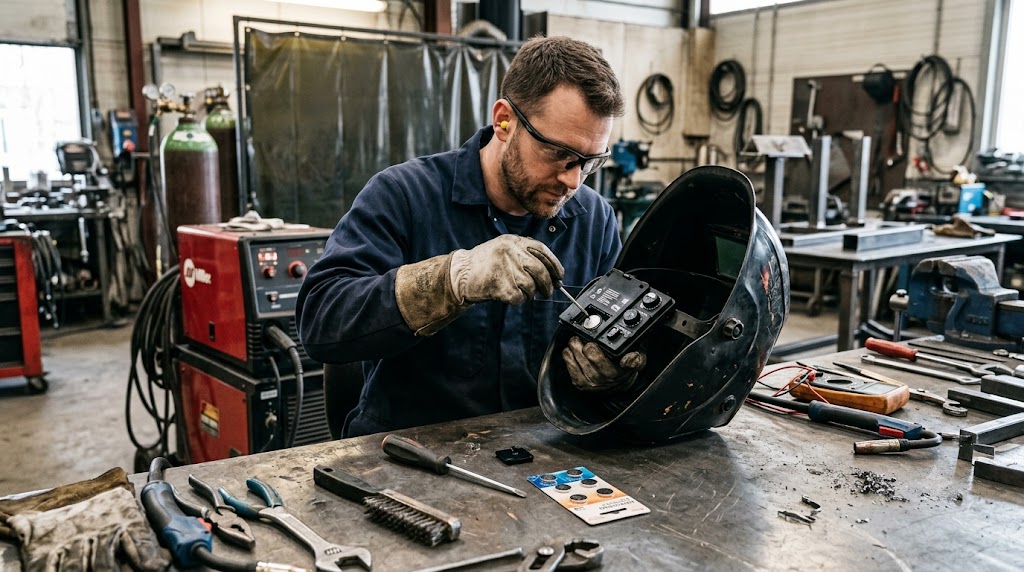
A poor battery connection mimics a completely dead helmet, and it is one of the most common real faults. Remove the cell, wipe the contacts clean of corrosion or debris, and reinstall it firmly. On many helmets, reseating the battery also performs a reset that wakes a lens stuck in a bad state, a fix the manufacturers themselves recommend.[^https://www.euromarc.co.nz/resources/troubleshooting-auto-darkening-helmets-common-problems-and-remedies] If a cell is loose in a worn holder, that alone can prevent the helmet from powering on.
Give the Solar Cell Light
Because the lens is solar-assisted, a helmet stored face-down in a dark case for a long time can be too depleted to wake instantly. Set it face-up in bright light for a while so the solar cell can bring the system back up, then test it. This also explains why a hood that seems dead in a dim shop may spring back to life outdoors.
Test It Properly Before Condemning It
Do not judge a helmet by looking at a light bulb. Use the built-in test button if it has one, or briefly aim the sensors at bright sunlight, which triggers the darkening the same way an arc does. Make sure your sensitivity is not turned all the way down, since a minimum sensitivity setting can keep the lens from reacting to a low-light test even when the helmet is fine.
When It Really Is the Cartridge
If you have pulled the pull-tab, fitted a fresh battery, cleaned and reseated the contacts, charged the solar cell in daylight, and confirmed sensitivity is up, and the helmet still will not respond to a test or an arc, the auto-darkening filter has failed internally. On a premium hood that means a warranty claim or a replacement cartridge. On a bargain helmet it usually means a new helmet.
Who should skip further repair: owners of no-name hoods with sealed or soldered cartridges, where a failed ADF costs about as much to fix as a better replacement helmet.
The Bottom Line
When your welding helmet won’t turn on, resist the urge to assume the worst. Nine times out of ten it is a pull-tab still in place, a dead or poorly seated coin cell, a dirty contact, or a solar cell that needs light, all of which you can fix in minutes. Run the checklist in order, test it correctly with the test button or sunlight, and only condemn the cartridge once power, contacts, and settings are all ruled out. That discipline saves a lot of helmets, and a lot of money, from an early trip to the bin.
Frequently Asked Questions
Why is my brand new welding helmet completely dead? Many new helmets ship with an insulating plastic pull-tab under the battery. Pull it out. If it is still dead, fit a fresh coin cell, since a shelf-stored battery can arrive flat.
How do I test if my auto-darkening helmet works? Use the built-in test button, or aim the sensors at bright sunlight, which triggers darkening like an arc does. Make sure sensitivity is not turned all the way down first.
Can a bad battery contact stop my helmet from turning on? Yes. A dirty, corroded, or loose contact mimics a dead helmet. Remove the cell, clean the contacts, and reseat it firmly, which also resets many lenses.
My helmet works outside but not in the shop. Why? The lens is solar-assisted and may be depleted from dark storage or a dim shop. Leave it face-up in bright light to recharge the solar cell, then retest.
What battery does a welding helmet use? Most use a CR2450 lithium coin cell, though some use CR2032 or CR2335. Check the old cell or your manual, and install it with correct polarity.
Does sensitivity affect whether the lens reacts? Yes. If sensitivity is turned all the way down, the lens may not respond to a low-light test or a low-amperage arc even when the helmet is working. Turn it up to test.
When should I replace the cartridge or helmet? Only after ruling out the pull-tab, battery, contacts, solar charge, and sensitivity. If it still will not respond, the ADF has failed, which means warranty or replacement.
References
- Troubleshooting Auto Darkening Helmets: Common Problems and Remedies (Euromarc): https://www.euromarc.co.nz/resources/troubleshooting-auto-darkening-helmets-common-problems-and-remedies
- Welding Helmet Troubleshooting Guide (Weldclass): https://www.weldclass.com.au/blog/118-welding-helmet-troubleshooting-guide