Field Weld and All Around Symbol Guide
Two of the most useful marks on a welding symbol are also two of the most misread: the little flag that means “field weld” and the open circle that means “weld all around.” Get them wrong and you either weld in the wrong place or leave a joint half done. Both sit at the same spot on the symbol, right where the arrow meets the reference line, and both carry a clear instruction once you know them. This guide explains the field weld flag and the all-around circle, and clears up the biggest misunderstanding about what “all around” really means.
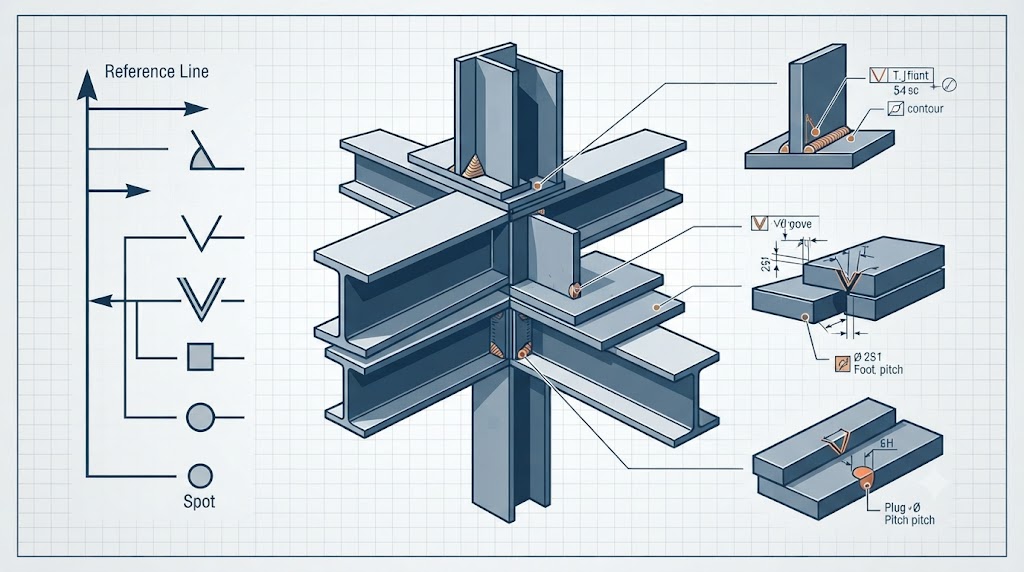
The field weld symbol is a flag at the junction of the arrow and reference line, meaning the weld is made in the field rather than the shop. The all-around symbol is an open circle at that same junction, meaning the weld goes continuously around the joint. Here is how to read both.
Two symbols, one location
Both of these are supplementary symbols placed at the arrow-and-reference-line junction:
- The field weld flag, a filled pennant-shaped flag, marks a weld made on site.
- The all-around circle, an open circle, marks a weld carried around the joint.
- They can appear together, a flagged weld that also goes all around.
- They add to the weld symbol, rather than replacing the weld type.
Because both live at the same junction, learning them together makes each easier to remember.
Direct answer: what they mean
Here is the quick read:
- Field weld (flag): make this weld in the field or at erection, not in the shop.
- Weld all around (circle): make the weld continuously around the entire joint.
- Both symbols are placed where the arrow meets the reference line.
- The weld type symbol (fillet, groove, and so on) still tells you what weld to make.
The flag is about where you weld, and the circle is about how far around the joint you weld.
The field weld symbol
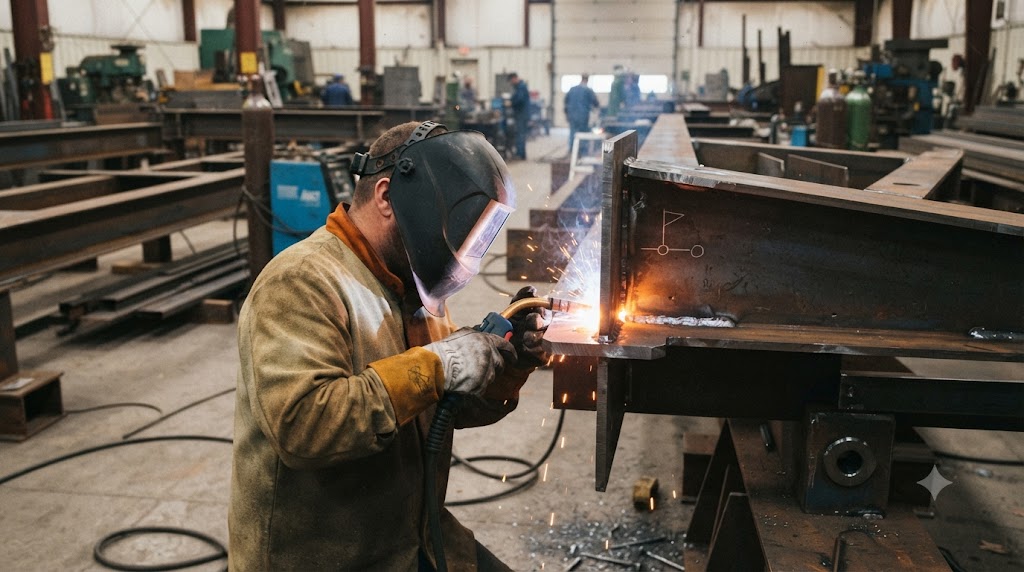
The field weld symbol is a flag, a filled, pennant-shaped mark, attached at the junction of the arrow and the reference line, usually pointing back toward the tail. Its meaning is straightforward: this weld is to be made in the field, meaning at the installation or erection site, rather than in the fabrication shop. This matters because shop welds and field welds happen under different conditions, and a fabricator needs to know which joints to leave for on-site assembly. For example, a steel structure might be partly welded in the shop and then bolted or field-welded together once it is standing. The flag tells everyone that this particular joint waits for the field, so it is not accidentally completed early in the shop.
The all-around symbol
The weld-all-around symbol is an open circle drawn at the same arrow-and-reference-line junction. It instructs the welder to make the weld continuously around the entire joint, rather than just along the line the arrow points to. It is commonly used where a part meets another all the way around its profile, such as a pipe or tube stub welded onto a plate, or a post set onto a base. Instead of drawing a separate symbol for each side, the single circle says: carry this weld the whole way around. That saves clutter on the drawing and makes the intent clear at a glance.
What “all around” really means
Here is the misunderstanding worth clearing up: does the all-around symbol mean weld on every side, including faces you might not expect? The intent of the all-around circle is that the weld follows continuously around the joint that the arrow points to, around the perimeter of that joint. For a simple part like a round tube on a plate, that is a single continuous weld all the way around the tube. Where people get tripped up is on more complex shapes, where “all around” is meant to carry the weld around the connected joint contour, not to invent welds on unrelated faces. If a design truly needs welds around a complex three-dimensional path, that is where drawings and the standard provide additional detail. The plain reading is: weld continuously around the joint indicated, and if the geometry is complicated, check the drawing details rather than assuming.
The bottom line
The field weld flag and the all-around circle are small marks with big instructions, both placed where the arrow meets the reference line. The flag means the weld is made in the field or at erection, not the shop, which keeps on-site joints from being completed too early. The open circle means the weld runs continuously around the joint the arrow points to, saving the drawing from repeating symbols on every side. The one caution is on “all around”: it means around the indicated joint’s perimeter, not automatically every face of a complex assembly, so check the drawing details when the geometry is not simple. Learn these two together and you will read them right every time.
FAQ
What does a field weld symbol mean? A field weld symbol is a filled, flag-shaped mark at the junction of the arrow and reference line, meaning the weld is to be made in the field or at the erection site rather than in the fabrication shop. It tells the shop to leave that joint for on-site assembly, since shop and field welds happen under different conditions.
Does the all around symbol mean weld on every side? It means weld continuously around the joint the arrow points to, around that joint’s perimeter. For a simple part like a tube on a plate, that is one continuous weld all the way around. It does not automatically mean inventing welds on unrelated faces of a complex assembly; for complicated geometry, check the drawing details.
Why does a print use a flag symbol for field welds? Because a fabricator needs to know which joints to complete in the shop and which to leave for the field. The flag clearly marks joints for on-site welding, so a structure can be partly welded in the shop and then assembled and field-welded once erected, without those joints being finished too early.
Where are the field weld and all around symbols placed? Both are placed at the junction where the arrow meets the reference line. The field weld flag is a filled pennant shape, and the all-around symbol is an open circle. Because they share this location, they can also appear together on a weld that is both made in the field and welded all around.
What is the difference between the field weld and all around symbols? The field weld flag is about where the weld is made (in the field, not the shop), while the all-around circle is about how far the weld goes (continuously around the joint). One controls location of the work, the other controls the extent of the weld, and both can appear on the same symbol.
Can the field weld and all around symbols appear together? Yes. Because both sit at the same arrow-and-reference-line junction, a single weld symbol can carry both a field weld flag and an all-around circle, meaning the weld is made in the field and is carried continuously around the joint. The weld type symbol still shows what kind of weld to make.
References
- AWS A2.4, Standard Symbols for Welding, Brazing, and Nondestructive Examination, supplementary symbol provisions (industry standard), aws.org.
- Miller Electric guide to reading weld symbols, including all-around and field weld marks (manufacturer), millerwelds.com.
- Lincoln Electric references on weld symbol interpretation (manufacturer), lincolnelectric.com.