Gas Metal Arc: Cylinder, Regulator and Process Matching
Every trade has a formal name and a shop name for the same thing. Gas metal arc welding is the formal one, printed in codes and textbooks. On the floor, everyone just calls it MIG. They are the same process, and understanding the formal version helps you make better choices about the part people skip: matching the gas, the cylinder, and the regulator to the work.
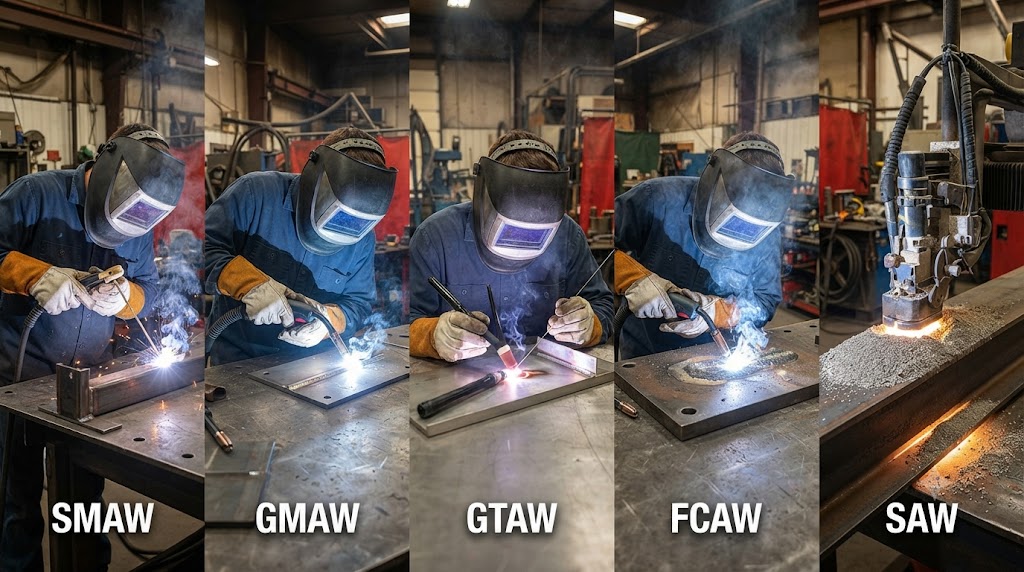
Gas metal arc welding, or GMAW, feeds a solid wire electrode continuously through a torch while a shielding gas surrounds the arc and protects the molten weld pool from the atmosphere. The wire is both the electrode and the filler, and the gas is what keeps the weld clean. Because the gas does so much of the work, the cylinder and regulator setup deserves as much attention as the machine.
Matching the gas to the metal
The shielding gas is not one size fits all. Each choice trades off penetration, cleanliness, and cost.
Carbon dioxide. Pure CO2 penetrates deeply and is the cheapest option, which makes it popular for thicker steel where you want the arc to dig in. The trade is a hotter, harsher arc with more spatter to clean up.
75/25 argon and CO2. Three parts argon to one part CO2 is the workhorse blend for carbon steel. The argon smooths the arc and cuts spatter while enough CO2 remains for good penetration. If you weld mostly mild steel, this is the default.
Pure argon. Aluminum needs pure argon. The steel mixes do not shield aluminum properly, so this is not a place to improvise.
Getting the gas right is the single biggest lever on weld quality in GMAW. A machine set perfectly still welds poorly under the wrong gas.
The cylinder and how to handle it
Shielding gas comes in a high pressure cylinder, and that pressure demands respect. A few rules keep it safe and working.
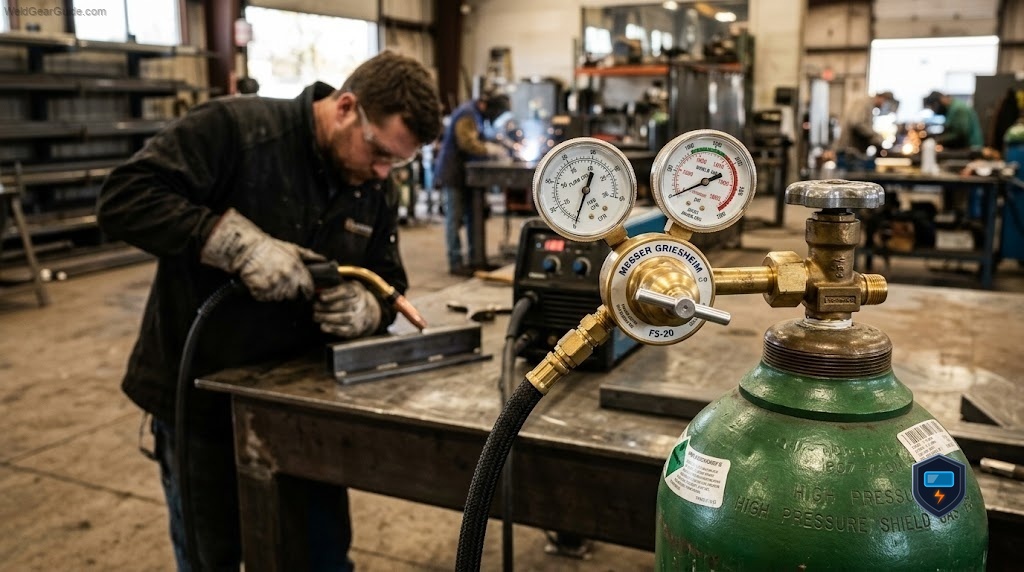
Secure the cylinder upright, chained to a cart, bench, or wall. A free standing bottle that tips can shear its valve, which is genuinely dangerous. Never move a cylinder with the regulator attached, and keep the protective cap on when it is not in use.
Crack the cylinder valve briefly before attaching the regulator to blow out any dust from the outlet, pointing it away from people. Open the valve slowly once the regulator is on, so the sudden pressure does not slam the gauge.
Check the cylinder valve and every fitting for leaks with soapy water. Bubbles mean gas is escaping, which both wastes it and, over time, empties a bottle you thought was full.
Setting up the regulator
The pressure regulator steps the cylinder’s high pressure down to a usable level, and the flowmeter shows how much gas reaches the torch in cubic feet per hour. Together they let you set the shield deliberately.
A reliable flowmeter regulator such as the BETOOLL argon and CO2 flow meter regulator or the ARCCAPTAIN argon and CO2 regulator fits the CGA-580 inlet used on argon and mixed gas cylinders and gives you a clear flow reading. The honest caveat on budget units is that the flow ball can read slightly off, so let a test bead be the final judge if the number and the result disagree. Note also that using a regulator on a CO2 cylinder often needs a different adapter than an argon bottle, so confirm the fitting before you buy.
Set the flow in a moderate band, commonly around 20 to 30 CFH for indoor steel, rather than cranking it. Too much flow turns turbulent and pulls air into the shield, which causes the porosity it was meant to prevent.
Matching the process to the job
A compact machine like the Millermatic 142 suits lighter steel on household power, while a dual voltage unit like the YESWELDER 165A welder covers a wider thickness range. Match the machine to your metal, the gas to the metal, and the flow to the conditions, and GMAW becomes one of the most productive processes in the shop.
Final read
Gas metal arc welding rewards a setup done with care. Choose the gas for the metal, handle and secure the cylinder properly, and set the regulator to a moderate, deliberate flow. Do those three things and the process that everyone just calls MIG delivers the clean, fast, forgiving welds that made it the most popular method in the shop.
Frequently asked questions
Is gas metal arc welding the same as MIG? Yes. GMAW is the formal name and MIG is the common shop term for the same wire fed, gas shielded process.
What gas is best for mild steel? A 75/25 argon and CO2 mix for a smooth, clean arc with good penetration. Pure CO2 penetrates deeper and costs less but spatters more.
How should I secure a gas cylinder? Upright and chained to a cart, bench, or wall, with the cap on when not in use. A tipped cylinder can shear its valve and become dangerous.
Can I use one regulator for argon and CO2? Many flowmeter regulators handle both gases, but a CO2 cylinder often needs a different adapter than an argon bottle. Confirm the fitting before use.
What flow rate should I set? Around 20 to 30 CFH for indoor steel. Higher flow becomes turbulent and pulls in air, so set a moderate rate and verify with a test bead.
Why does my weld have porosity? Usually a draft, a leak, a clogged nozzle, or the wrong gas, not too little flow. Check those causes before increasing the flow rate.
References
- OSHA, Welding, Cutting, and Brazing: https://www.osha.gov/welding-cutting-brazing
- OSHA 1910.253, Oxygen fuel gas welding and cutting: https://www.osha.gov/laws-regs/regulations/standardnumber/1910/1910.253
- National Institute for Occupational Safety and Health, Welding safety: https://www.cdc.gov/niosh/welding/about/index.html