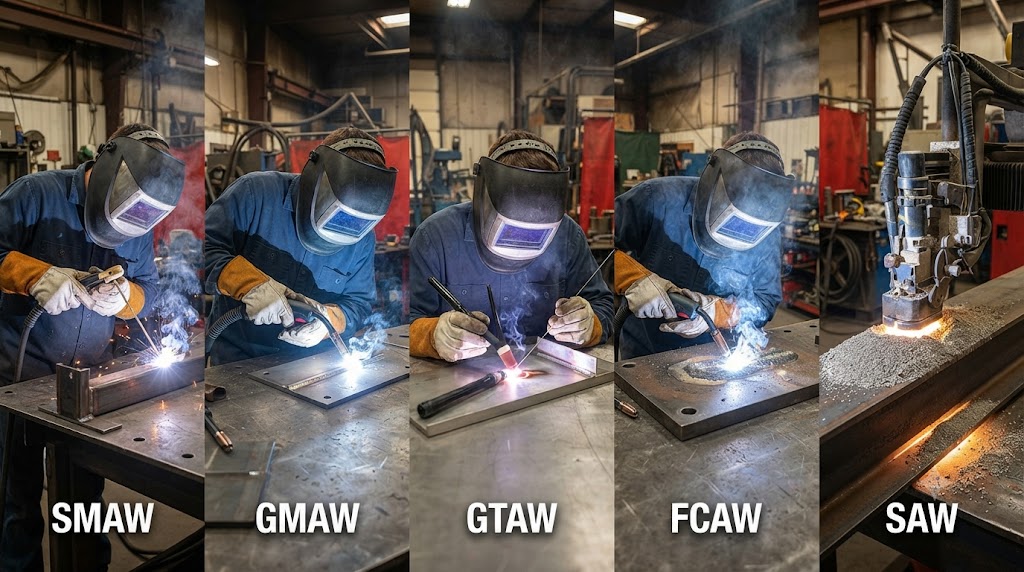
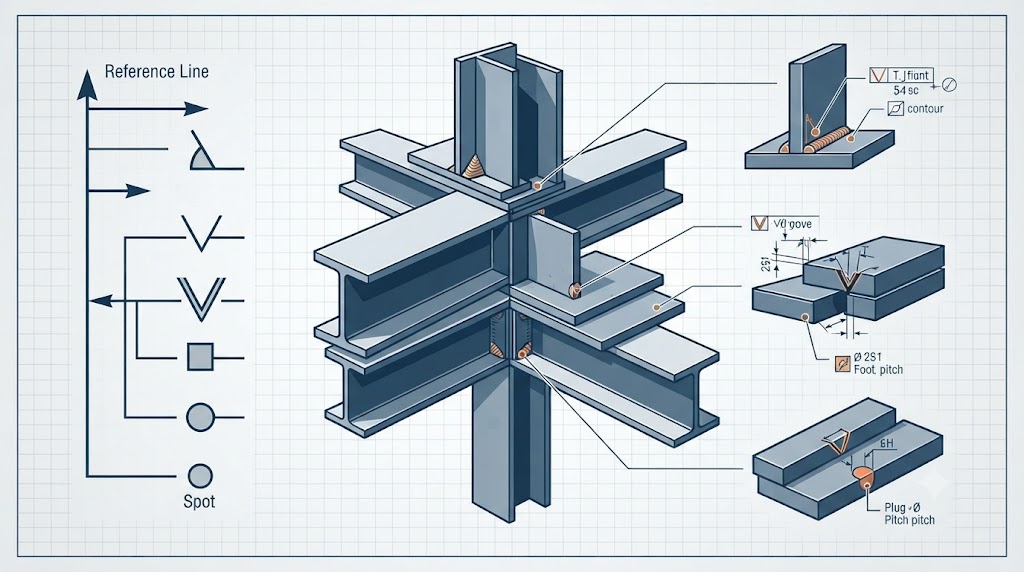
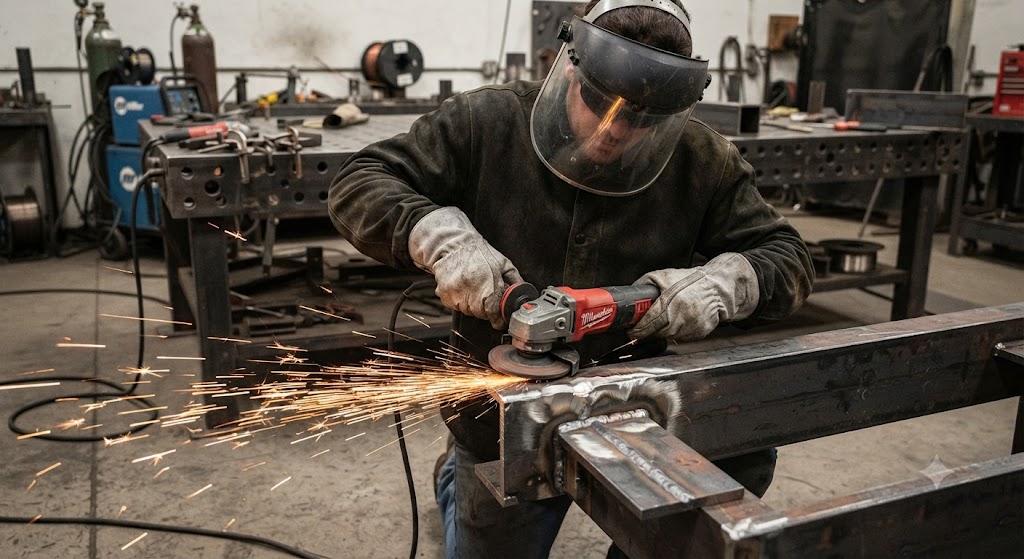
Gas Welding Supplies: Gas Selection, Flow and Setup
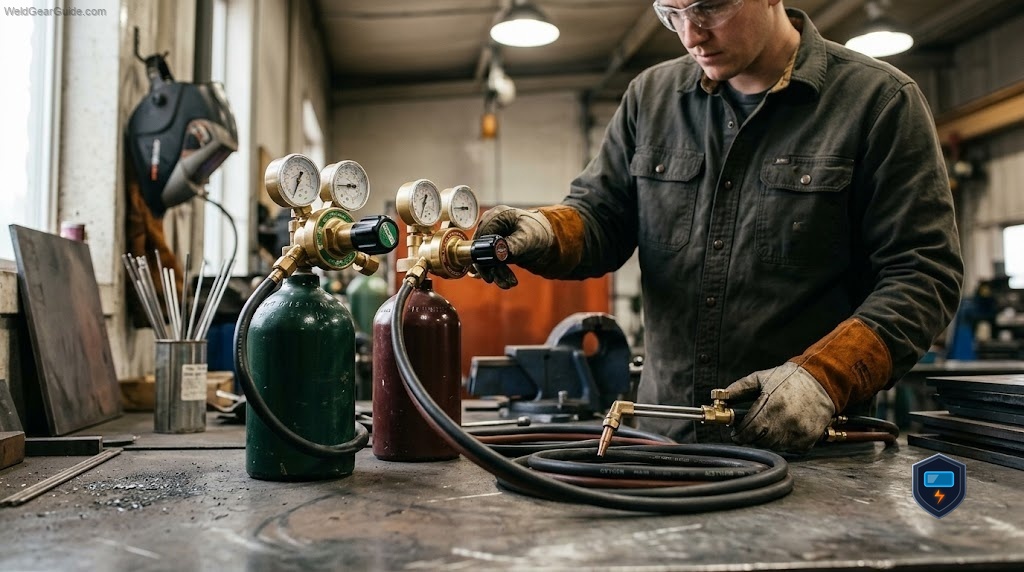
Walk into a welding project without the right supplies on hand and you learn quickly how many small things stand between a cylinder of gas and a clean weld. A bottle alone does nothing. It takes a matched set of parts, chosen for your gas and your process, to turn compressed gas into a steady shield over the puddle. Knowing what those supplies are and how they fit together is what separates a smooth setup from a frustrating one.
Gas welding supplies are the full set of items that store, control, and deliver welding gas: the cylinder, the regulator and flowmeter, the hoses and fittings, and the consumables that go with your process. Each piece has to match the others, and the whole chain has to match the metal you are welding. Get the selection right and setup is quick. Get it wrong and you fight leaks, mismatched fittings, and porous welds.
The core supplies
The cylinder. Holds the gas under high pressure. Sourced and filled through a gas supplier, sized to how much you weld. Small bottles are portable but refill often, larger ones cost more up front but are cheaper per unit.
The regulator and flowmeter. Steps the high cylinder pressure down to a working level and shows the flow reaching the torch in cubic feet per hour. This is the control point for your shield, so an accurate one is worth having.
Hoses and fittings. Carry the gas from the regulator to the machine, with fittings matched to the gas and the connections on each end.
Process consumables. For MIG, the nozzles, tips, and liners that shape the gas around the wire. For TIG, the cups and collets that direct argon over the puddle. These wear and need replacing.
Selecting the gas
The gas is the first choice, driven entirely by the metal.
- 75/25 argon and CO2 is the everyday mix for steel MIG, balancing penetration with a smooth, clean arc.
- Pure CO2 penetrates deeper on thicker steel and costs less, at the price of a hotter arc and more spatter.
- Pure argon is required for aluminum and is the standard for TIG across steel, stainless, and aluminum.
Match the gas to the metal first, because every other supply choice, the regulator inlet, the fittings, the consumables, follows from it.
The regulator: the heart of the setup
Once the gas is chosen, the regulator has to match its cylinder inlet. A flowmeter regulator such as the BOWELD argon and CO2 flow meter regulator fits the CGA-580 inlet common on argon and mixed gas cylinders and gives a clear flow reading. For running two lines or a machine plus a back purge from one bottle, the YESWELDER dual output argon regulator splits the flow. The honest notes: a CO2 cylinder often needs a different adapter than argon, and budget flow balls can read slightly off, so confirm the fitting and trust a clean test bead.
Setting flow for clean welds
With everything connected and leak checked, set the flow to a moderate band, not a high one. For indoor steel MIG, roughly 20 to 30 CFH covers the puddle. For TIG with argon, closer to 15 to 20 CFH depending on the cup. Running the flow high seems safer but backfires: turbulent gas drags air into the shield, causing porosity, and it empties the bottle fast.
Run a test bead and read it. A clean bead means the coverage is right. Porosity at a sensible flow points to a draft, a leak, or a clogged nozzle rather than too little gas.
Setup and safety checklist
- Leak check every fitting with soapy water after assembly. Bubbles mean escaping gas.
- Secure the cylinder upright with a chain or strap. A tipped bottle can shear its valve.
- Open the valve slowly so the regulator is not slammed with sudden pressure.
- Keep the cap on when the regulator is off, and never move a cylinder with the regulator attached.
- Block drafts rather than compensating with higher flow.
- Replace worn consumables, since a spatter clogged nozzle or a cracked cup ruins shielding no matter how good the gas is.
Final read
Gas welding supplies work as a chain, and the chain is only as good as its matches: gas to metal, regulator to cylinder, flow to conditions. Choose the gas first, fit a regulator that matches its inlet, set a moderate flow, and keep your consumables fresh. Handle the cylinder safely and leak check every joint, and the whole setup turns compressed gas into the steady, clean shield that good welds depend on.
Frequently asked questions
What gas welding supplies do I actually need? A cylinder, a matching regulator and flowmeter, hoses and fittings, and the consumables for your process (nozzles and tips for MIG, cups and collets for TIG).
How do I choose the right gas? By the metal. 75/25 argon and CO2 for steel MIG, pure CO2 for deeper penetration on thick steel, and pure argon for aluminum and TIG.
What flow rate should I set? Roughly 20 to 30 CFH for indoor steel MIG and 15 to 20 CFH for argon TIG. Set a moderate flow and confirm with a test bead instead of running it high.
Does the regulator have to match the gas? It has to match the cylinder inlet for that gas. Argon and mixed gas commonly use CGA-580, while CO2 often needs a different adapter.
Why do my welds keep coming out porous? Usually a draft, a leak, or a worn nozzle rather than low gas. Fix those before raising the flow.
How often do consumables need replacing? Whenever they wear or clog. A spatter blocked nozzle or a cracked TIG cup disturbs shielding, so keep spares and swap them as needed.
References
- OSHA 1910.253, Oxygen fuel gas welding and cutting: https://www.osha.gov/laws-regs/regulations/standardnumber/1910/1910.253
- OSHA, Welding, Cutting, and Brazing: https://www.osha.gov/welding-cutting-brazing
- National Institute for Occupational Safety and Health, Welding safety: https://www.cdc.gov/niosh/welding/about/index.html