Welder's Flash (Arc Eye) Explained: Causes and Prevention

You finish welding, everything feels fine, and you go to bed. Then at 2 a.m. you wake up feeling like someone poured sand in your eyes, and the light from your phone is unbearable. That delayed, painful surprise is welder’s flash, also called arc eye, and almost every welder learns about it the hard way at least once. The good news is that it is temporary, and it is almost entirely preventable. This explainer covers what welder’s flash is, what causes it, how long it lasts, and how to protect your eyes.
Welder’s flash, or arc eye, is a painful eye condition called photokeratitis, essentially a sunburn of the cornea caused by the intense ultraviolet (UV) light of the welding arc. Symptoms are delayed and temporary. Here is what you need to know.
What welder’s flash is
Welder’s flash is UV damage to the surface of the eye:
- It is photokeratitis, a burn of the cornea.
- It is caused by UV light from the welding arc.
- It is like a sunburn of the eye’s surface.
- It is temporary, healing on its own in most cases.
Think of it as sunburn on your eyes: painful, delayed, and something that heals but is far better avoided.
Direct answer: causes and key facts
Here are the essentials:
- The cause is UV radiation from the welding arc hitting unprotected eyes.
- It is photokeratitis, a burn of the cornea, the same injury as snow blindness.
- Symptoms are delayed, typically appearing 6 to 12 hours after exposure.
- It is temporary, usually resolving within 24 to 48 hours.
- It is preventable with proper eye protection.
The delay is why welder’s flash catches people off guard: you feel nothing at the time and wake up in pain hours later.
What causes welder’s flash
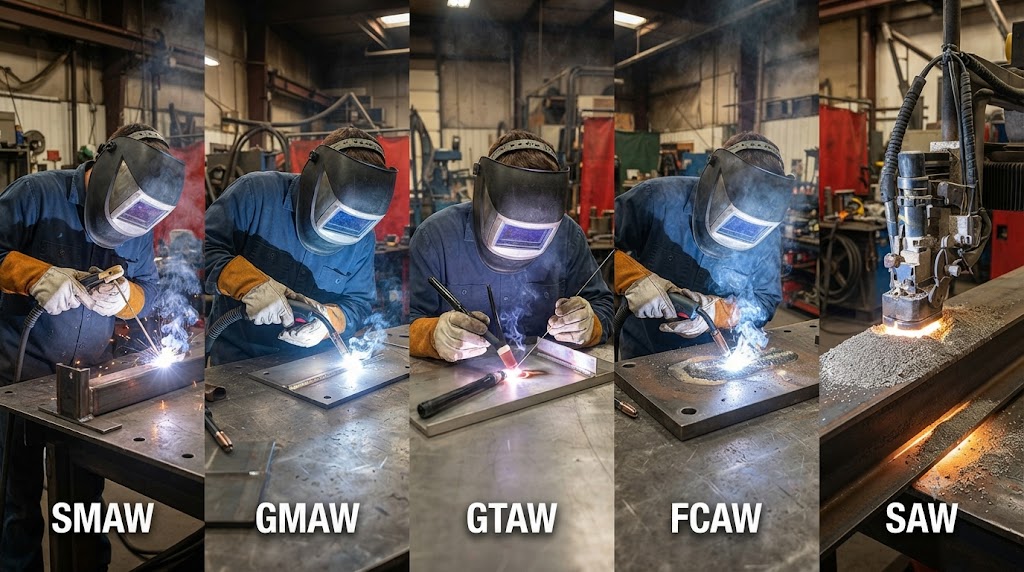
Welder’s flash is caused by the intense ultraviolet light a welding arc gives off. A welding arc is extremely bright and radiates a lot of UV, and when that UV hits the unprotected surface of the eye, it damages the cells of the cornea, the clear front layer of the eye. This is the same kind of injury as snow blindness (from UV reflecting off snow) or a sunburn on your skin, just on the eye. It does not take long exposure or even looking directly at the arc; a brief glance at someone else’s arc across the shop, or welding with inadequate eye protection, can be enough. This is why bystanders and helpers get arc eye too, not just the person welding. The key point is that it is a UV burn, so anything that lets arc UV reach your eyes, no helmet, the wrong shade, a gap, or watching another welder, can cause it.
Symptoms and how long it lasts
The hallmark of welder’s flash is that the symptoms are delayed, usually showing up about 6 to 12 hours after exposure rather than right away. When they arrive, symptoms include a gritty, sandy feeling in the eyes, pain, redness, watering, sensitivity to light, and sometimes blurred vision, as if there is something in the eye you cannot flush out. The reassuring part is that welder’s flash is temporary: because the cornea heals quickly, symptoms usually resolve within about 24 to 48 hours, though light sensitivity or blurring can linger a bit longer. Home care is supportive: rest the eyes, stay in a dark or dim room to ease light sensitivity, use artificial tears for comfort, take over-the-counter pain relief, and avoid contact lenses and rubbing your eyes while they heal. You should seek medical attention if the pain is severe, vision is significantly affected, or symptoms do not improve, since a professional can rule out other injury and provide treatment. It is temporary, but it is not something to ignore.
How to prevent welder’s flash
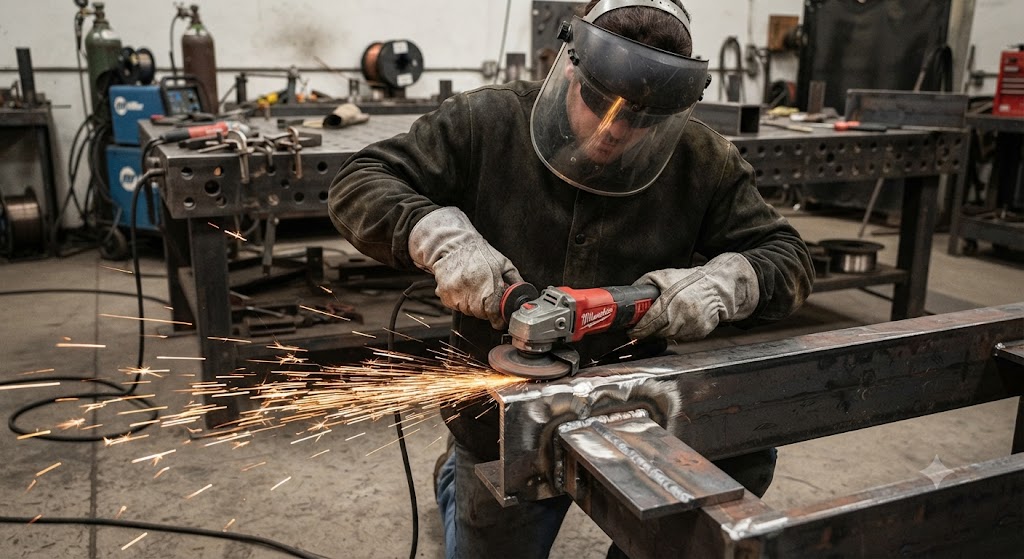
Prevention is simple and almost completely effective: keep arc UV away from your eyes. Always wear a proper welding helmet with the correct shade lens for the process and amperage you are running, since too light a shade lets damaging light through. An auto-darkening helmet is popular because it darkens the instant the arc strikes, which helps prevent the flashes that happen when a fixed helmet is not in position in time. Make sure the helmet has no cracks or gaps, and wear safety glasses underneath for added protection and for when the helmet is up. Just as important, protect the people around you: use welding screens or curtains to block the arc from bystanders and helpers, because arc eye can strike anyone who catches the light, not just the welder. Never watch someone weld without proper protection. Get in the habit of full, correct eye protection every time, even for a quick tack, and welder’s flash becomes a problem you simply do not have.
The bottom line
Welder’s flash, or arc eye, is photokeratitis, a sunburn of the cornea caused by the ultraviolet light of a welding arc reaching unprotected eyes. Its defining trait is the delay: you feel nothing at the time and wake up 6 to 12 hours later with gritty, painful, light-sensitive eyes. The good news is it is temporary, usually clearing within 24 to 48 hours with rest, a dark room, artificial tears, and pain relief, though you should see a professional if it is severe. Best of all, it is almost entirely preventable with a proper helmet and the correct shade lens, no gaps, and screens to protect bystanders. Treat full eye protection as non-negotiable every single time, and you keep your eyes safe from an injury that is as avoidable as it is unpleasant.
FAQ
What is welder’s flash? Welder’s flash, also called arc eye, is photokeratitis, a painful burn of the cornea caused by the intense ultraviolet light of a welding arc reaching unprotected eyes. It is essentially a sunburn of the eye’s surface, the same injury as snow blindness. Symptoms are delayed and it is temporary, but it is painful and should be prevented with proper eye protection.
How long does welder’s flash last? Welder’s flash is temporary. Symptoms usually appear 6 to 12 hours after exposure and then resolve within about 24 to 48 hours as the cornea heals, though light sensitivity or slight blurring can linger a little longer. If symptoms are severe or do not improve within a couple of days, you should see a medical professional to rule out other injury.
Why are the symptoms delayed? Welder’s flash is like a sunburn: you do not feel the UV damage as it happens, and the pain develops later as the injured corneal cells react. That is why symptoms typically show up 6 to 12 hours after exposure, often waking a welder in the middle of the night, even though nothing felt wrong during or right after welding. The delay is a classic feature of arc eye.
Can you get welder’s flash from watching someone else weld? Yes. Arc eye is caused by UV light, and that light travels, so simply watching someone weld or catching a glance of an arc across the shop without proper eye protection can cause it. This is why bystanders and helpers get welder’s flash too, and why welding screens or curtains should be used to protect everyone near the work, not just the welder.
How do you treat welder’s flash at home? Care is supportive: rest your eyes, stay in a dark or dim room to ease light sensitivity, use artificial tears for comfort, and take over-the-counter pain relief. Avoid contact lenses and do not rub your eyes while they heal. Symptoms usually pass within a day or two. Seek medical attention if the pain is severe, vision is affected, or symptoms do not improve.
How do you prevent arc eye? Always wear a proper welding helmet with the correct shade lens for your process and amperage, with no cracks or gaps, and safety glasses underneath. An auto-darkening helmet helps by darkening the instant the arc strikes. Protect people nearby with welding screens or curtains, and never watch welding without proper protection. Consistent, correct eye protection prevents nearly all cases.
References
- Cleveland Clinic, photokeratitis symptoms, causes, and treatment (medical), my.clevelandclinic.org.
- College of Optometrists, photokeratitis (UV burn, arc eye) clinical guidance (medical), college-optometrists.org.
- MSC Industrial Supply, welder’s flash causes, symptoms, and treatment (industry), mscdirect.com.