Why Do Welders Drink Milk After Welding Galvanized Steel?
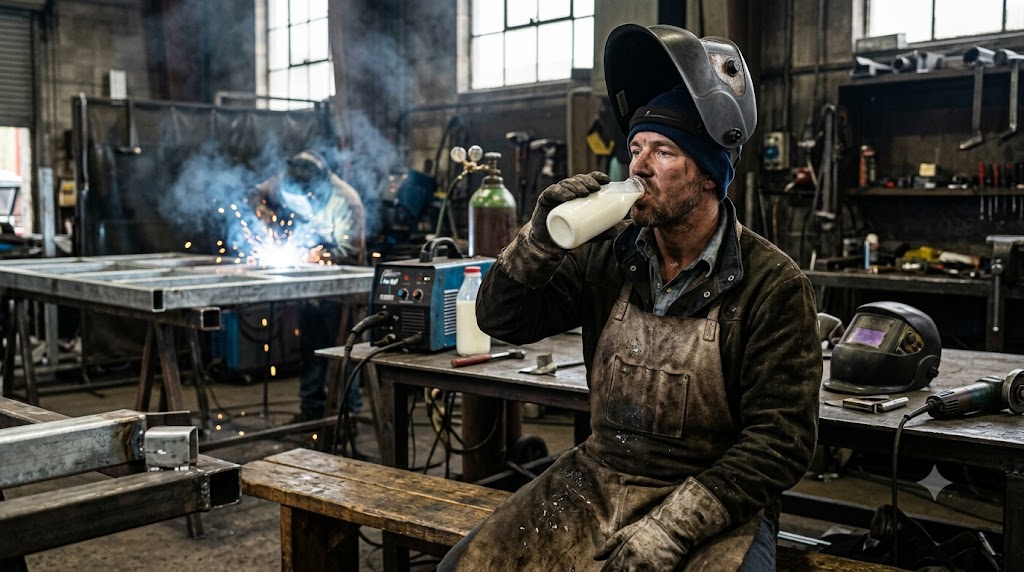
Ask an old hand what to do before you burn on galvanized steel and there is a good chance they will grin and say, “Drink some milk first.” It gets passed down like gospel on job sites, chugging a carton to “coat your stomach” or “pull the zinc out.” The problem is that the advice, however well meant, does not do what people think, and believing it can put you at real risk.
Welders drink milk after welding galvanized steel because of a long-standing shop myth that it neutralizes or flushes out the zinc that causes metal fume fever. It does not. Metal fume fever comes from inhaling zinc oxide fumes into your lungs, and milk goes into your digestive system, a completely separate pathway. Milk cannot reach or neutralize a problem that lives in your airways. The only things that actually protect you are ventilation and proper respiratory protection.
What metal fume fever actually is
When you weld galvanized steel, the heat vaporizes its zinc coating, and that vapor reacts with air to form fine zinc oxide particles. Breathe enough of them in and you can develop metal fume fever, an acute, flu-like illness. Medical sources describe the classic picture: fever, chills, body aches, headache, nausea, a metallic taste in the mouth, and fatigue, usually setting in several hours after exposure rather than immediately.
There is a well-documented quirk that fits the welder’s week. Tolerance builds up over a work week and fades over time off, so symptoms are often worst after a break. That is why it is nicknamed “Monday fever” or “the smothers,” hitting hardest on the first galvanized job after the weekend. The reassuring part: metal fume fever is typically self-limiting and resolves on its own within 24 to 48 hours once you are away from the fumes. The dangerous part: it is easy to shrug off and keep working in the same fumes.
Why milk cannot help
The myth rests on a basic anatomy mistake. Metal fume fever is an inhalation problem. The zinc oxide is in the air, and it does its damage in your respiratory tract. Milk travels down your esophagus into your stomach. The two systems do not connect in a way that lets a glass of milk intercept particles you have breathed into your lungs.
The “milk binds heavy metals” idea is borrowed loosely from stories about calcium and ingested metals, but even for swallowed poisons, milk is not a recommended treatment. Poison control guidance has moved away from giving milk for poisoning, and it was never a treatment for something you inhaled. Drinking milk before or after welding galvanized steel gives you a false sense of protection while the actual exposure continues unchecked. That false confidence is the real harm.
What actually protects you
The fix is not in a carton. It is in the air you breathe.
- Ventilation and fume extraction come first. Move the fumes away from your face with local exhaust, a fume extractor, or by working outdoors or in a well-ventilated bay with good air movement. Position yourself so the plume drifts away from you, not up into your hood.
- Wear a proper respirator. A well-fitted P100 respirator, or a powered air-purifying respirator (PAPR), filters the zinc oxide particulate. A paper nuisance mask does not cut it for metal fume. Fit matters as much as the rating.
- Position and airflow. Keep your head out of the plume, use fans to clear the work zone, and never weld galvanized in a tight, closed space without extraction.
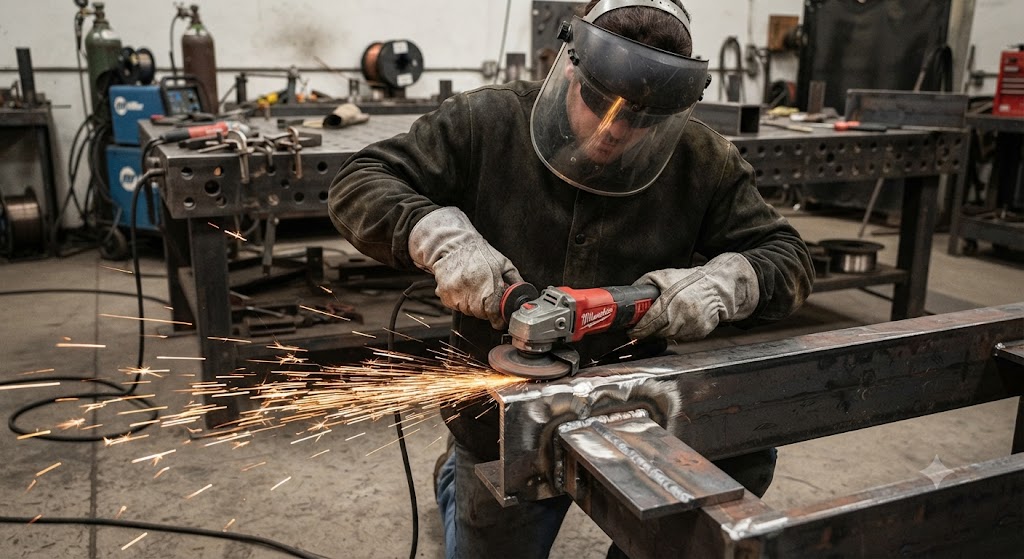
- Removing the coating helps. Where the job allows, grinding the zinc back from the weld zone reduces how much fume you generate in the first place.
If you do come down with metal fume fever, get to fresh air, rest, and hydrate. Hydration in general is fine and sensible. Just understand that any fluid helps you feel better while your body clears it; the milk is not doing anything special, and it never prevented the exposure.
When to take it seriously
Metal fume fever usually passes in a day or two, but do not gamble on it. Symptoms that are severe, that include real shortness of breath, or that do not improve within a couple of days warrant medical attention, because heavy welding fume exposure can involve more than just zinc, and other metals and gases carry their own risks. If breathing is genuinely difficult, treat it as an emergency, not a rite of passage.
The bottom line
The milk ritual is tradition, not protection. Metal fume fever is caused by inhaling zinc oxide, and no amount of milk in your stomach can reach or neutralize that. Skip the folklore and rely on what works: get the fumes away from your face with ventilation and extraction, and wear a properly fitted respirator every time you burn on galvanized steel.
FAQ
Why do welders drink milk after welding galvanized steel? It is an old shop tradition based on the belief that milk neutralizes or flushes out the zinc that causes metal fume fever. The belief is mistaken; milk does not prevent or treat the condition.
Does milk actually prevent metal fume fever? No. Metal fume fever comes from inhaling zinc oxide into your lungs, while milk goes into your digestive system. Milk cannot reach or neutralize an inhaled exposure.
What is metal fume fever? An acute, flu-like illness from breathing zinc oxide fumes when welding galvanized steel. Symptoms include fever, chills, headache, nausea, and a metallic taste, usually starting a few hours after exposure and clearing within 24 to 48 hours.
Why are symptoms often worse on Monday? Tolerance builds during a work week and fades over time off, so the first galvanized job after a break tends to hit hardest. That pattern gives it the nickname “Monday fever.”
What actually protects welders from zinc fumes? Ventilation and fume extraction to move the plume away from your face, plus a properly fitted P100 respirator or PAPR. Grinding the zinc coating back from the weld zone also reduces fume.
When should I see a doctor for metal fume fever? If symptoms are severe, include real shortness of breath, or do not improve within a day or two. Difficulty breathing should be treated as an emergency.
References
- Cancer Council Australia, information on welding fumes and metal fume fever (established health authority).
- NCBI Bookshelf / StatPearls, “Metal Fume Fever” (NBK583199), peer-reviewed medical reference.
- OSHA, welding, cutting and brazing health hazards guidance on zinc and metal fumes, osha.gov.
- American Welding Society, Safety and Health Fact Sheet on metal fume fever, aws.org.