Rod Oven Temperature Chart for 7018 and Low Hydrogen Rods
Set your rod oven wrong and you can do more harm than good. Too cool, and your 7018 keeps absorbing moisture; too hot, and you can damage the coating. And there is a second temperature entirely, far higher, for recovering rods that have already gotten wet. Getting these numbers right is the difference between sound low-hydrogen welds and porosity or cracking. This guide lays out the temperatures for holding and rebaking low-hydrogen and other electrodes, and explains the crucial difference between the two.
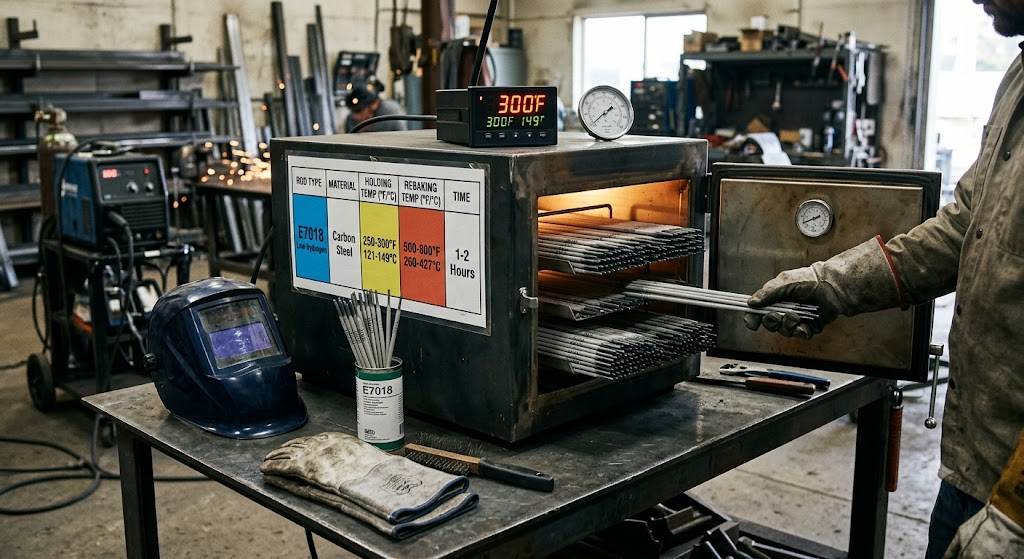
Low-hydrogen rods like 7018 are held in a rod oven at about 250 to 300 degrees F (120 to 150 degrees C) to stay dry. Rebaking rods that have absorbed moisture requires much higher temperatures, generally 500 to 800 degrees F. Here is the full chart and how to use it.
Why temperature matters
Rod oven temperature is not a set-and-forget guess, because the number does real work:
- Holding temperature keeps low-hydrogen rods dry so they deposit a low-hydrogen weld.
- Too low lets rods pick up atmospheric moisture, causing porosity and cracking.
- Too high can oxidize alloys in the coating and degrade the electrode.
- Rebaking temperature is a separate, much higher range for restoring wet rods.
Matching the temperature to the electrode and the task is what keeps your welds sound.
Direct answer: the temperature chart
Here are the widely recommended temperatures. Always follow your electrode manufacturer’s data sheet and your governing code, as exact numbers vary.
| Electrode type | Storage / holding | Reconditioning (rebaking) |
|---|---|---|
| Low-hydrogen (E7018, E7016, A5.1) | 250 to 300 degrees F (120 to 150 C) | 500 to 800 degrees F, about 1 to 2 hours |
| High-strength low-hydrogen (E8018 and up, A5.5) | 250 to 300 degrees F | 600 to 800 degrees F, about 1 hour |
| Rutile / general (E6013, E7014) | Up to about 130 degrees F | Not typically rebaked |
| Cellulose (E6010, E6011) | Dry at room temperature (do not oven-bake) | Not rebaked (moisture is needed) |
Holding keeps dry rods dry; rebaking recovers wet ones, and the two are very different numbers.
Holding temperature explained
For low-hydrogen electrodes, the consensus holding range is about 250 to 300 degrees F (120 to 150 degrees C), echoed by AWS D1.1, ASME B31.3, and electrode manufacturers, with some makers suggesting the upper end for the best moisture control. Once you open a sealed can of 7018, the rods begin picking up moisture from the air, so they belong in a holding oven at this temperature to stay code-ready. Not every electrode wants this, though. Rods like 6013 and 7014 are stored much cooler and should not sit in an oven above about 130 degrees F, and cellulose rods like 6010 and 6011 actually need to retain some moisture, so they are kept dry at room temperature and never baked, because over-drying ruins their arc. Never store cellulose and low-hydrogen rods together in a hot oven, since the temperature right for one is wrong for the other.
Holding versus rebaking
This is the distinction that trips people up. Holding is keeping already-dry rods dry at 250 to 300 degrees F. Rebaking (reconditioning) is restoring rods that have absorbed moisture, and it takes a far higher temperature: for standard low-hydrogen rods (A5.1), commonly 500 to 800 degrees F, and for higher-strength types (A5.5), often 600 to 800 degrees F, held for a defined time. One hour at the specified final temperature is the usual guidance, and you should not simply hold rods longer at a lower temperature as a substitute. Two practical cautions: high-strength electrodes should get only a limited number of rebakes (typically no more than three one-hour cycles in the 700 to 800 degree F range) to avoid oxidizing coating alloys, and a household kitchen oven cannot reach or safely hold rebaking temperatures, so do not use one. Rebaking needs a proper high-temperature oven.
What happens if rods overheat
A fair question, since hotter is not better. Holding rods far above their recommended temperature, or rebaking too many times or too hot, can oxidize the alloying elements in the electrode coating, which can lower the weld’s tensile or impact properties and degrade performance. That is why the standards give both a temperature and, for rebaking, a limit on how many times you can recondition high-strength rods. The goal is precise: hold at the recommended range, rebake at the specified temperature for the specified time when needed, and no more. Follow the electrode maker’s data sheet, because it lists the exact numbers for that specific rod.
A holding oven to use
To hold these temperatures reliably, an adjustable oven helps.
- YESWELDER 15 pound portable rod oven is a temperature-controlled oven adjustable from about 85 to 300 degrees F, holding 15 pounds of rods up to 14 inches, which covers the holding range for low-hydrogen rods. Its limitation is that it is a holding oven, not a high-temperature rebaking unit, so it cannot recondition wet rods.
Who should skip worrying about rebaking temperatures: hobbyists who buy small quantities and keep rods sealed and dry, opening only what they will use, so they rarely need to recover wet rods.
The bottom line
Rod oven temperature comes down to two very different jobs. Holding keeps low-hydrogen rods like 7018 dry at about 250 to 300 degrees F, which is where they should live once the can is opened, while rods like 6013 stay cooler (under about 130 degrees F) and cellulose rods like 6010 are kept dry at room temperature, never baked. Rebaking is the separate, much hotter task of recovering rods that got wet, generally 500 to 800 degrees F for a set time, and it needs a proper high-temperature oven, not a kitchen range. Overheating or over-rebaking damages the coating, so follow the electrode maker’s data sheet and your code, and match the temperature to the task.
FAQ
What temperature should a rod oven hold 7018 at? About 250 to 300 degrees F (120 to 150 degrees C), the widely recommended holding range for low-hydrogen electrodes echoed by AWS D1.1, ASME B31.3, and electrode makers. Some manufacturers suggest the upper end for the best moisture control. This keeps opened 7018 dry and code-ready.
Is there a difference between storage temp and rebaking temp? Yes, a big one. Storage (holding) keeps already-dry rods dry at 250 to 300 degrees F. Rebaking restores rods that absorbed moisture and needs far higher heat, generally 500 to 800 degrees F for a defined time. The two temperatures are not interchangeable, and holding longer at a low temperature does not replace a proper rebake.
What happens if welding rods overheat in the oven? Holding rods far too hot, or rebaking too often or too high, can oxidize the alloying elements in the coating, which can lower the weld’s tensile or impact properties. That is why standards specify both a temperature and, for high-strength rods, a limit on rebake cycles. Hold at the recommended range and rebake only as specified.
Can I store 6013 and 7018 in the same oven? Not at the same temperature. Low-hydrogen 7018 is held at 250 to 300 degrees F, while 6013 should not sit above about 130 degrees F. Storing them together at the higher temperature would over-dry the 6013, so keep electrode types at their own recommended temperatures.
How long do you rebake low-hydrogen rods? Commonly about one hour at the specified final temperature for standard low-hydrogen rods, within the 500 to 800 degree F range (600 to 800 for higher-strength types). Do not substitute several hours at a lower temperature. High-strength rods should get only a limited number of rebake cycles to avoid degrading the coating.
Can I use a kitchen oven to bake welding rods? No for rebaking. A household oven cannot reliably reach or hold the 500 to 800 degrees F needed for reconditioning, and it mixes food space with shop materials. For holding, a purpose-built rod oven is the right tool; for rebaking, you need a proper high-temperature oven.
References
- Lincoln Electric guidance on storing and redrying electrodes, including reconditioning temperatures and rebake limits (manufacturer), lincolnelectric.com.
- Hobart Brothers oven storage and reconditioning table for stick electrodes (manufacturer), hobartbrothers.com.
- ESAB guidance on storing and redrying stick electrodes, and AWS D1.1 / ASME B31.3 holding and baking temperatures (manufacturer and industry standards), esab.com, aws.org.