Welding Respirator Buying Guide
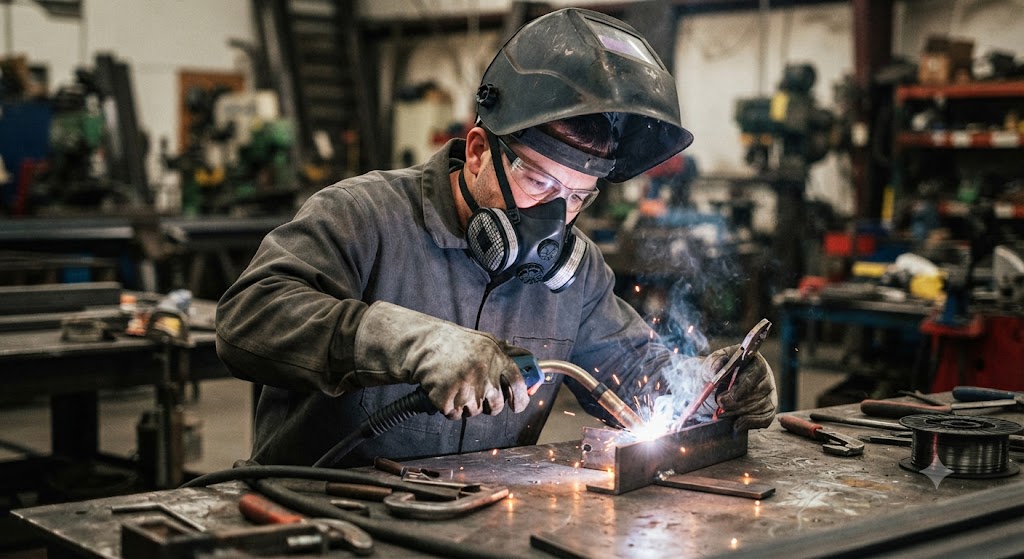
I did not wear a respirator for the first few years of my welding career. Almost nobody I worked with did. We were outside a lot, the fume plume drifted away from us most of the time, and nobody told us what was actually in it. Then I read the NIOSH data on manganese exposure in welding fumes and what prolonged manganese accumulation does to the neurological system, and I went out and bought a respirator that same week. If you are welding indoors with any regularity and you are not wearing a respirator, this guide is the information you need to choose one and actually use it.
What Is in Welding Fumes
Welding fumes are not just smoke. They are a complex mixture of metal oxides, gases, and particulates generated when base metal, filler wire, and coatings vaporize and oxidize in the arc zone. The exact composition depends on the base metal, the filler, the shielding gas, and the process.
Common hazardous components include iron oxide (the primary component in carbon steel fumes), manganese (present in most steel filler wires, toxic to the nervous system at chronic low doses), hexavalent chromium (generated when welding stainless steel or chromium-coated material, a known human carcinogen), zinc oxide (generated when welding galvanized steel, causes metal fume fever), and ozone (generated by the UV arc, irritates the respiratory system and lungs).
Metal fume fever is a well-documented acute response to zinc oxide and other metal oxide fumes, causing flu-like symptoms that resolve within 24 to 48 hours of removing exposure. The neurological effects of chronic manganese exposure are not reversible. Respiratory disease from repeated chromium hexavalent exposure is a documented occupational health risk with a long latency period. These are not theoretical risks.
Which Respirator Should You Buy for Welding?
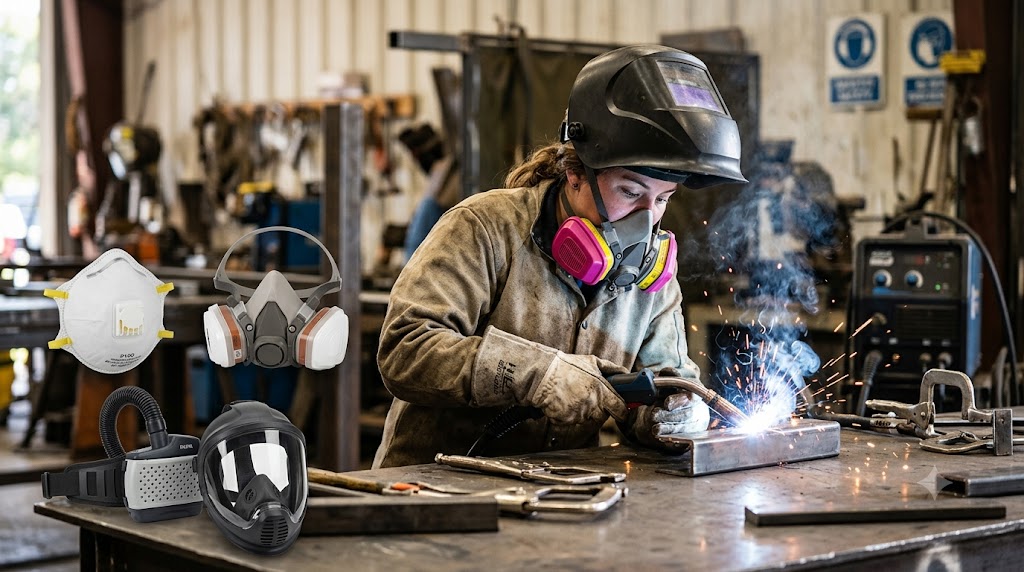
For most indoor MIG and stick welding on carbon steel with adequate ventilation but not perfect airflow, a half-mask P100 respirator is the right starting point. A P100 filter is rated to remove 99.97% of airborne particles including oil-based and non-oil-based particulates. It is the highest particle filter rating available in the cartridge respirator class and is the standard recommended by NIOSH for welding fume protection in most scenarios.
For welding stainless steel, galvanized steel, or any chromium-containing alloy indoors, or for welding in confined or poorly ventilated spaces, the hazard level is significantly higher and a powered air purifying respirator (PAPR) provides substantially better protection and comfort for extended sessions.
For an outdoor hobby welder with good natural airflow, the risk level is substantially reduced. Adequate local exhaust ventilation combined with a basic half-mask P100 provides reasonable protection for occasional use.
Welding Respirator Type Comparison
| Type | Filtration | Comfort All Day | Fit Required | Best For |
|---|---|---|---|---|
| N95 disposable | 95% non-oil particles | Moderate | Yes | Very light duty, not recommended for production welding |
| Half mask P100 | 99.97% all particles | Good | Yes, seal check required | Standard indoor welding, most processes |
| Full face P100 | 99.97% + eye protection | Moderate | Yes, thorough fit required | High hazard environments, eye exposure risk |
| PAPR (powered air purifying) | 99.97% + | Excellent, no seal | No face seal | Production welding, stainless, confined space |
| Supplied air respirator | 100%, clean supply | Excellent | No face seal | Extreme hazard, paint booths, confined space |
Key Buying Factors
NIOSH approval. Any respirator used for genuine occupational protection must be NIOSH-approved. NIOSH approval means the respirator and filter cartridge combination has been tested to meet the stated filtration efficiency. Do not buy a respirator without NIOSH approval marking on the packaging and device.
Filter type and rating. For welding fumes, P100 is the correct filter. The P designation means it handles both oil and non-oil particles. The 100 designation means 99.97% filtration efficiency. N95 is insufficient for most production welding scenarios because it only handles non-oil particles at 95% efficiency and does not provide adequate protection against metallic fume at production exposure levels.
Fit and seal. A respirator that does not seal to your face is not protecting you. Facial hair, improper head strap adjustment, and a facepiece that does not match your face shape all break the seal. Always perform a user seal check before each use: positive pressure check (exhale gently with exhaust valve blocked) and negative pressure check (inhale gently with cartridge inlets blocked). If you feel air movement at the face seal, readjust before welding.
Low profile for helmet compatibility. Standard half-mask respirators can interfere with welding helmet headgear, pressing the helmet off your face and breaking the arc flash seal. Low-profile designs like the GVS Elipse and Miller LPR-100 sit closer to the face and are specifically designed for compatibility with welding helmets.
Cartridge replacement schedule. P100 particulate cartridges should be replaced when breathing resistance increases noticeably or according to the manufacturer’s schedule. For combination cartridges that also filter organic vapors or acid gases, replace according to a change-out schedule based on your exposure concentration and work duration.
Brands Worth Knowing
3M is the most widely distributed respirator brand with NIOSH-approved options across all categories. The 3M 7500 series half-mask is comfortable for all-day wear and takes standard 3M cartridges widely available at welding and safety supply stores. GVS Elipse P100 has earned a strong reputation specifically in the welding community for its low-profile design and comfort fit under welding helmets. Miller LPR-100 was designed specifically for welding and is one of the lowest-profile half-mask respirators available. Klein Tools and GERSON both produce NIOSH-approved P100 options in the mid-price tier.
The Bottom Line
Wear a P100 half-mask respirator for indoor carbon steel welding. Upgrade to a PAPR for stainless, galvanized, or any high-exposure confined space scenario. Buy NIOSH-approved products only. Perform a seal check every time you put the respirator on. Replace cartridges on schedule. The long-term consequences of skipping respiratory protection during welding are well documented and entirely preventable.
Frequently Asked Questions
Is a N95 mask enough for welding? No. N95 masks are rated at 95% filtration for non-oil particles only. Welding fumes include oil-based and metallic aerosols at concentrations that require P100 filtration (99.97%) for adequate protection in most indoor scenarios.
What does P100 mean on a welding respirator? P100 indicates the filter removes 99.97% of airborne particles, including both oil and non-oil-based particles. It is the highest particle filter rating in the NIOSH cartridge respirator classification system.
Do I need a respirator for outdoor welding? For occasional outdoor welding with good natural airflow, the risk is lower but not zero. Chronic low-level manganese exposure from outdoor welding is still documented. A P100 half-mask is good practice even outdoors for regular welding.
What is metal fume fever? Metal fume fever is an acute flu-like reaction caused by inhaling zinc oxide fumes from welding or grinding galvanized steel. Symptoms include fever, chills, and fatigue and resolve within 24 to 48 hours. Repeated exposure is not healthy and galvanized work always requires respiratory protection and strong ventilation.
How do I know if my respirator is sealing properly? Perform a user seal check every time you put on the respirator. Positive pressure test: block the exhalation valve and exhale gently. Negative pressure test: cover the cartridge inlets and inhale gently. No air movement at the face seal means a good fit.
How often should I replace P100 cartridge filters? Replace when breathing resistance increases noticeably or discolors heavily. Combination cartridges that also contain activated carbon for vapor and gas filtration must be replaced on a schedule based on concentration and use duration.
What is a PAPR respirator for welding? A PAPR (powered air purifying respirator) is a battery-powered blower that draws air through a filter and delivers it through a hood or helmet. It does not require a face seal, provides cooler airflow during extended welding sessions, and is the standard of care for high-exposure welding scenarios.
References
https://www.osha.gov/laws-regs/regulations/standardnumber/1910/1910.134 https://www.cdc.gov/niosh/topics/welding https://www.3m.com/3M/en_US/safety-centers-of-expertise-us/respiratory-protection
SEO Title: Welding Respirator Buying Guide